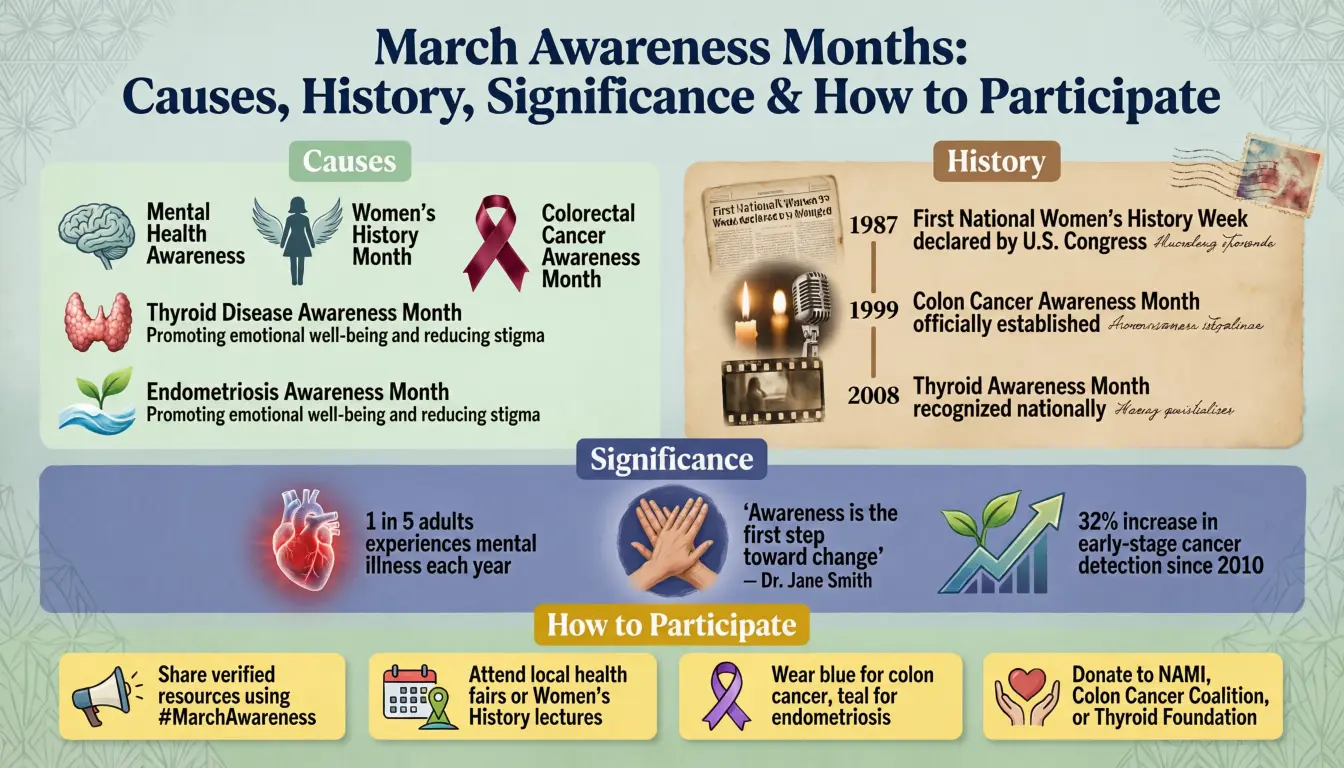
If you’ve been searching for “March awareness months meaning,” you’re likely wondering why so many important observances are recognized during this time and what they truly represent.
March is more than just the beginning of spring in many parts of the world; it’s a month filled with powerful awareness campaigns that shine a spotlight on health, equality, education, and environmental causes.
An awareness month is designed to educate the public, encourage conversations, and inspire action around specific issues that affect communities globally.
Throughout March, organizations, nonprofits, and international institutions lead campaigns to promote understanding, prevention, advocacy, and support.
From health-related initiatives to social justice movements and environmental protection efforts, each observance carries a deeper purpose beyond simple recognition.
In this guide, we’ll explore the meaning behind March awareness months, their historical roots, major causes observed, and why they continue to matter in today’s world.
By the end, you’ll understand not just what is celebrated in March but why it truly matters.
What Does “Awareness Month” Mean?
An awareness month is a dedicated period of time set aside to highlight a specific cause, issue, disease, social movement, or community concern.
The primary goal is to educate the public, encourage open discussions, reduce stigma, and inspire meaningful action. When people search for March awareness month’s meaning, they are often trying to understand why certain causes receive an entire month of recognition rather than just a single day.
Awareness months are typically organized by nonprofit organizations, advocacy groups, healthcare institutions, or international bodies such as the United Nations.
These campaigns focus on spreading accurate information, promoting prevention strategies, raising funds for research, and influencing public policy. Over time, many awareness movements have grown from small grassroots efforts into nationally or globally recognized initiatives.
Unlike awareness days, which spotlight a cause for 24 hours, awareness months allow deeper engagement.
Schools host educational programs, media outlets publish special coverage, businesses run themed campaigns, and communities organize events. Social media also plays a major role in amplifying messages through hashtags, visual symbols, and awareness ribbons.
Ultimately, an awareness month is about visibility and impact. It gives a voice to underrepresented issues, supports affected individuals, and encourages society to move from simple recognition toward understanding, empathy, and positive change.
Why Is March Packed with Awareness Campaigns?
March is one of the most awareness-focused months of the year, and there are several meaningful reasons behind it.
For many countries, March marks the transition into spring, a season symbolizing renewal, growth, and fresh beginnings. This seasonal shift aligns perfectly with the goals of awareness campaigns, which aim to inspire change, promote healthier lifestyles, and encourage new perspectives.
Another key reason is historical timing. Several major movements and advocacy efforts began in March, eventually expanding into nationally and internationally recognized observances. For example, International Women’s Day on March 8 helped establish March as a significant month for gender equality discussions.
Over time, additional causes were added to the calendar, creating a ripple effect of awareness initiatives throughout the month.
March also fits strategically within annual planning cycles. Governments, nonprofits, and health organizations often launch campaigns in early spring to prepare for fundraising events, policy discussions, and community programs scheduled later in the year.
Media outlets are more likely to cover awareness topics during this period because multiple campaigns overlap, increasing visibility and public engagement.
Additionally, global organizations like the World Health Organization and the United Nations coordinate international observances that fall in March, reinforcing its importance worldwide.
Together, seasonal symbolism, historical milestones, strategic planning, and international coordination explain why March has become such a powerful month for awareness campaigns across health, social, and environmental causes.
Major Health Awareness Months in March
March features several major health awareness campaigns that focus on prevention, education, research funding, and community support.
These observances aim to reduce stigma, promote early detection, and encourage healthier lifestyles.
Understanding the March awareness month’s meaning becomes clearer when you explore the health causes highlighted during this time.
One of the most recognized observances is Women’s History Month, led by the National Women’s History Alliance, which not only celebrates women’s achievements but also raises awareness about women’s health issues.
March is also Endometriosis Awareness Month, supported by groups such as the Endometriosis Foundation of America, focusing on a condition that affects millions worldwide yet remains underdiagnosed.
National Kidney Month, promoted by the National Kidney Foundation, emphasizes early testing and kidney disease prevention.
At the same time, National Nutrition Month is organized by the Academy of Nutrition and Dietetics to encourage balanced eating habits and better dietary awareness.
Additionally, Cerebral Palsy Awareness Month, supported by the Cerebral Palsy Foundation, highlights inclusion, accessibility, and support for individuals living with disabilities.
Together, these health observances demonstrate how March serves as a platform for education, advocacy, and improved public health outcomes worldwide.
Social and Cultural Awareness Observances in March
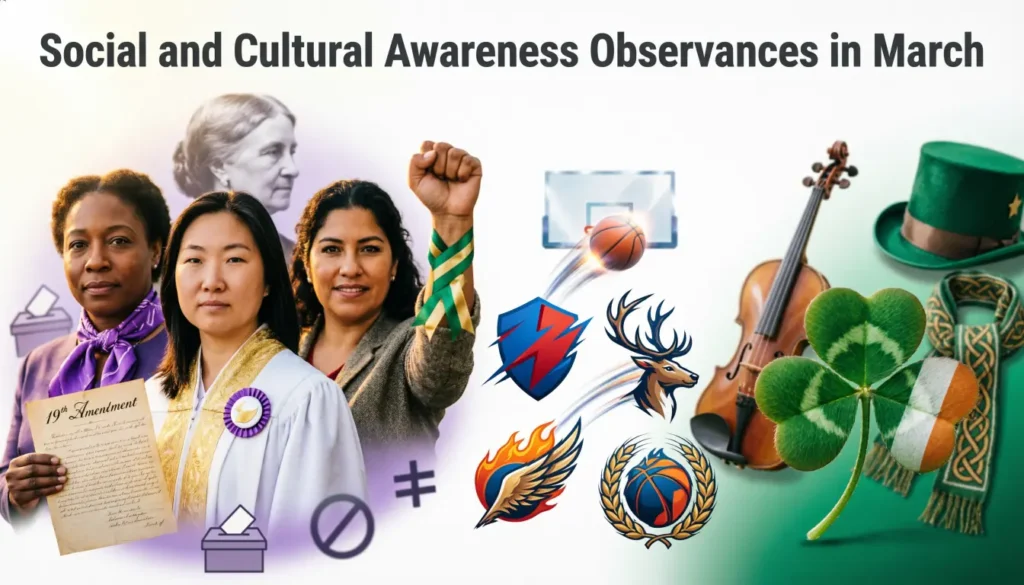
Beyond health-related campaigns, March is also deeply connected to social justice, equality, education, and human rights initiatives.
These observances help communities reflect on progress, address ongoing challenges, and promote inclusivity across cultures and societies. When exploring the meaning of March awareness months, it’s important to recognize how these social and cultural campaigns shape public dialogue worldwide.
One of the most influential global observances is International Women’s Day (March 8), recognized by the United Nations.
This day highlights gender equality, women’s empowerment, and social progress. Its presence in March strengthens the broader focus on women’s rights throughout the month.
Another important date is World Down Syndrome Day (March 21), also supported globally through initiatives connected to the United Nations.
The campaign encourages inclusion, celebrates diversity, and promotes understanding often symbolized by wearing colorful socks.
March 21 also marks the International Day for the Elimination of Racial Discrimination, reinforcing conversations about equality and civil rights. Additionally, National Reading Month promotes literacy, educational growth, and lifelong learning in schools and communities.
Together, these social and cultural observances give March a powerful human-centered focus, encouraging awareness,
dialogue, and collective responsibility for building more inclusive and equitable societies.
Environmental Awareness Events in March
March is also an important month for environmental awareness, as global organizations use this time to promote conservation, sustainability, and climate responsibility.
The seasonal transition into spring in many regions naturally supports themes of renewal, growth, and protecting the planet. This environmental focus adds another layer to understanding the true meaning of March awareness months.
One of the most recognized environmental events in March is Earth Hour, organized by the World Wildlife Fund.
During this global movement, individuals, businesses,
and landmarks switch off non-essential lights for one hour to show support for climate action and energy conservation.
The symbolic “lights out” message encourages long-term environmental commitment.
March 3 marks World Wildlife Day, established by the United Nations to celebrate biodiversity and raise awareness about endangered species.
The observance highlights the urgent need to protect wildlife and natural habitats around the world.
Throughout the month, schools and communities also organize climate awareness marches, recycling drives, and tree-planting campaigns.
These activities emphasize practical steps individuals can take to reduce their environmental impact.
Together, these environmental initiatives reinforce March as a month of responsibility
and action, reminding society that protecting the planet requires collective awareness and consistent effort.
Awareness Colors, Symbols, and Ribbons in March
Colors, ribbons, and visual symbols play a powerful role in awareness campaigns throughout March.
These elements make causes instantly recognizable, unify supporters, and help messages spread quickly across social media, events, and fundraising activities. When exploring the meaning of March awareness months, understanding these symbols adds deeper context to each campaign.
For example, yellow is widely associated with Endometriosis Awareness Month, symbolizing hope and resilience. Green is commonly linked to both kidney health initiatives and Cerebral Palsy Awareness Month, representing growth, renewal, and support.
Purple is often used in women’s empowerment and equality campaigns during March, reflecting dignity and justice.
These colors are more than decorative choices.
They create a shared identity among supporters and make campaigns visually consistent across posters, websites, clothing, and digital platforms. Awareness ribbons, in particular, have become universal symbols of solidarity.
By simply wearing a ribbon, individuals publicly show support and spark conversations about important issues.
Symbols also help campaigns reach wider audiences.
In the digital age, profile picture frames, hashtags, and themed graphics amplify awareness beyond physical events. This visual consistency strengthens recognition and reinforces the message long after the month ends.
Ultimately, awareness colors and symbols transform information into visible action, helping causes gain attention, empathy, and lasting impact.
Historical Origins of March Awareness Campaigns
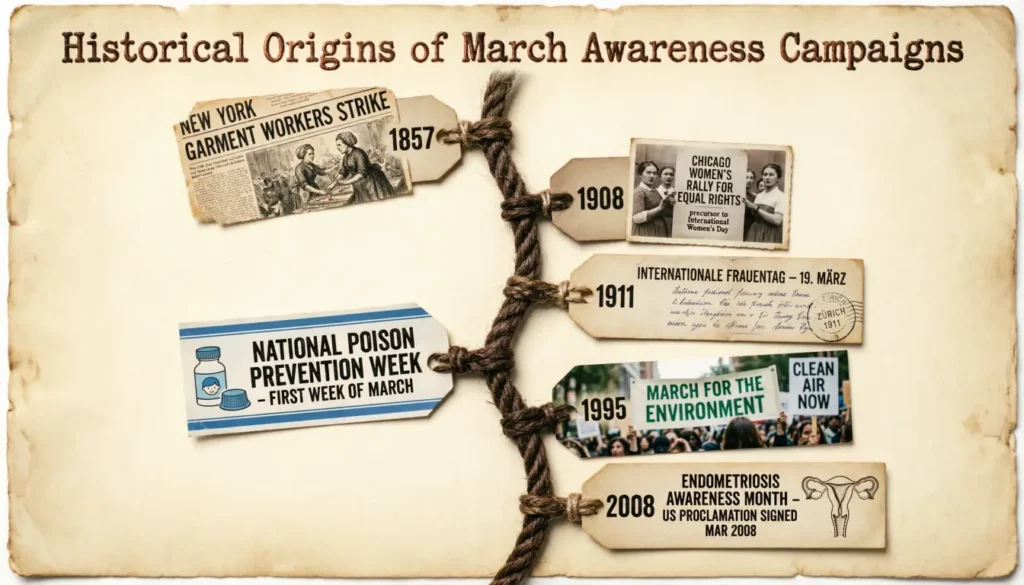
The concept of dedicating entire months to specific causes has a fascinating history, and March is no exception. Many of today’s awareness months began as grassroots movements, gradually evolving into nationally or internationally recognized campaigns.
Understanding the historical origins helps explain why March has become such a significant month for awareness initiatives.
The tradition of awareness months in the United States began in the early 20th century, often driven by nonprofit organizations or advocacy groups seeking to highlight overlooked issues.
For example, Women’s History Month traces its roots to “Women’s History Week,” first celebrated in 1980, before expanding to a full month in March.
Its timing was chosen to coincide with International Women’s Day on March 8, connecting national recognition with global celebrations.
Health-related awareness campaigns also have historical foundations.
National Kidney Month and National Nutrition Month, for instance, emerged from public health initiatives in the 20th century to educate communities about prevention, early detection, and lifestyle changes. Similarly, Endometriosis Awareness Month grew out of advocacy by patient groups seeking to bring attention to a condition that had long been underdiagnosed.
International observances, such as World Wildlife Day and the International Day for the Elimination of Racial Discrimination, are rooted in United Nations resolutions, emphasizing global solidarity and coordinated awareness efforts.
Over time, media coverage, social networks, and community involvement helped amplify these campaigns, transforming them from small local efforts into worldwide movements. Today, March awareness campaigns combine history, advocacy, and education, offering both cultural and societal significance while inspiring collective action.
Global vs National March Observances
March awareness months are celebrated both nationally and internationally, but the scope, focus, and recognition can vary depending on the country or region. Understanding this distinction helps clarify the full meaning of March awareness months and how different societies engage with these causes.
In the United States, many awareness months are promoted by national nonprofit organizations, government proclamations, or professional associations.
For example, National Kidney Month and National Nutrition Month are widely recognized through campaigns, educational programs, and media coverage across the country.
Schools, hospitals, and community centers often participate with events, workshops, and fundraisers that are specifically tailored to a national audience.
On the global stage, organizations like the United Nations coordinate observances such as International Women’s Day, World Wildlife Day, and the International Day for the Elimination of Racial Discrimination.
These campaigns unite multiple countries under a common cause, encouraging cross-cultural participation and international collaboration.
Events can range from local awareness marches to worldwide social media campaigns and virtual conferences.
Cultural and regional differences also influence how awareness months are celebrated.
For instance, Women’s History Month in the U.S. emphasizes the contributions of American women, while International Women’s Day focuses on global gender equality issues.
Similarly, environmental campaigns may highlight region-specific issues, such as forest conservation in Canada or wildlife protection in Africa.
By examining both national and global observances, it becomes clear that March awareness months operate on multiple levels engaging local communities while contributing to worldwide dialogue, advocacy, and impact.
This dual approach strengthens awareness, fosters inclusivity, and inspires collective action.
Why March Awareness Months Matter in 2026 and Beyond
March awareness months are more than just symbolic dates on a calendar; they carry real-world impact that continues to grow in significance each year.
These observances play a crucial role in education, advocacy, fundraising, and community engagement, making them highly relevant in 2026 and beyond.
One of the primary reasons these campaigns matter is their influence on public policy and social change.
By raising awareness about health conditions, social justice issues, or environmental concerns, these months encourage lawmakers, institutions, and organizations to take action.
For instance, highlighting kidney health or nutrition in March can lead to increased funding for research, better screening programs, and healthier communities overall.
Awareness months also foster inclusivity and understanding. Celebrations such as International Women’s Day or World Down Syndrome Day help break stereotypes, promote diversity, and give a voice to underrepresented communities.
These campaigns encourage individuals to empathize, learn, and take proactive steps in their own communities.
Social media amplification has made these campaigns even more powerful. Hashtags, awareness ribbons, and viral posts enable millions to engage globally, spreading knowledge far beyond traditional media outlets. In addition, schools, nonprofits, and local groups organize events, workshops, and fundraisers that make participation tangible and impactful.
Finally, awareness months inspire personal action. Wearing a ribbon, sharing educational content, or volunteering can create a ripple effect that benefits countless individuals.
In 2026, as challenges such as public health, equality, and environmental protection continue to evolve, March awareness campaigns remain a vital tool for fostering informed, compassionate, and proactive societies worldwide.
How Individuals Can Participate in March Awareness Campaigns
March awareness months are not just for organizations or institutions; individuals play a crucial role in spreading awareness, educating others, and supporting important causes.
Participation can take many forms, allowing anyone to contribute in ways that match their interests, skills, and resources.
One simple but effective way to participate is by sharing educational content online. Social media platforms provide a powerful space to raise awareness through posts, infographics, videos, or personal stories. Using campaign hashtags or profile frames helps amplify the message and connect with a broader audience.
Wearing awareness colors or ribbons is another visible form of support.
For example, yellow ribbons for Endometriosis Awareness Month or green for Kidney and Cerebral Palsy campaigns allow individuals to show solidarity and spark conversations about the issues they represent. Community members can also host or attend local events such as workshops, rallies, or awareness walks to actively engage with campaigns.
Volunteering with nonprofits or advocacy groups is an impactful way to make a difference. Whether helping organize events, assisting in fundraising, or providing educational support, volunteers directly contribute to the success of awareness campaigns. Donations, even small ones, can also support research, community programs, and advocacy initiatives.
Finally, individuals can practice advocacy by educating friends and family, starting conversations, or contacting local representatives to support related policies.
By taking these actions, every person contributes to the larger goal of March awareness months spreading knowledge, encouraging empathy, and driving positive societal change. Participation transforms awareness from a concept into meaningful, tangible action.
March Awareness Calendar Snapshot (Quick Reference)
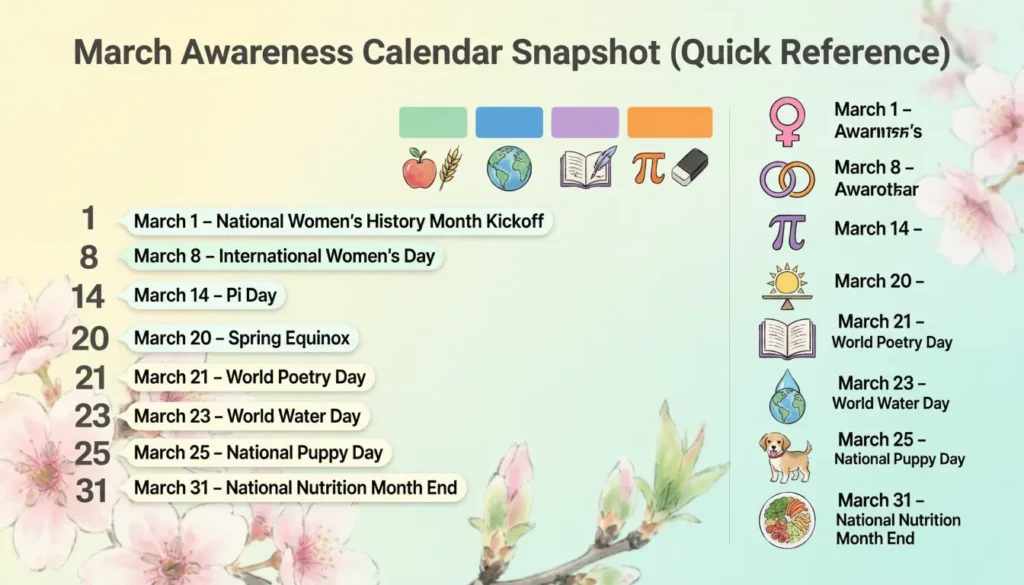
For those looking for a clear overview, a March awareness calendar provides a concise way to track key observances and their meanings.
Organizing these events by date or week allows individuals, educators, and organizations to plan participation, campaigns, or educational activities effectively.
Understanding the timing of each observance also adds context to the overall meaning of March awareness months.
- March 1–31: Women’s History Month – Celebrates women’s achievements and highlights ongoing gender equality efforts.
- March 1–31: Endometriosis Awareness Month – Raises awareness about the often-underdiagnosed condition affecting millions of women worldwide.
- March 1–31: National Kidney Month – Focuses on kidney health, prevention, and early detection.
- March 1–31: National Nutrition Month – Promotes healthy eating habits, nutrition education, and lifestyle improvement.
- March 1–31: Cerebral Palsy Awareness Month – Encourages inclusion, accessibility, and support for individuals with disabilities.
- March 3: World Wildlife Day – Celebrates biodiversity and promotes global conservation efforts.
- March 8: International Women’s Day – Highlights gender equality, women’s empowerment, and social progress.
- March 21: World Down Syndrome Day – Promotes inclusion and celebrates individuals with Down syndrome, often symbolized by colorful socks.
- March 21: International Day for the Elimination of Racial Discrimination – Advocates for civil rights, equality, and anti-discrimination awareness.
- Throughout March: Local environmental and health campaigns – Tree-planting drives, awareness walks, and community initiatives vary by region and organization.
By providing a snapshot, this calendar makes it easier to understand which campaigns overlap, which causes are emphasized, and how individuals can engage.
It serves as a practical reference while highlighting the diverse and meaningful ways March is dedicated to awareness, advocacy, and education worldwide.
FAQs – March Awareness Months Meaning
Understanding March awareness months can raise many questions, especially for those new to these campaigns. Answering common queries helps clarify their purpose, significance, and ways to participate.
These FAQs also provide quick, digestible information for readers seeking immediate insights.
What is the purpose of awareness months?
Awareness months are designed to educate the public, reduce stigma, and promote advocacy for specific causes. They provide a dedicated time to highlight health issues, social challenges, and environmental concerns, encouraging action and informed discussions.
Why is Women’s History Month in March?
Women’s History Month originated from “Women’s History Week” in 1980 and was later expanded to a full month in 1987.
March was chosen to coincide with International Women’s Day on March 8, linking national recognition with global celebrations of gender equality and women’s achievements.
How are awareness months officially recognized?
Many awareness months are established through government proclamations, nonprofit campaigns, or international resolutions.
Organizations like the United Nations coordinate global observances, while local nonprofits and government agencies manage national campaigns.
Are March awareness campaigns global?
Some observances, like International Women’s Day and World Wildlife Day, are recognized worldwide, while others, such as National Kidney Month or National Nutrition Month, are specific to certain countries. Both global and national campaigns complement each other to maximize impact.
How can schools and communities participate?
Schools can host educational events, reading programs, or health awareness activities. Communities can organize walks, tree-planting events, and local fundraisers. Social media campaigns and public advocacy also provide accessible ways for broader participation.
These FAQs provide concise answers to help readers quickly understand the meaning and relevance of March awareness months while encouraging them to engage actively in the campaigns.
Conclusion
March awareness months serve as a vital platform for education, advocacy, and community engagement across health, social, and environmental causes.
By dedicating this month to meaningful observances, society gains the opportunity to recognize important issues, celebrate achievements, and inspire positive action. Understanding the meaning behind March awareness months allows individuals to connect more deeply with these campaigns, appreciating their history, purpose, and global significance.
Throughout March, campaigns like Women’s History Month, Endometriosis Awareness Month, National Kidney Month,
and National Nutrition Month highlight pressing health concerns, while observances such as International Women’s Day, World Down Syndrome Day, and the International Day for the Elimination of Racial Discrimination promote social equality, inclusion, and human rights.
Environmental campaigns, including Earth Hour and World Wildlife Day, remind communities of the urgent need for sustainability and conservation.
Each of these observances uses colors, symbols, and ribbons to create visual recognition, engage supporters, and spark public dialogue.
Participation is not limited to organizations; individuals can contribute through social media awareness, volunteering, attending events, or simply sharing educational information.
Awareness months also influence public policy, drive fundraising, and foster empathy and understanding across diverse communities.
In essence, March is a month of action, reflection, and learning.
By embracing its awareness campaigns, society can address pressing issues, celebrate progress, and collectively work toward a healthier,
more inclusive, and environmentally conscious world.
Recognizing the meaning of March awareness months empowers individuals to move beyond awareness into tangible impact.

“ASF — Discipline, Duty & Determination. A mind trained for focus, a heart built on courage, and a spirit that never backs down. Living by principles, acting with purpose, and leading with strength. Silence in action, power in presence, and pride in every step. Always ready, always alert. Explore more at thepunside.com.”