So, you’ve noticed a bump on your skin or somewhere else on your body and started wondering: what does a cyst look like? You’re not alone.
Many people discover lumps and aren’t sure whether it’s harmless or something that needs medical attention. A cyst is a small, sac-like growth that can be filled with fluid, semi-solid material, or air.
While most cysts are benign, their appearance can vary depending on the type and location on your body.
Some are soft and movable under the skin, while others feel firm or slightly tender. Understanding the visual signs of different cysts can help you identify them accurately and know when to seek professional advice.
In this article, we’ll explore the types of cysts, their appearance, common symptoms, and how to tell them apart from other lumps so you can feel more confident about what you’re seeing.
What is a Cyst?
A cyst is essentially a closed sac or pocket in the body that can be filled with fluid, pus, air, or other material. These small growths can appear anywhere, from just under the skin to deeper within organs. While many people immediately worry when they notice a lump, most cysts are benign and not harmful. They are different from tumors because cysts typically contain material rather than abnormal cell growth.
Cysts can develop for several reasons. Sometimes they form due to blocked glands, such as sebaceous glands that produce oil for your skin. Other times, cysts appear because of infections, genetic conditions, or chronic inflammation. For example, epidermoid cysts are common on the face, neck, and back, while ganglion cysts often appear on the wrist or hand. Even internal organs, like the ovaries or kidneys, can develop cysts, which may go unnoticed until discovered during routine medical scans.
It’s also important to know how cysts differ from other lumps. Unlike abscesses, which are painful and filled with infection, cysts are usually painless and slow-growing. Unlike lipomas, which are fatty lumps, cysts have a more defined sac-like structure. Recognizing these differences is key to understanding what you’re seeing and deciding whether medical evaluation is necessary.
By knowing what a cyst is and how it forms, you can better identify them visually and take steps to monitor or treat them safely.
Common Types of Cysts
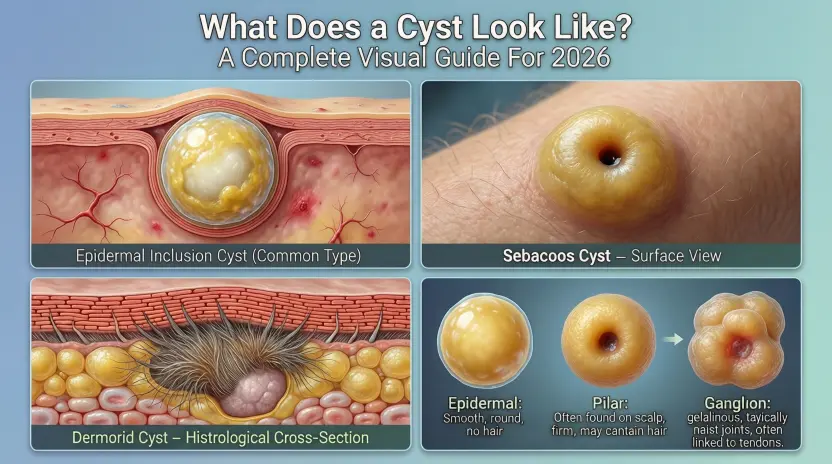
Cysts come in many forms, and knowing the different types can help you identify what you’re dealing with. One of the most common is the sebaceous cyst, which often appears on the face, neck, or torso. These cysts develop when sebaceous glands, responsible for producing skin oil, become blocked. They usually feel soft or slightly firm, are slow-growing, and may have a small, visible opening on the skin.
Another frequent type is the epidermoid cyst, sometimes called an epidermal inclusion cyst. These are filled with keratin, a protein found in skin cells, and typically appear on the face, back, or scalp. They are usually painless unless infected and can be mistaken for other lumps because they are small, round, and movable under the skin.
Ganglion cysts are different; they are fluid-filled lumps commonly found on the wrists or hands. They can vary in size and may feel firm or squishy. Ganglion cysts often appear suddenly and may become more noticeable when using the affected joint.
There are also internal cysts, such as ovarian cysts, which form within the ovaries and can sometimes cause bloating or abdominal discomfort. Rare types include dermoid cysts, which may contain hair, skin, or teeth, and Baker’s cysts, found behind the knee.
Understanding these types helps you recognize a cyst’s likely appearance and behavior, making it easier to decide whether monitoring at home is sufficient or a doctor’s evaluation is necessary.
What Does a Cyst Look Like?
Visually identifying a cyst can help you determine whether it is harmless or requires medical attention. Most cysts appear as small, rounded lumps under the skin, ranging from the size of a pea to a golf ball, depending on the type and how long it has been developing. They are usually skin-colored, white, or slightly yellow, and the surface may be smooth or slightly raised. Some cysts, like sebaceous cysts, may even have a tiny visible opening at the center, which can release a thick, oily substance if pressed by a doctor.
The texture and firmness of a cyst can vary. Epidermoid cysts often feel firm but can move slightly under the skin when touched, while ganglion cysts are more fluid-filled and may feel squishy or springy. Most cysts are painless, though some may cause tenderness if they press against nerves or become inflamed.
Location also plays a role in appearance. Skin cysts commonly show up on the face, neck, or back, whereas ganglion cysts are usually seen on wrists or fingers. Internal cysts, such as ovarian cysts, may not be visible at all but could cause a subtle bulge or swelling in the abdomen.
It’s important to remember that not every bump is a cyst. Redness, rapid growth, severe pain, or unusual color changes may indicate an infection or other medical issue. Understanding these visual cues and characteristics allows you to identify cysts more accurately and seek professional evaluation when needed.
How to Differentiate a Cyst from Other Lumps
Not every lump or bump on your body is a cyst, so it’s important to know how to tell them apart. Cysts are usually slow-growing, round or oval, and contained in a sac. They often feel smooth or slightly firm and are generally painless unless infected. However, other types of lumps may have different characteristics that signal a different condition.
Lipomas, for example, are soft, fatty lumps that move easily under the skin. Unlike cysts, they are rarely associated with a central opening or fluid-filled sac. Abscesses are another type of lump but are caused by infections. They are usually red, warm, swollen, and painful. Unlike a cyst, an abscess may grow quickly and sometimes release pus spontaneously.
Tumors or other abnormal growths can also resemble cysts but tend to be firmer, irregular in shape, and may grow more aggressively. Pain is not always present, which is why it’s essential to monitor any lump carefully.
Red flags to watch for include sudden growth, color changes, persistent pain, or discharge that looks unusual. If a lump shows any of these signs, it’s important to seek medical attention promptly.
By paying attention to texture, mobility, color, and growth rate, you can get a better idea of whether a lump is likely a harmless cyst or something that needs further evaluation. Proper differentiation ensures that you monitor safely and avoid unnecessary worry.
Causes and Risk Factors
Cysts can develop for a variety of reasons, and understanding these causes can help you prevent them or recognize when one is forming. One of the most common causes is a blocked gland or duct. For example, sebaceous cysts form when the oil-producing glands in the skin become clogged, trapping oil and skin cells inside. Similarly, epidermoid cysts arise from skin cells that get trapped beneath the surface.
Infections are another common trigger. When bacteria enter a hair follicle or gland, it can lead to fluid accumulation and cyst formation. Certain cysts, such as abscesses, are directly caused by infection, but even some benign cysts can become inflamed if bacteria enter.
Genetic and developmental factors also play a role. Some people are more prone to cysts due to inherited conditions or abnormalities in skin or organ development. For example, dermoid cysts, which may contain hair or other tissues, often develop due to congenital issues.
Other risk factors include chronic inflammation, trauma, or irritation in a particular area. Repeated friction, pressure, or minor injuries can increase the likelihood of cyst formation. Certain medical conditions, such as polycystic ovary syndrome (PCOS), also predispose individuals to developing cysts internally.
While cysts are generally harmless, understanding these causes and risk factors helps you stay aware of potential triggers. Paying attention to skin changes, maintaining hygiene, and monitoring recurring lumps are all important steps in managing and preventing cyst formation.
Symptoms Associated with Cysts
Cysts can present a variety of symptoms, depending on their type, size, and location. Many cysts are asymptomatic, meaning you might not notice any pain or discomfort. Often, people only discover them during routine self-examination or a medical check-up. These painless cysts are usually slow-growing and soft or slightly firm under the skin.
However, some cysts can cause visible swelling or lumps, making them easier to identify. For example, sebaceous and epidermoid cysts often appear as small, round bumps that may be skin-colored, yellowish, or slightly red if irritated. Ganglion cysts can appear on the wrists or hands as firm, fluid-filled lumps, sometimes changing in size depending on joint movement.
Other cysts, especially those forming internally like ovarian or kidney cysts, may not be visible but can produce subtle symptoms such as abdominal bloating, discomfort, or pressure. In some cases, cysts can cause pain or tenderness, particularly if they press against nearby nerves, become inflamed, or become infected.
Additional signs to watch for include redness, warmth, discharge, or rapid growth. While most cysts are harmless, these symptoms can indicate infection or complications and require medical attention.
Recognizing these symptoms helps you differentiate cysts from other lumps and decide whether to monitor them or seek professional evaluation. Paying attention to both visible and internal signs ensures early detection and proper management.
Diagnosis
Diagnosing a cyst typically begins with a clinical examination by a healthcare professional. During the exam, a doctor will look at the lump’s size, shape, color, and texture, and may gently press it to assess mobility and firmness. They will also ask about any symptoms, such as pain, tenderness, or rapid growth, and about the duration of the lump.
In many cases, a physical exam is enough to identify a common cyst like a sebaceous or epidermoid cyst. However, if the cyst is large, deep, or unusual in appearance, further testing may be necessary to rule out other conditions, such as tumors or abscesses.
Imaging tests are often used for deeper or internal cysts. An ultrasound can help determine whether a lump is fluid-filled or solid, while MRI or CT scans provide more detailed views of cysts located inside organs, such as the kidneys or ovaries. These imaging techniques help doctors plan appropriate treatment if necessary.
In rare cases, a biopsy may be performed. This involves removing a small sample of tissue or fluid from the cyst to analyze it under a microscope. Biopsies are typically reserved for cysts that are suspicious, unusually large, or not responding to treatment.
Proper diagnosis ensures that a cyst is accurately identified and distinguishes it from other potentially serious conditions. It also helps guide decisions about treatment, monitoring, or surgical removal, keeping patients safe and informed about their health.
Treatment Options
Most cysts are harmless and do not require treatment, especially if they are small, painless, and not causing any discomfort. In such cases, doctors may recommend observation, meaning you simply monitor the cyst for changes in size, color, or symptoms. Regular self-checks can help you notice any developments early.
Home care can also help manage minor cysts. Applying a warm compress several times a day may reduce swelling and promote drainage, particularly for sebaceous cysts. Maintaining good hygiene and avoiding squeezing or popping the cyst is essential, as doing so can cause infection or scarring.
For cysts that are painful, inflamed, or cosmetically concerning, medical intervention may be necessary. A healthcare professional may perform drainage, removing the cyst’s contents with a sterile needle, or surgical excision, which removes the entire cyst sac to prevent recurrence. Procedures are usually quick and done under local anesthesia.
When urgent care is needed: Seek medical attention if the cyst becomes rapidly swollen, red, warm, or extremely painful, or if there is discharge that looks infected. These signs can indicate a bacterial infection that may require antibiotics or more intensive treatment.
Understanding treatment options allows you to manage cysts safely while avoiding complications. Most cysts can be monitored or treated effectively, ensuring minimal discomfort and reducing the risk of recurrence or infection.
Prevention and Self-Care
While not all cysts can be completely prevented, practicing good self-care and hygiene can reduce the risk of developing some types. Keeping your skin clean and dry, especially in areas prone to friction or sweat, helps prevent blocked glands and bacterial buildup that can lead to cyst formation. Avoid squeezing or picking at bumps, as this can trigger infection or inflammation.
For cysts that develop due to repeated irritation or friction, wearing comfortable clothing and protective gear can minimize trauma to the skin. For example, ganglion cysts on the wrist may be less likely to form if you avoid constant pressure or repetitive strain.
Monitoring your skin regularly is also a key part of self-care. Early detection allows you to address small cysts before they grow larger or become painful. Note changes in size, color, texture, or tenderness, and seek medical advice if anything seems unusual.
For internal cysts, like ovarian cysts, maintaining regular check-ups with your doctor can help detect them early, even before symptoms appear. Certain lifestyle factors, such as a balanced diet, staying hydrated, and managing conditions like hormonal imbalances, can also reduce the risk of cyst formation.
By combining awareness, hygiene, and healthy habits, you can manage your risk and keep your skin and body healthier. While some cysts are unavoidable, these steps empower you to catch them early and reduce the chances of complications.
FAQs About Cysts
1. Can a cyst go away on its own?
Yes, some cysts may shrink or disappear without treatment, especially small, harmless ones. However, others may persist or grow over time, requiring monitoring or medical intervention.
2. Are cysts contagious?
No, cysts are not contagious. They develop due to blocked glands, infections, or genetic factors, and cannot be transmitted from one person to another.
3. When should I worry about a cyst?
Seek medical attention if a cyst grows rapidly, becomes painful, turns red or warm, or starts leaking pus. These signs may indicate infection or complications.
4. Can I remove a cyst at home?
It’s strongly advised not to try removing a cyst yourself. Squeezing or cutting it at home can lead to infection, scarring, or recurrence. Professional removal ensures safety and prevents complications.
5. Are cysts cancerous?
Most cysts are benign and harmless. However, in rare cases, a lump may appear similar to a cyst but could be cancerous. Any suspicious or rapidly growing lump should be evaluated by a doctor.
6. How can I prevent cysts?
Good hygiene, avoiding skin trauma, and regular check-ups can reduce the risk of some cysts. Monitoring your skin for new lumps helps detect cysts early.
7. Do cysts hurt?
Many cysts are painless, but pain can occur if they become inflamed, infected, or press on nerves. Location and size affect discomfort levels.
These FAQs address common concerns, helping readers understand cysts, manage them safely, and know when professional care is necessary.
Conclusion
Cysts are a common occurrence, and most are harmless and manageable.
Understanding what a cyst looks like, how it forms, and the types that exist can help you identify them accurately and respond appropriately.
If it’s a small sebaceous cyst on the skin, a fluid-filled ganglion cyst on the wrist, or an internal ovarian cyst, knowing the visual and physical characteristics is the first step in proper monitoring.
While many cysts do not require treatment, paying attention to symptoms and changes is essential.
Redness, pain, rapid growth, or discharge may indicate infection or complications and should prompt professional evaluation.
Proper diagnosis by a doctor, often through physical examination or imaging, ensures that a cyst is correctly identified and distinguished from other conditions.
Treatment options range from simple observation and home care, like warm compresses, to medical procedures such as drainage or surgical removal.
Preventive measures, including good hygiene, avoiding trauma, and regular self-checks, can help reduce the risk of cyst formation or recurrence.
Ultimately, awareness is key.
By learning how cysts look, understanding their causes and symptoms, and knowing when to seek medical attention, you can manage cysts safely and effectively.
Regular monitoring, combined with professional guidance when necessary, empowers you to maintain both your skin health and overall well-being.

“Hi, I’m Gigi Giggles! Spreading laughter and good vibes wherever .I go Lover of silly jokes, random adventures, and all things fun. Life’s too short to be serious, so let’s giggle, smile, and make every day a little brighter .Check out more puns and laughs at thepunside.com!