Have you ever stumbled upon a phrase like “Sally sells seashells by the seashore” and noticed how catchy it sounds? That’s alliteration at work! But what does alliteration mean exactly, and why does it make words so memorable?
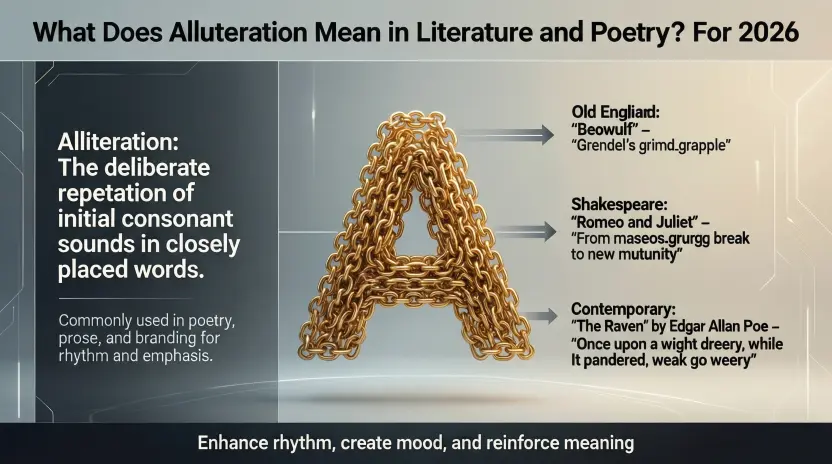
In simple terms, alliteration is a literary device where the same consonant sound is repeated at the beginning of closely connected words.
Writers, poets, marketers, and speakers have used it for centuries to create rhythm, emphasize ideas, and make phrases stick in our minds.
From Shakespeare’s classic plays to modern advertising slogans like Coca-Cola or Dunkin’ Donuts, alliteration adds musicality and charm to language.
In this article, we’ll dive deep into the meaning of alliteration, explore its history, show you plenty of fun examples, and even provide practical tips so you can use it effectively in your own writing, poetry, or everyday communication.
Definition of Alliteration
Alliteration is one of the most well-known literary devices in the world of writing. Simply put, it refers to the repetition of the same consonant sound at the beginning of words that are close to each other in a sentence or phrase. This repetition isn’t just for fun; it serves to create rhythm, emphasis, and a sense of musicality in language. For example, the classic tongue twister “Peter Piper picked a peck of pickled peppers” relies entirely on the repetition of the “p” sound to make it catchy and memorable.
It’s important to note that alliteration focuses on sounds rather than letters. This means that words starting with different letters can still form alliteration if they share the same starting sound. For instance, “city” and “sugar” could be considered alliterative because both start with the soft “s” sound.
Alliteration is widely used across different forms of writing, from poetry and fiction to marketing and speechwriting. In poetry, it can enhance mood and flow, while in advertising, it makes brand names more memorable. Overall, understanding the definition of alliteration is the first step toward using it effectively in your writing, If you’re crafting a catchy slogan, a rhythmic poem, or a playful story.
History and Origin of Alliteration
Alliteration has a long and fascinating history that dates back over a thousand years. Its roots can be traced to Old English and Norse poetry, where poets used alliteration as a key structural element in their verses. For example, the epic poem Beowulf, written around the 8th–11th century, relies heavily on alliteration to create rhythm and emphasize important ideas, long before rhyme became a common tool in poetry.
During the Middle Ages, alliteration remained a popular device in both poetry and oral storytelling. It helped storytellers make lines more memorable, especially in cultures where oral transmission of stories was common. By repeating sounds, poets and bards could make their tales easier to recall and recite.
In modern English literature, alliteration continued to flourish. Famous writers such as William Shakespeare and Edgar Allan Poe used it to enhance the musical quality of their writing, drawing attention to key words and creating a sense of rhythm and mood. Beyond literature, alliteration has also been embraced in advertising, branding, and speechwriting, where its memorability and musicality make it a powerful tool.
Understanding the history of alliteration not only shows how deeply embedded it is in our literary tradition but also highlights its timeless appeal. From ancient epics to today’s marketing campaigns, alliteration proves that repeating sounds can capture attention, engage audiences, and make language unforgettable.
How Alliteration Works
Alliteration works by repeating the same consonant sound at the beginning of nearby words, creating a sense of rhythm and musicality in language. This repetition makes phrases more catchy, memorable, and engaging for readers and listeners alike. For example, in the phrase “Whispering winds wound through the willows,” the repeated “w” sound gives the sentence a flowing, lyrical quality that draws attention.
One key point to remember is that alliteration is based on sounds, not letters. Words that begin with different letters can still alliterate if they share the same starting sound. For instance, “physics” and “fancy” both start with the “f” sound, making them alliterative. Conversely, words with the same letter but different sounds, like “chef” and “church” (both starting with “ch”), may not count as alliteration depending on pronunciation.
Alliteration is also flexible in its placement. While it typically appears at the beginning of words, it can occur within phrases or even across multiple lines in poetry and prose. Writers often use it to highlight key ideas, set a mood, or add emphasis to important words.
In advertising, branding, and speechwriting, alliteration makes slogans and phrases easier to remember. Think of “Best Buy” or “PayPal” . The repeated consonant sounds make these names stick in your mind. Understanding how alliteration works is essential for using it effectively, If in poetry, creative writing, or marketing content.
Types of Alliteration
Alliteration comes in different types and styles, each serving a unique purpose in writing. Understanding these types can help you use alliteration more effectively and creatively in your work.
1. Single-Consonant Alliteration:
This is the most common form, where the same consonant sound is repeated at the beginning of several words. A classic example is the tongue twister: “Peter Piper picked a peck of pickled peppers.” Single-consonant alliteration is easy to recognize and works well in poetry, children’s stories, and catchy phrases.
2. Multi-Consonant or Complex Alliteration:
In this type, more than one consonant sound is repeated, often in close succession. For example, “Slick, slippery snakes slither silently” repeats both “s” and “sl” sounds. Complex alliteration creates a richer, more textured rhythm in writing, making it engaging and playful.
3. Assonance vs. Consonance vs. Alliteration:
It’s important to distinguish alliteration from similar literary devices. Assonance repeats vowel sounds, consonance repeats consonant sounds anywhere in words (not just the start), while alliteration focuses specifically on initial consonant sounds. For example, “Fleet feet sweep by sleeping geese” combines both alliteration (“f” in fleet feet) and consonance (“ee” sounds).
By recognizing these types, writers can experiment with rhythm, tone, and emphasis, creating sentences that are both memorable and expressive. If for poetry, fiction, or marketing slogans, choosing the right type of alliteration can enhance the musicality and impact of your words.
Alliteration in Literature
Alliteration has been a favorite tool of writers for centuries, used to create rhythm, emphasize key ideas, and make language more memorable. In literature, it is often employed in poetry, prose, and even plays to enhance the musical quality of words.
For example, in Shakespeare’s works, alliteration frequently appears to highlight emotion or action. In Macbeth, phrases like “Fair is foul, and foul is fair” use repeated consonant sounds to create a sense of foreboding and rhythm. Similarly, Edgar Allan Poe utilized alliteration extensively in poems such as “The Raven”, where repeated sounds add to the eerie, haunting atmosphere.
Alliteration is also prominent in classic epics like Beowulf and other Anglo-Saxon poetry. These works relied on alliteration as a structural element, often replacing rhyme to help oral storytellers remember long passages. Each line carefully balances repeated sounds, creating a melodic cadence that guided both the speaker and the listener.
Modern literature continues to embrace alliteration, especially in children’s books and young adult fiction, where it adds playfulness and makes text easier to read aloud. Authors like Dr. Seuss famously used alliteration to create fun, engaging stories that stick in readers’ minds.
Overall, alliteration in literature enhances mood, emphasizes ideas, and captivates readers. Understanding how authors use it can inspire your own writing, If you’re crafting poetry, short stories, or engaging narrative prose.
Alliteration in Everyday Life
Alliteration isn’t just for poets or writers it’s everywhere in everyday life, from advertising and branding to speeches and social media. Its power lies in making phrases catchy, memorable, and fun to say, which is why marketers, public speakers, and content creators use it so often.
One of the most obvious places alliteration appears is in brand names and slogans. Think of Coca-Cola, PayPal, or Dunkin’ Donuts. The repetition of initial consonant sounds makes these names easier to remember and more appealing to consumers. Similarly, advertising slogans often rely on alliteration to stick in your mind, such as “Reduce, Reuse, Recycle” or “Finger-Lickin’ Good”.
Alliteration is also common in speeches and public speaking. Politicians, motivational speakers, and storytellers use it to emphasize key points and create rhythm. For instance, phrases like “Freedom, fairness, and future” are easier for audiences to remember and feel more impactful.
In the age of social media, alliteration shines in captions, hashtags, and memes. Short, snappy, and playful phrases like “Monday Motivation” or “Foodie Friday” grab attention quickly, encourage sharing, and improve engagement.
Even in everyday conversation, people unconsciously use alliteration to make language sound more playful or persuasive. If you’re writing a poem, crafting a marketing slogan, or posting a social media caption, alliteration adds rhythm, charm, and memorability, proving that this centuries-old literary device is just as useful today as it was in ancient epics.
Benefits of Using Alliteration
Alliteration is more than just a fun literary trick; it offers several practical benefits for writers, speakers, and marketers. One of the primary advantages is that it makes language more memorable. By repeating the same consonant sound, alliteration creates a rhythmic pattern that sticks in the mind, making phrases, slogans, and sentences easier to recall. This is why advertisers often use it in brand names like “PayPal” or “Best Buy”.
Another benefit is that alliteration adds musicality and flow to writing. In poetry and prose, repeating sounds can create a pleasant rhythm that engages readers and enhances the reading experience. For example, “Whispering winds wound through the willows” uses the repeated “w” sound to create a smooth, flowing effect.
Alliteration also emphasizes important words or ideas, helping the writer draw attention to key concepts. This is especially useful in speeches, storytelling, and persuasive writing, where repetition reinforces meaning.
Additionally, alliteration can make language playful and engaging, which is valuable for children’s literature, social media content, and creative writing. It encourages experimentation with sounds and words, stimulating both the writer’s and reader’s imagination.
Finally, using alliteration strategically can enhance branding and marketing efforts, improve memorability in educational materials, and make your writing stand out in a crowded space. Overall, alliteration is a versatile tool that combines creativity, impact, and memorability in every form of communication.
How to Use Alliteration Effectively
Using alliteration effectively requires a balance of creativity, subtlety, and purpose. While it can make your writing memorable and engaging, overusing it or forcing it into awkward sentences can make your text feel unnatural. Here are some key strategies to use alliteration successfully.
1. Focus on Key Words: Choose the most important words in your sentence, phrase, or title and consider which consonant sounds can be repeated. For example, in a marketing slogan like “Fresh, Fun, and Fabulous”, the repeated “f” sound emphasizes excitement and positivity.
2. Keep It Natural: Alliteration should enhance readability, not hinder it. Avoid forcing words just to repeat a sound. The best examples flow smoothly, like “whispering winds wound through the willows”, where the repeated “w” sound feels organic and pleasant.
3. Match Tone and Purpose: Select consonant sounds that reflect the mood of your writing. Hard sounds like “k” or “t” can convey action or urgency, while soft sounds like “s” or “m” create a gentle, calming effect.
4. Experiment Across Formats: Use alliteration in poetry, short stories, captions, speeches, and advertising. Even in professional writing, subtle alliteration can make phrases more persuasive and memorable.
5. Practice and Revise: Don’t worry if your first attempt feels awkward. Experiment with different sounds, read aloud, and revise until the repetition feels natural and effective.
By following these strategies, you can use alliteration to capture attention, emphasize ideas, and make your writing more engaging without overdoing it.
Fun Exercises to Practice Alliteration
Practicing alliteration can be both fun and educational, helping you improve your writing, poetry, and even public speaking. Here are some effective exercises to get started:
1. Tongue Twisters: Tongue twisters are classic alliteration exercises. Try phrases like “She sells seashells by the seashore” or create your own using different consonant sounds. Repeating these phrases aloud helps you become comfortable with sound patterns and improves pronunciation.
2. Write Short Poems or Sentences: Choose a consonant sound and write a short sentence or two using as many words as possible that begin with that sound. For example, using “b”: “Brave bears bravely balanced behind big bushes.” This develops your creativity while reinforcing the concept of initial consonant repetition.
3. Rewrite Existing Sentences: Take a simple sentence from a book, news article, or story, and rewrite it using alliteration. For instance, “The cat ran across the yard” could become “Clever cats carefully crept across the courtyard.”
4. Alliterative Storytelling: Challenge yourself to tell a short story where every sentence uses at least one alliterative phrase. This can be a fun exercise for children and adults alike, encouraging imaginative use of language.
5. Social Media Practice: Try creating captions, hashtags, or slogans using alliteration. For example, “Fitness Friday Fun” or “Mindful Monday Motivation.” This is practical practice for everyday content creation.
These exercises strengthen your understanding of alliteration, improve your writing skills, and make your sentences more memorable. With regular practice, using alliteration will become a natural and enjoyable part of your writing toolkit.
Common Mistakes to Avoid
While alliteration is a powerful literary tool, it can easily backfire if misused. Understanding the common mistakes will help you use it effectively without making your writing awkward or forced.
1. Overusing Alliteration: One of the biggest mistakes is overloading your sentences with repeated sounds. For example, “Peter’s playful puppy pranced past people perfectly” may sound excessive and distract the reader. Use alliteration sparingly to emphasize important points rather than in every sentence.
2. Forcing Words: Avoid choosing words just to fit a particular sound. Forced alliteration can make sentences feel unnatural. For instance, writing “Fantastic frogs flopped furiously” when it doesn’t match your tone or context can confuse readers. Always prioritize clarity over repetition.
3. Confusing Sounds with Letters: Alliteration is about sounds, not letters. Words that start with the same letter but sound different, like “chef” and “church”, do not create true alliteration. Similarly, words that start with different letters but share a consonant sound, like “city” and “sugar”, do count.
4. Ignoring Context and Tone: The sound you choose should match the mood and purpose of your writing. Hard consonants convey action or tension, while soft consonants create calm or whimsy. Misaligned sounds can clash with your message.
5. Neglecting Readability: Alliteration should enhance your writing, not make it harder to read. Read your sentences aloud to ensure they flow naturally and don’t sound forced or awkward.
By avoiding these mistakes, you can leverage alliteration effectively, making your writing rhythmic, memorable, and enjoyable without overwhelming your audience.
FAQs
Alliteration is a common literary device, but many readers have questions about how it works and when to use it. Here are some frequently asked questions:
Q1: What is an example of alliteration in a sentence?
A simple example is: “Sally sells seashells by the seashore.” The repeated “s” sound at the beginning of several words creates rhythm and makes the sentence memorable.
Q2: Is alliteration only for poetry?
No! While alliteration is often used in poetry, it appears in prose, marketing, speechwriting, and even everyday conversation. It is versatile and can enhance any type of writing.
Q3: Can alliteration be used in professional writing?
Yes. Subtle alliteration can make headlines, slogans, or presentations more engaging and easier to remember. For instance, a business tagline like “Fresh, Fast, Friendly” uses alliteration effectively.
Q4: How is alliteration different from assonance or consonance?
Alliteration focuses on repeating initial consonant sounds. Assonance repeats vowel sounds within words, and consonance repeats consonant sounds anywhere in words, not necessarily at the start.
Q5: Why is alliteration important?
Alliteration adds musicality, rhythm, and memorability to language. It helps emphasize key ideas, makes content more engaging, and can even make reading or listening more enjoyable.
By answering these FAQs, readers gain a clearer understanding of how alliteration works and why it matters. If you’re a student, writer, or content creator, knowing these basics will help you use alliteration confidently and creatively.
Conclusion
Alliteration is a timeless and versatile literary device that adds rhythm, emphasis, and memorability to writing.
By repeating initial consonant sounds in words that are close together, writers, poets, speakers, and marketers can create phrases that are both engaging and memorable.
From ancient epic poems like Beowulf to Shakespeare’s plays, children’s books by Dr. Seuss, and modern advertising slogans, alliteration has proven its ability to capture attention and enhance language.
Understanding how alliteration works, its definition, history, types, and practical uses allows you to incorporate it effectively into your own writing.
If you’re crafting a catchy headline, a persuasive speech, a social media caption, or a playful poem, alliteration can make your words stand out, flow smoothly, and resonate with your audience.
It’s equally important to practice alliteration through exercises, avoid common mistakes such as overuse or forced phrasing, and ensure that the repeated sounds match the tone and purpose of your writing.
By doing so, you’ll maximize its impact and maintain readability.
In short, alliteration is not just a poetic flourish, it’s a powerful tool for communication. Experiment with different sounds, have fun with tongue twisters, and challenge yourself to make your writing more rhythmic and memorable.
With a little creativity and practice, alliteration can transform ordinary words into captivating, unforgettable phrases.

“ASF — Discipline, Duty & Determination. A mind trained for focus, a heart built on courage, and a spirit that never backs down. Living by principles, acting with purpose, and leading with strength. Silence in action, power in presence, and pride in every step. Always ready, always alert. Explore more at thepunside.com.”