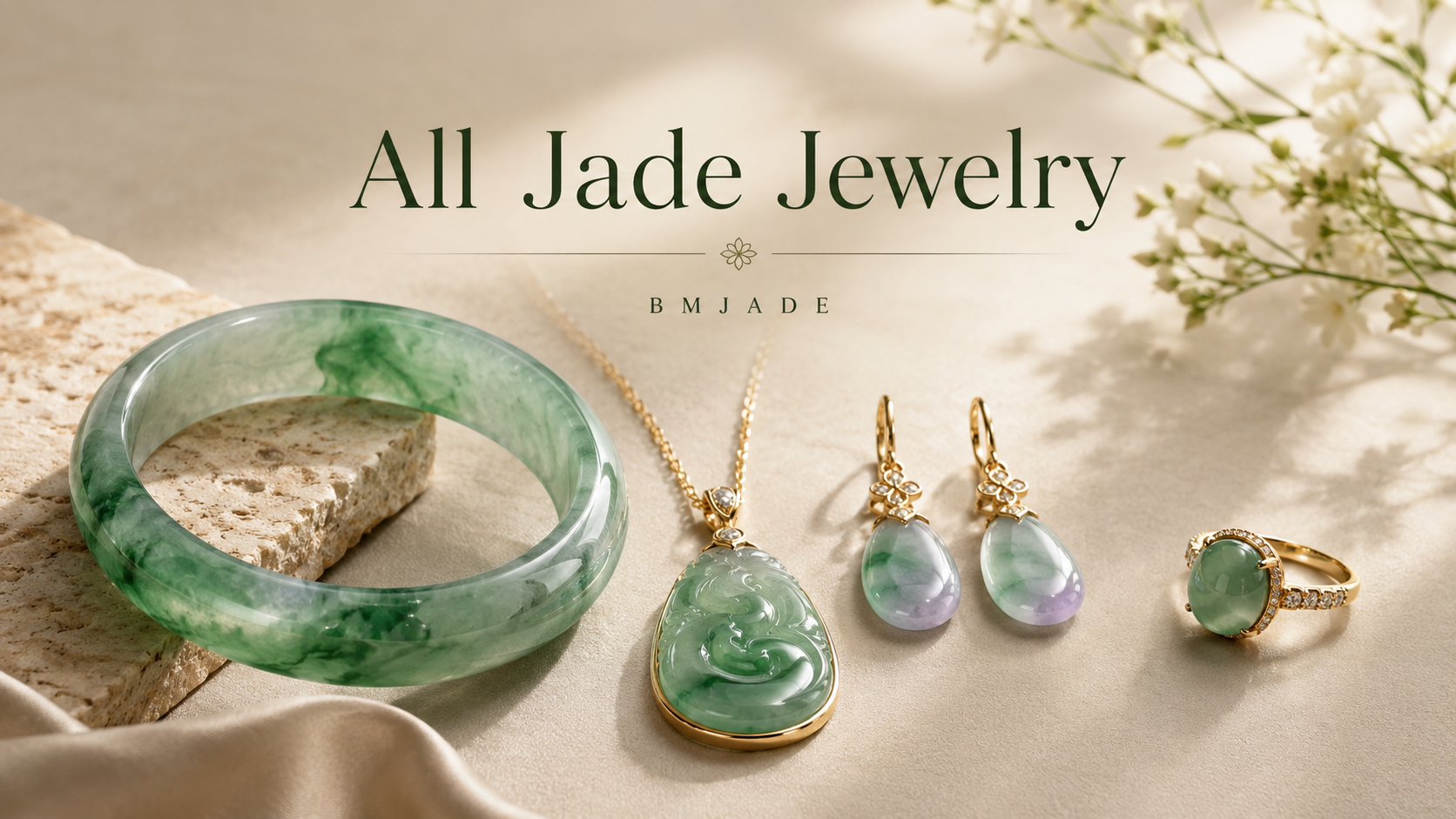
Buying jade jewelry online can be a rewarding experience, especially when you understand what makes one piece more trustworthy than another. Jade is not just a decorative gemstone; it carries cultural meaning, personal symbolism, and real material differences that affect value. For buyers interested in type A jadeite jewelry, it is important to know what to check before placing an order, from treatment status and certification to size, color, craftsmanship, and after-sale support.
Unlike ordinary fashion jewelry, jade cannot be judged only by how beautiful it looks in a photo. A bright green stone is not automatically high value, and a pale or icy piece is not automatically low value. Jade quality depends on multiple factors, including material type, natural texture, translucency, color distribution, carving work, polish, and whether the stone has been treated.
That is why buyers should approach jade shopping with both appreciation and practical judgment. A good purchase is not only about choosing the prettiest design. It is about understanding what the seller provides, what the certificate verifies, and whether the product details match your expectations.
Before buying jade jewelry from a specialized jade brand, here are the most important things to know.
1. Understand What Type A Jadeite Means
One of the first things to understand is the meaning of Type A jadeite. In the jadeite market, Type A refers to natural jadeite that has not been chemically bleached, polymer-filled, or dyed. It may be traditionally polished or waxed as part of the finishing process, but the stone itself has not been artificially altered in a way that changes its internal structure or natural color.
This is different from treated jadeite. Type B jadeite is chemically treated and filled with resin or polymer to improve appearance. Type C jadeite is dyed to enhance color. Type B+C jadeite has both filling and dyeing. These treated materials can look attractive, especially in online photos, but they do not carry the same buyer confidence or long-term value as untreated jadeite.
For this reason, buyers should always check whether the product description explains treatment status. If a listing only uses words like “premium jade,” “green jade,” or “natural-looking jade” without clearly explaining the material, that is not enough.
When buying jade jewelry, treatment status matters because it affects authenticity, value, durability expectations, and emotional trust. Many buyers choose jade for personal meaning or gifting, so knowing that the piece is natural and untreated can make the purchase feel more secure.
2. Check the Certificate Information Carefully
Certificates are one of the most important details in online jade shopping. Jade treatments and imitations can be difficult to identify by eye, especially through product photos. Some stones can look convincing even when they are treated, dyed, or not jadeite at all. This is why independent testing matters.
A certificate can help confirm what the material is and whether the jadeite is natural or treated, depending on the testing result. For serious jade buyers, this is much more reliable than home tests such as touching the stone, listening to sound, checking weight, or using a flashlight.
Before purchasing, look for certificate details such as:
- The testing institution
- The certificate number
- The tested material
- The identification result
- The treatment conclusion
- The product or sample information
- Any verification method available
A certificate is especially important for jadeite because treatment can strongly affect price. A seller’s own authenticity card may be useful as a service promise, but it is not the same as an independent gemological certificate.
When reviewing a product page, do not only look for the word “certified.” Check whether the seller explains what the certificate actually verifies. A trustworthy jade store should make this easy for buyers to understand.
3. Know That Natural Jade Has Variations
One of the most common misunderstandings about jade is expecting every piece to look perfectly even. Natural jade often has variations in color, texture, translucency, and internal structure. These variations are not always flaws. In many cases, they are part of what makes each piece unique.
A bracelet may have lighter and darker color zones. A pendant may show cloudy areas or subtle fiber-like textures. An icy jade piece may appear more translucent in some lighting and softer in others. A lavender or green jade piece may look slightly different under daylight, indoor lighting, or camera lighting.
This is why buyers should read the product description carefully and review multiple photos. If a piece is natural, small differences in tone and texture should be expected. No two natural jade pieces are exactly the same.
When buying online, remember that screen settings can also affect how jade appears. A phone, laptop, or tablet may display green, lavender, or icy tones differently. A responsible product page should help buyers understand the actual appearance as much as possible, but small visual differences are normal in gemstone jewelry.
4. Compare Color, Texture, and Translucency Together
Many beginners focus only on color when buying jade. Color is important, but it is not the only factor. Jade value and beauty also depend on texture and translucency.
A strong green color may be desirable, but if the texture is coarse or the material is treated, the piece may not have the value buyers expect. A lighter icy jade piece may be elegant because of its fine texture and translucency. A lavender jade piece may be chosen for softness and symbolic meaning rather than intense color.
When looking at jade jewelry, consider these factors together:
- Color tone
- Color distribution
- Texture fineness
- Transparency or translucency
- Surface polish
- Carving quality
- Natural inclusions
- Overall balance
The best choice depends on your style and purpose. Some buyers prefer vivid green jade for a classic and luxurious look. Others prefer icy, white, yellow, black, or lavender jade for a softer or more modern appearance. There is no single “best” jade for every buyer.
Instead of only asking which color is most expensive, ask which piece has the right balance of beauty, authenticity, wearability, and meaning for you.
5. Choose the Right Jewelry Type for Your Needs
Before buying, think about how the piece will be worn. Jade jewelry comes in many forms, including bracelets, bangles, pendants, necklaces, rings, and earrings. Each type has different practical considerations.
A jade bracelet or bangle is often worn daily and may carry strong personal meaning. Size is very important because a bangle that is too small may be difficult to wear, while one that is too large may feel loose. A pendant or necklace is easier to gift because sizing is more flexible. Earrings should be considered based on weight, shape, and comfort. Rings require attention to size, adjustability, setting strength, and daily wear habits.
For gifts, pendants and adjustable designs are often easier choices because they do not require exact wrist or finger measurements. For personal purchases, bracelets and rings can feel more intimate because they become part of daily movement.
Before ordering, ask yourself:
- Is this for daily wear or special occasions?
- Is it for yourself or a gift?
- Does the recipient prefer subtle or statement jewelry?
- Is exact sizing required?
- Is the design meaningful or mainly decorative?
- Will the piece match the wearer’s lifestyle?
A beautiful jade piece should not only look good in photos. It should also fit the buyer’s daily life.
6. Pay Attention to Size Details
Sizing is one of the most practical things to check before buying jade jewelry. This is especially important for bangles and rings.
For jade bangles, inner diameter matters most. The bangle must be large enough to pass over the hand but not so large that it slips around uncomfortably. Some buyers prefer a snug fit, while others prefer a looser style. The right size depends on hand shape, wrist size, and personal comfort.
For rings, check whether the design is fixed-size or adjustable. Adjustable jade rings can be easier to wear, but buyers should still consider whether the band style suits their finger. For necklaces, check chain or cord length. For earrings, check drop length and weight.
Do not assume sizing from photos. A close-up product image may make a piece look larger than it is. Always read measurements carefully.
Important size details may include:
- Bracelet inner diameter
- Bracelet width or thickness
- Pendant height and width
- Chain or cord length
- Ring size or adjustability
- Earring length and weight
- Stone dimensions
If you are buying a gift and do not know the exact size, choose a jewelry type with more flexibility, such as a pendant necklace, adjustable ring, or earrings.
7. Review the Craftsmanship and Setting
The jade itself is important, but craftsmanship also affects the final value and wearing experience. A well-polished piece feels smooth and comfortable. A well-carved pendant has balanced lines and clean details. A secure setting helps protect the stone during wear.
For jade jewelry with metal settings, check what material is used. Sterling silver, gold vermeil, gold-filled details, or solid gold settings may all create different price points and wearing experiences. For cord necklaces or bracelets, check whether the cord looks durable and adjustable.
Craftsmanship details to review include:
- Smooth polish
- Clean carving
- Balanced shape
- Secure setting
- Comfortable edges
- Good proportion
- Durable clasp or cord
- Metal quality
A trustworthy jade jewelry product page should not only describe the stone but also explain the wearable details. Buyers should understand how the piece is made, not just what it looks like.
8. Understand Pricing Before You Buy
Jade pricing can vary widely. This can be confusing for buyers who see one jade bracelet priced much higher than another, even when they appear similar in photos. The difference may come from jade quality, treatment status, certificate support, color, texture, translucency, size, carving work, or setting materials.
A lower price is not always bad, and a higher price is not always better. The key is whether the price makes sense based on the information provided.
For example, untreated jadeite with better translucency, finer texture, stronger color, and certificate support will usually cost more. A smaller or lighter-colored piece may be more affordable while still being natural and beautiful. A detailed hand-carved pendant may cost more than a simple polished design because craftsmanship adds value.
Before buying, compare the price with:
- Material type
- Treatment status
- Certificate support
- Color quality
- Texture and translucency
- Size
- Craftsmanship
- Metal or setting material
- Brand service and guarantee
Good jade buying is not about finding the cheapest listing. It is about finding a piece where price, quality, proof, and trust are aligned.
9. Check Return Policy and Buyer Protection
Even with clear photos and measurements, online jewelry shopping still requires confidence. A piece may look slightly different in person because of lighting or screen display. A bracelet may not fit as expected. A buyer may decide that another style would be better.
This is why return policy matters. Before purchasing, check the return window, item condition requirements, refund process, and whether original packaging and certificates must be returned with the item.
A clear return policy is a sign that the seller understands real buyer concerns. It also helps reduce hesitation, especially for first-time jade buyers.
Important return policy questions include:
- How many days do buyers have to request a return?
- Must the jewelry be unworn?
- Are certificates and packaging required for return?
- Who pays return shipping?
- How long does the refund take?
- Are custom or final-sale items excluded?
- What happens if the item arrives damaged?
A strong buying experience does not end at checkout. It includes customer support after delivery.
10. Look for Authenticity Guarantees
An authenticity guarantee is another important factor. A return policy covers general satisfaction, while an authenticity guarantee supports the seller’s claims about the material.
For jade, this matters because buyers want long-term confidence. They want to know that the piece is what the product page says it is. They also want to know that the seller will respond if they have questions about certification or authenticity.
A meaningful authenticity guarantee should be specific. It should be supported by product information, certificate details, and customer service. A vague statement like “high quality guaranteed” is not as strong as clear material disclosure and independent verification.
When a brand stands behind its jade pieces, buyers feel safer making a purchase, especially when buying meaningful jewelry for themselves or someone they love.
11. Consider the Meaning Behind the Piece
Jade jewelry is often purchased for more than appearance. Many people choose jade because it represents protection, harmony, wisdom, good fortune, longevity, elegance, or family connection. Certain designs, such as Buddha, Guan Yin, Pixiu, dragon, phoenix, safety buckle, or leaf carvings, may carry additional symbolism.
Before buying, consider whether you want the piece mainly for style, meaning, or both. A simple jade ring may feel modern and minimal. A carved pendant may carry traditional symbolism. A jade bracelet may feel more personal because it stays close to the body during daily wear.
For gifts, meaning can make the piece more special. Jade can be suitable for birthdays, anniversaries, Mother’s Day, weddings, Lunar New Year, graduation, or personal milestones. A certificate and elegant packaging can also make the gift feel more complete.
Choosing jade is not only a commercial decision. It can also be an emotional one.
12. Read Reviews and Educational Content
Before buying, take time to read customer reviews and educational content from the brand. Reviews can help you understand whether buyers feel the jewelry matched the photos, whether the packaging was good, whether certificates were included, and whether customer service was helpful.
Educational content is also a trust signal. A serious jade jewelry brand should help buyers understand topics such as jadeite vs nephrite, Type A jadeite, treatment status, certificate verification, jade care, color meanings, bracelet sizing, and gift selection.
A store that educates buyers is usually thinking long term. It is not only trying to sell a product quickly. It is helping customers understand what they are buying and why it matters.
This kind of guidance is especially useful for first-time jade buyers who may feel unsure about terminology, pricing, or authenticity.
Final Thoughts
Buying jade jewelry online becomes much easier when you know what to check. Treatment status, certificate details, natural variation, size, craftsmanship, pricing, return policy, and authenticity guarantees all matter. A beautiful piece should also be supported by clear information and reliable service.
The best jade purchase is not always the brightest green stone or the lowest price. It is the piece that matches your style, carries the meaning you want, and comes from a seller that makes the buying process transparent. When you understand the material and the brand stands behind its products, the purchase feels more confident.
For buyers who want natural jadeite pieces with certificate-backed trust and a more transparent shopping experience, BMjade is a brand worth considering.