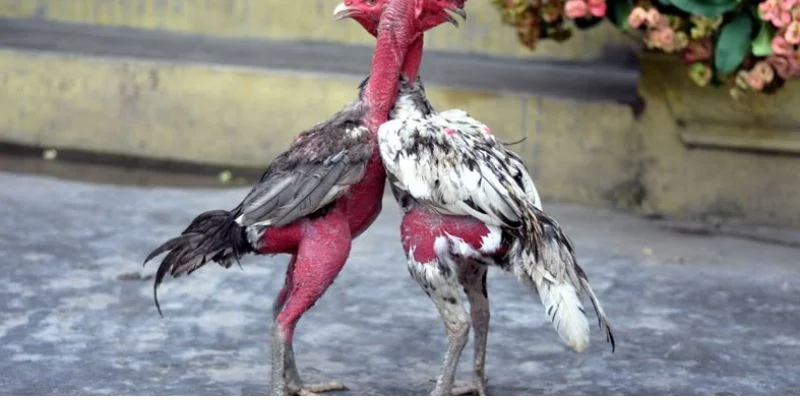
Choosing the right fighting rooster is always a skill many enthusiasts focus on when looking for a true champion. A rooster with good qualities usually possesses a striking appearance and an extremely effective fighting style. Based on the experience of seasoned rooster breeders, this article will help you clearly see each important characteristic. This will also make it easier for newcomers to accurately assess the fighting ability of each rooster when participating in cockfighting Nhà cái uy tín.
What is cockfighting?
At nhà cái uy tín , this is the name given to fighting roosters with good physical condition and strong fighting instincts. They are usually cared for and trained systematically before entering large and small arenas.
Unlike ordinary breeds, fighting roosters possess remarkable stamina and a high ability to withstand blows. To find a standout candidate, many breeders spend a great deal of time observing everything from their appearance to their movement. Therefore, the process of selecting a fighting rooster is always considered a top priority before training. Fighting roosters with a muscular physique often have a significant advantage when entering actual competition.
Fighting roosters with bright eyes usually possess extremely good reflexes.
Tips for choosing quality fighting roosters from experienced breeders.
Experienced cockfighting enthusiasts don’t judge fighting roosters based on intuition. They carefully observe each part of the bird to determine its fighting ability and stamina. Below are some common techniques used in selecting fighting roosters for actual combat.
Selection by visual inspection
The eyes are always the first detail noticed when choosing a fighting rooster because they reflect its agility and reflexes. A fighting rooster with sharp eyes usually enters the fight quite confidently and is less passive when facing off.
According to the experience of many cockfighting enthusiasts, deep-set eyes with thin eyelids indicate excellent observational skills. Cocks possessing these characteristics tend to remain alert during extended fights.
Additionally, if the distance from the eyes to the nose is wide, the fighting rooster tends to be aggressive and not afraid of confrontation. When selecting fighting roosters, many people highly value those with fiery eyes or pure white eyes because of their remarkable resilience.
Choose fighting roosters based on their tongues.
Many newcomers often overlook this detail, even though it’s a characteristic highly valued by experienced cockfighting enthusiasts. Observing the tongue can sometimes help identify fighting roosters that are more resilient than average.
Cases where the tongue is dark in color or has small black spots are often considered a good sign. When entering a fight, this group tends to deliver quite solid blows and maintain a stable rhythm. Some fighting roosters with tongues that are deeply recessed in the throat often possess a more distinctive crow than other breeds. This is also a type often mentioned when selecting fighting roosters for actual combat.
The beak of the rooster
The beak is considered an extremely important supporting weapon in the process of attacking an opponent. Therefore, when choosing a fighting rooster, many people always carefully check this part first. A beak of balanced length usually helps the fighting rooster maintain its strength better when striking. If the upper part is slightly curved downwards and larger than the lower beak, the ability to restrain the opponent is often significantly more effective.
Additionally, if the beak and legs are similar in color, it is often considered a sign that the fighting cock possesses a resilient physique. Cases where the beak extends almost to the eyes are also highly valued for their extremely tenacious fighting ability.
Strong legs help the rooster maintain stable kicking power.
Choose fighting roosters based on their face and neck.
The head and neck area directly affects the ability to withstand force during competition. Therefore, many people spend a considerable amount of time observing this detail before making their final decision.
Based on practical experience, the head and neck should be relatively well-proportioned to maintain a stable stance. Fighting roosters with large necks tend to withstand blows better and are less prone to fatigue during prolonged fights. Additionally, a clearly visible neck bone often indicates greater flexibility and endurance. Conversely, if the neck is too small, its ability to withstand force is often not as outstanding.
Based on the legs
The legs are the most important part of a fighting cock’s attack, so almost everyone pays close attention to this detail. Fighting cocks with strong legs usually possess quite painful kicks and maintain a good rhythm throughout the match.
When selecting fighting roosters, many experienced breeders prioritize those with dry scales and a firm surface. These are usually the types that possess strong leg power and high impact resistance. Additionally, if the leg is raised high and then spreads forcefully upon impact, the rooster usually reacts very quickly. Some people even test the rooster’s strength by slightly lifting the leg and observing the reaction force upon impact.
A confident stance gives you an advantage in combat.
Assessing a good breed through its spurs.
Spurs are a crucial detail contributing to the danger level in each close-range attack. Therefore, experienced cockfighters always observe carefully before making a final decision. Spurs that are positioned low and have scales aligned in a straight line often help fighting roosters deliver quite dangerous blows. In particular, flexible spurs are considered rare in the cockfighting world.
In addition, the three-pronged or six-pronged spur types are highly valued for their endurance. When choosing fighting roosters, many people also pay special attention to the crescent-shaped spurs because of their unpredictable striking ability. The sturdy, iron spurs often give the fighting rooster a clear advantage in quick attacks.
Selection based on the tail
The tail is a crucial element for maintaining balance, and therefore significantly impacts fighting style. A fighting rooster with a well-shaped tail tends to move more nimbly and maintain better posture during combat.
The crescent-shaped tail with its sickle-like curved feathers is highly valued for its ability to deliver devastating blows. Additionally, long tails often indicate agility and consistent stamina.
Conclusion
Choosing a fighting rooster is never a simple matter because each rooster possesses unique characteristics. Experienced breeders usually spend a lot of time observing everything from its eyes and posture to its legs and spurs before making a decision. Hopefully, the above information has given you a more practical perspective to evaluate fighting roosters more effectively when consulting information at nhacaiuytin