Spring is a season of renewal, growth, and fresh beginnings, and Spring 2026 promises to bring its own unique energy and significance.
But what exactly does Spring 2026 mean, and why does it hold importance for so many around the world? Whether you’re curious about the exact dates of the season, the spring equinox, or the cultural and symbolic meanings tied to this vibrant time of year, you’re in the right place.
From blossoming flowers to longer daylight hours, spring represents transformation and hope, both in nature and in our personal lives.
In this guide, we’ll explore everything you need to know about Spring 2026, including festivals, holidays, environmental changes, astrological influences, and historical traditions.
By the end, you’ll understand not just when the season occurs, but why it has captivated humans for centuries and how you can make the most of this fresh, exciting season in 2026.
What is Spring?
Spring is one of the four seasons, marking the transition from winter’s cold to summer’s warmth. Scientifically, it begins when the spring equinox occurs, usually around March 20–21 in the Northern Hemisphere, when day and night are almost equal in length. This astronomical event signifies a balance in nature and is the official start of spring 2026. Meteorologically, spring is often defined by the months of March, April, and May, though exact dates can vary by region.
Beyond its scientific definition, spring has deep symbolic meaning. Across cultures, it represents renewal, growth, and fresh beginnings. Trees blossom, flowers bloom, and animals awaken from hibernation, signaling life’s resurgence after the dormancy of winter. People often associate spring with hope, positivity, and personal transformation, making it a season of both physical and emotional renewal.
In 2026, spring will bring all these natural changes alongside unique cultural and environmental significance. From celebrations and festivals to the observation of astronomical events, spring is more than just a season; it’s a time to embrace growth, rejuvenation, and new opportunities. Understanding what spring 2026 means helps us connect with nature, our surroundings, and ourselves, preparing us to fully enjoy the season’s energy and possibilities.
Key Dates of Spring 2026
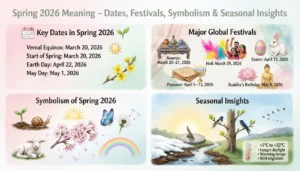
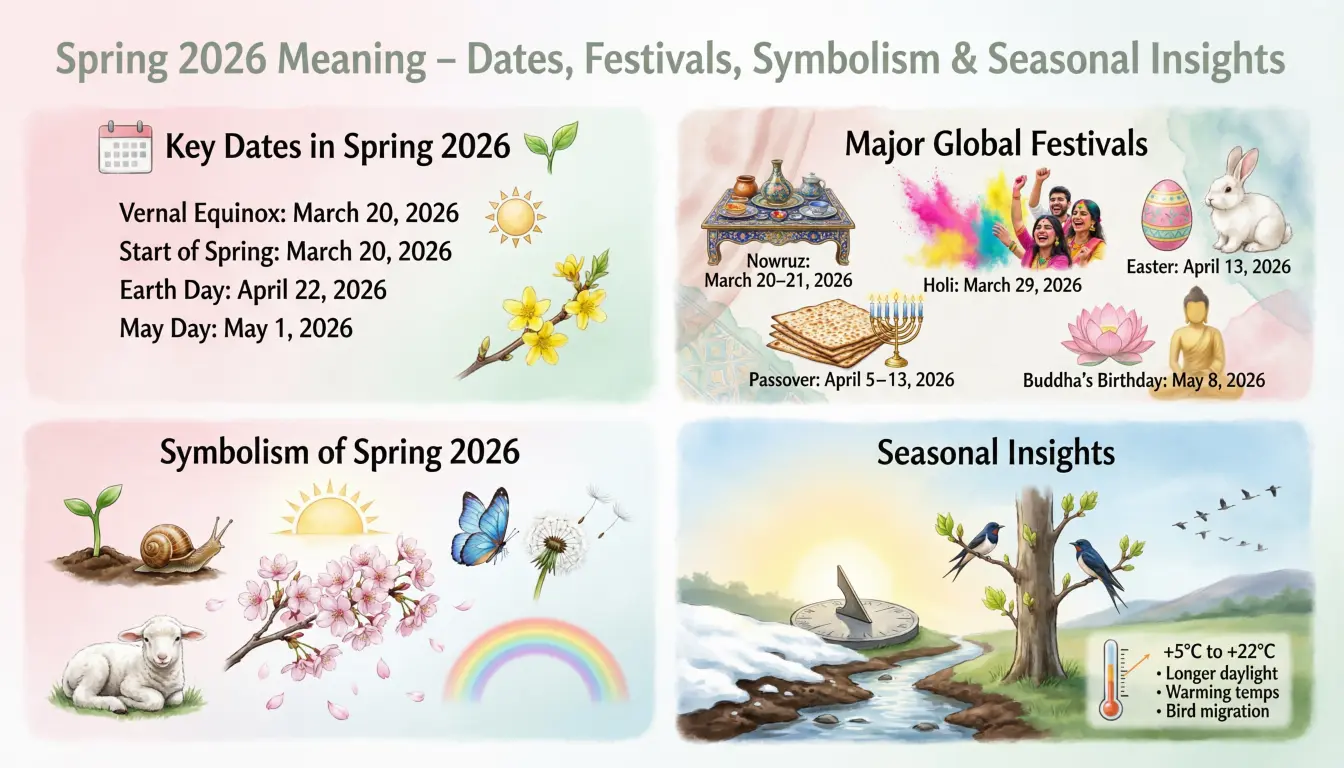
Spring 2026 officially begins with the spring equinox, which occurs on March 20, 2026, in the Northern Hemisphere. On this day, daylight and nighttime are nearly equal, symbolizing balance and harmony in nature. The season continues until the summer solstice, which falls on June 21, 2026, when the Northern Hemisphere experiences its longest day of the year. These dates are essential for anyone tracking seasonal changes, planning festivals, or simply looking to connect with the rhythms of nature.
Meteorologically, spring 2026 is considered to include the months of March, April, and May, though local climates can slightly shift these boundaries. In the Southern Hemisphere, the season is reversed, beginning around September 22, 2026, and ending on December 21, 2026, highlighting the global differences in seasonal patterns.
Several other notable dates occur during spring 2026. For example, Easter Sunday falls on April 5, 2026, a holiday often associated with spring’s themes of renewal and rebirth. Additionally, the Vernal Equinox Festival and various cultural events celebrate the return of longer days, blossoming nature, and growth.
Understanding the key dates of spring 2026 helps you plan celebrations, outdoor activities, and personal projects aligned with the season’s energy. Whether for cultural, environmental, or personal reasons, these dates mark a time of transformation and new beginnings, making spring 2026 a season full of opportunity and vitality.
Astronomical Significance of Spring 2026
Spring is not just a season we feel on Earth, it has profound astronomical significance. Spring 2026 officially begins with the vernal equinox on March 20, 2026, marking the moment when the Sun crosses the celestial equator from south to north. On this day, day and night are nearly equal in length, a natural phenomenon that has fascinated humans for centuries. The equinox symbolizes balance in the cosmos and signals the start of longer daylight hours, warmer temperatures, and the gradual awakening of nature.
During spring, Earth’s axial tilt positions the Northern Hemisphere closer to the Sun, causing more direct sunlight and longer days. This shift affects not only weather patterns but also plant growth and animal behavior, making spring a season of energy and renewal. In Spring 2026, stargazers can enjoy a range of celestial events. Meteor showers, visible planets, and occasionally a full or new moon coincide with the season, offering spectacular night sky experiences.
Historically, the spring equinox has guided calendars, agriculture, and cultural rituals. Many ancient civilizations, from the Egyptians to the Mayans, celebrated equinoxes as sacred times, linking the movement of the Sun to planting cycles, festivals, and spiritual practices.
Understanding the astronomical aspects of spring 2026 helps us connect to the larger universe and appreciate the natural cycles that influence life on Earth. By observing these celestial patterns, we can better align with the rhythm of the season and embrace the renewal and growth it brings.
Cultural & Religious Festivals in Spring 2026
Spring has always been a season of celebration, and Spring 2026 is no exception. Across the world, this season brings a variety of cultural, religious, and traditional festivals that honor renewal, growth, and nature’s beauty. One of the most widely celebrated holidays is Easter, which falls on April 5, 2026. Easter symbolizes rebirth and new beginnings in Christian traditions, often marked with church services, family gatherings, and spring-themed activities like egg hunts.
In South Asia, Holi, the festival of colors, occurs during spring, celebrating the victory of good over evil and the arrival of vibrant new life. The festival involves throwing colored powders, dancing, and enjoying seasonal treats. Similarly, Passover, celebrated by Jewish communities, commemorates liberation and renewal, aligning with spring’s themes of freedom and transformation.
Spring 2026 also hosts several international observances. Earth Day on April 22 encourages environmental awareness and sustainability, reminding us to connect with the natural world during this season of growth. Many countries hold harvest and flower festivals, celebrating the blossoming of plants, renewal of the soil, and cultural heritage.
These festivals not only highlight the symbolic importance of Spring 2026 but also offer opportunities to gather, reflect, and engage with communities. By participating in these celebrations, we honor the season’s essence, rebirth, vitality, and hope and create meaningful experiences that resonate with both nature and culture.
Symbolism of Spring 2026
Spring has long been associated with renewal, growth, and transformation, and Spring 2026 continues this symbolic tradition. Across cultures, spring represents the triumph of light over darkness, warmth over cold, and life over dormancy. It is a season that encourages new beginnings, fresh opportunities, and personal rejuvenation. Many people use spring as a time to reset their routines, start new projects, or embrace lifestyle changes, reflecting the energy of renewal that the season embodies.
In art and literature, spring is often portrayed as a time of blossoming creativity and emotional awakening. Flowers, greenery, and longer daylight symbolize hope, positivity, and the potential for growth. The spring equinox, marking the start of spring 2026, adds an astronomical layer to this symbolism, highlighting balance, harmony, and alignment with nature’s rhythms.
Culturally, spring festivals and rituals emphasize themes of fertility, prosperity, and community. From planting ceremonies to colorful celebrations like Holi, societies have long honored the season as a powerful reminder of life’s cyclical nature. Spiritually, spring can inspire introspection and renewal, helping individuals reconnect with their goals, relationships, and personal growth.
Understanding the symbolism of Spring 2026 allows us to see the season not just as a weather change but as a meaningful period for reflection, creativity, and transformation. Embracing its energy encourages positivity, resilience, and a sense of connection to the natural world.
Spring 2026 in Astrology & Zodiac
Astrology adds a fascinating layer to the meaning of Spring 2026, connecting the season to zodiac signs, planetary movements, and personal energy cycles. In the Northern Hemisphere, spring spans the zodiac signs of Aries (March 21–April 19), Taurus (April 20–May 20), and Gemini (May 21–June 20). Each sign carries distinct traits: Aries brings new beginnings and bold energy, Taurus emphasizes stability and growth, and Gemini encourages curiosity, communication, and adaptability.
Planetary alignments during spring 2026 can influence moods, productivity, and personal relationships. For instance, the positioning of Venus and Mars may affect emotional balance, while Mercury’s movement may impact communication and decision-making. Observing these celestial patterns can help individuals align their actions with the natural flow of the season.
Spring has always been a time for astrological reflection, as the equinox marks a moment of balance between day and night. This is an ideal period to set intentions, plan projects, or embark on personal transformations. Astrologers often recommend using spring energy to focus on self-growth, career ambitions, and creative pursuits, capitalizing on the rejuvenating force of the season.
For those born in spring 2026, the combination of zodiac influences and seasonal energy can provide insight into personality traits, strengths, and potential opportunities. Understanding the astrological significance of Spring 2026 helps us harness the cosmic energy to live more intentionally, make informed choices, and embrace the season’s transformative potential.
Environmental and Natural Significance of Spring 2026
Spring is not only a season of cultural and personal renewal it has profound environmental and natural significance, and Spring 2026 is no exception. During this season, the Northern Hemisphere experiences longer daylight hours and warmer temperatures, which trigger remarkable changes in ecosystems. Trees regain their leaves, flowers bloom, and plants begin their growth cycles, creating vibrant landscapes that symbolize life and rejuvenation.
Animals respond to these seasonal changes as well. Many species end hibernation, migratory birds return to their breeding grounds, and insects like bees and butterflies become active again. These patterns are crucial for maintaining biodiversity and supporting ecosystems, highlighting the importance of spring for environmental balance. Spring 2026 will see these natural rhythms unfold across forests, gardens, and urban green spaces, offering opportunities for observation and connection with nature.
Spring is also significant for humans who depend on seasonal changes for agriculture. Farmers often plant crops during this period, taking advantage of the favorable climate and longer days. Additionally, spring encourages environmental awareness, with events like Earth Day on April 22, 2026, reminding us to protect and cherish natural resources.
By understanding the environmental and natural significance of Spring 2026, we can appreciate the intricate cycles of life and the interconnectedness of all living things. The season serves as a reminder to slow down, observe nature, and participate in the renewal that surrounds us.
Historical Context of Spring
Spring has held historical significance across civilizations, and understanding this context adds depth to the meaning of Spring 2026. Since ancient times, humans have observed seasonal changes to guide agriculture, festivals, and rituals. The arrival of spring signaled the planting season, ensuring food security and prosperity for communities. In many cultures, this period became associated with renewal, fertility, and the cyclical nature of life.
Ancient civilizations, such as the Egyptians and Mayans, celebrated equinoxes with monuments and ceremonies aligned with the Sun. These events marked the balance between light and darkness and helped societies track the passage of time. In Europe, pre-Christian spring festivals like Beltane and May Day honored fertility, nature, and the return of warmth after winter, often featuring bonfires, dances, and symbolic rituals.
In Asia, spring has been celebrated for centuries through festivals like Holi in India, symbolizing color, joy, and the victory of good over evil. Similarly, Cherry Blossom Festivals in Japan celebrate the fleeting beauty of nature and the importance of renewal and mindfulness.
Even in modern times, spring continues to be a season of reflection and celebration, connecting people to historical practices and natural cycles. Recognizing the historical context of Spring 2026 reminds us that this season has always been more than a weather change; it’s a period of cultural, agricultural, and spiritual significance, bridging humanity’s past with the present.
Fun Facts and Unique Events in Spring 2026
Spring 2026 is packed with exciting fun facts and unique events that make the season memorable. Did you know that the March 20, 2026, equinox marks one of the rare moments in the year when day and night are nearly equal in length worldwide? This celestial balance has fascinated humans for centuries and continues to inspire celebrations, rituals, and observations.
Meteor enthusiasts can look forward to spring meteor showers, such as the Lyrids, which peak around April 22, 2026. These dazzling events offer a spectacular night sky display and are perfect opportunities for stargazers to connect with nature. Additionally, spring often brings a series of full moons, including the Pink Moon in April, named after early blooming flowers, adding a poetic touch to the season.
Spring 2026 also coincides with several cultural and environmental events, such as Earth Day on April 22, which promotes sustainability, green initiatives, and community activities. Flower festivals, garden shows, and local fairs will celebrate the beauty of blossoming plants and nature’s renewal, making it a season for outdoor enjoyment and social gatherings.
On a lighter note, spring is associated with quirky traditions, like wearing bright colors, decorating homes with flowers, or participating in fun runs and community events that celebrate health and new beginnings.
By exploring these fun facts and unique events, we see that Spring 2026 is not just a transition in weather, it’s a season full of wonder, discovery, and joyful experiences, offering something for everyone to enjoy.
How to Celebrate and Make the Most of Spring 2026
Spring 2026 is the perfect time to embrace renewal, growth, and fresh opportunities. Whether you want to connect with nature, celebrate cultural traditions, or simply refresh your personal life, there are countless ways to make the most of the season. One simple approach is to spend time outdoors, enjoying blossoming flowers, longer daylight hours, and warming temperatures. Visiting parks, botanical gardens, or hiking trails allows you to connect with nature’s energy and recharge physically and mentally.
Participating in festivals and cultural events is another way to celebrate Spring 2026. From Easter gatherings to Holi’s vibrant celebrations and local flower festivals, these events encourage community engagement and fun. Attending workshops, spring fairs, or eco-friendly initiatives like Earth Day activities can also create meaningful experiences aligned with the season’s symbolism of growth and renewal.
Spring is an ideal season for personal growth and self-improvement. Many people use this time for decluttering, setting new goals, or starting creative projects. Gardening, trying seasonal recipes, or even redecorating your home can bring freshness and inspiration to daily life.
Finally, incorporating wellness practices like meditation, yoga, or mindful walks can help you harness spring’s rejuvenating energy. By intentionally engaging with the spirit of Spring 2026, you can make this season not only enjoyable but transformative, balancing fun, reflection, and personal growth in harmony with the natural world.
FAQs About Spring 2026
1. What does Spring 2026 symbolize?
Spring 2026 symbolizes renewal, growth, and fresh beginnings. It is a season associated with nature’s revival, personal transformation, and cultural celebrations of life and hope.
2. When does Spring 2026 start and end?
In the Northern Hemisphere, Spring 2026 begins on March 20, 2026, with the vernal equinox and ends on June 21, 2026, at the summer solstice. Meteorologically, it covers March, April, and May.
3. Are there any notable celestial events in Spring 2026?
Yes! Spring 2026 features the spring equinox, full moons like the Pink Moon in April, and meteor showers such as the Lyrids, making it a season rich in astronomical phenomena.
4. What major festivals occur during Spring 2026?
Major festivals include Easter on April 5, Holi, Passover, and Earth Day on April 22. Many regions also host flower festivals, cultural celebrations, and spring fairs.
5. How can I make the most of Spring 2026?
You can enjoy Spring 2026 by spending time outdoors, attending cultural events, starting new projects, engaging in wellness routines, and connecting with nature’s renewal.
6. How is spring celebrated around the world?
Globally, spring is celebrated through planting ceremonies, colorful festivals, and rituals honoring fertility, nature, and the season’s rejuvenating energy. Traditions vary by culture but share common themes of growth and joy.
These FAQs provide quick answers for anyone curious about Spring 2026, offering practical, cultural, and symbolic insights to fully enjoy the season.
Conclusion
Spring 2026 is more than just a season; it represents renewal, growth, and transformation in every aspect of life.
From the astronomical significance of the vernal equinox to the cultural and religious festivals celebrated around the world, spring offers a unique opportunity to reconnect with nature, traditions, and personal goals.
The longer days, blossoming flowers, and warming temperatures symbolize hope, positivity, and new beginnings, making it an ideal time to embrace change and pursue growth.
Understanding the meaning of Spring 2026 also allows us to appreciate its environmental impact. Plants flourish, animals awaken, and ecosystems thrive, reminding us of the interconnectedness of all living things.
This awareness encourages us to participate in sustainable practices and enjoy the outdoors responsibly.
Astrologically, spring brings dynamic energy through the zodiac signs of Aries, Taurus, and Gemini, guiding individuals in personal development, communication, and creativity.
Celebrating festivals, attending events, and engaging in wellness routines help us align with the season’s rejuvenating energy.
Ultimately, Spring 2026 invites reflection, action, and celebration.
Whether you are planting a garden, attending a cultural festival, or setting new personal goals, this season embodies the potential for transformation and joy.
By embracing its symbolism, events, and natural rhythms, you can make the most of Spring 2026 and start a vibrant chapter filled with opportunity, positivity, and growth.

Owen Carter — Creating moments that inspire, entertain, and connect. From creative ideas to daily insights, this page brings personality, passion, and authenticity in every post. Powered by ThePunSide.com for even more creativity, humor, and good vibes every day.