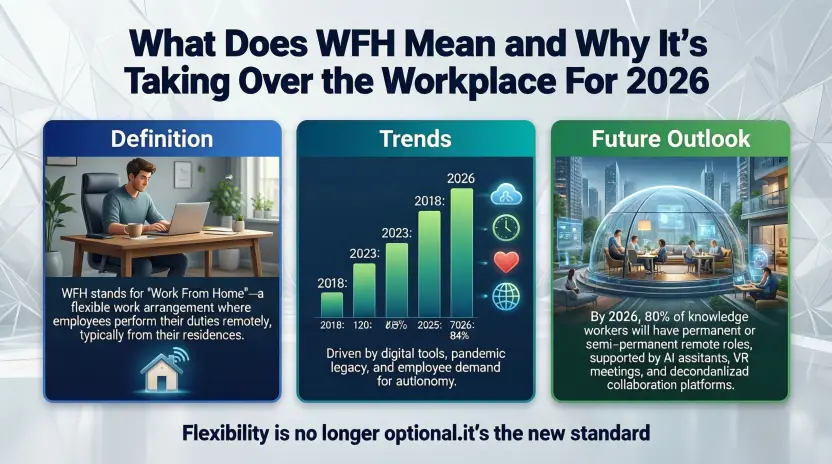
Have you ever seen “WFH” in a message, email, or job listing and wondered what it actually means? You’re not alone.
In today’s world, where remote work has become the new normal, “WFH” is one of the most common acronyms floating around workplaces and online chats.
But beyond just being an abbreviation for Work From Home, WFH represents a shift in how people approach their jobs, productivity, and work-life balance.
If you’re a professional seeing it in a team Slack message, a job seeker reading it in a listing, or simply curious about workplace trends, understanding WFH is essential.
In this guide, we’ll break down exactly what WFH stands for, how it’s used in real life, the benefits and challenges of working from home, tips for staying productive, and even what the future of remote work might look like.
By the end, you’ll be a WFH expert.
What Does WFH Stand For?
WFH stands for Work From Home, a term that has become increasingly common in today’s professional and digital world.
At its core, WFH simply means performing your job duties from your home instead of commuting to a traditional office.
While it sounds straightforward, the concept of WFH encompasses more than just the physical location; it reflects a shift in how work is organized, communicated, and balanced with personal life.
People often encounter WFH in emails, Slack messages, job postings, or even social media posts. For example:
- “I’ll be WFH tomorrow due to a doctor’s appointment.”
- “Our team is WFH on Fridays for better flexibility.”
In job advertisements, WFH indicates that the position allows remote work either full-time or part-time, giving employees the freedom to manage their schedules and workspace. The term has also become part of everyday conversation, especially in tech-savvy and professional communities.
WFH is sometimes used interchangeably with remote work, but there’s a subtle difference: remote work can happen from anywhere (a coffee shop, coworking space, or another city), while WFH specifically refers to working from one’s home. Understanding this distinction helps avoid confusion and ensures that you use the term correctly in professional and casual communication.
In short, knowing what WFH means is not just about decoding an acronym, it’s about recognizing the growing culture of flexible, home-based work that has transformed the modern workplace.
Origin of WFH
The concept of WFH, or Work From Home, isn’t as new as many people think. While remote work has exploded in popularity in the past decade, its roots go back decades, evolving alongside technology and shifting workplace cultures. Before the internet and smartphones, working from home was limited to freelancers, writers, or self-employed professionals. Communication relied on phone calls, faxes, and letters, making remote work less practical for most traditional jobs.
The real transformation began in the late 20th century, when computers and email started to enter offices. This allowed employees to complete tasks without being physically present. The term WFH started gaining recognition in professional circles as companies experimented with flexible schedules and telecommuting programs.
However, the biggest surge in WFH usage came during the COVID-19 pandemic. Overnight, millions of employees worldwide had to transition from offices to their homes. Suddenly, WFH became a mainstream term, not just a niche concept. Companies and employees alike adapted quickly, using tools like Zoom, Slack, and project management software to stay connected and productive.
Today, WFH is more than an emergency solution; it’s part of a broader remote work culture. Many organizations continue to offer WFH options even post-pandemic, embracing flexibility and acknowledging its benefits for productivity, employee satisfaction, and work-life balance. Understanding the origin of WFH helps contextualize its current significance in the modern workplace.
WFH in Everyday Language
WFH has become a part of everyday language, not just a professional term. Whether you’re texting a colleague, posting on social media, or chatting in a group message, WFH is now widely recognized as shorthand for working from home. Its convenience makes communication faster and more casual, which is why you’ll often see it used in emails, instant messaging apps, and even calendar invites.
For example, a colleague might say:
- “I’ll be WFH tomorrow, so call me on Slack instead of coming to the office.”
- “Team meeting at 3 PM, even if you’re WFH.”
WFH is also common in job listings, signaling that the role allows flexibility in location. Employers may use phrases like:
- “This is a fully WFH position.”
- “Hybrid model: 3 days in the office, 2 days WFH.”
Interestingly, WFH has crossed over into casual conversations beyond work. Friends and family might use it to explain why someone isn’t going out, e.g., “I’m WFH today, so I’ll join you later.”
It’s important to note the subtle distinction between WFH and remote work: while both involve working outside a traditional office, WFH specifically refers to working from your home, whereas remote work can happen anywhere, like a coffee shop or coworking space.
Using WFH correctly in everyday language demonstrates professionalism and familiarity with modern workplace culture. It’s no longer just an acronym, it’s part of how people talk about next and 250 words count
Here’s the fourth H2 section – “Bflexibility, work-life balance, and productivity in the digital age.
Benefits of WFH
Working from home, or WFH, offers numerous benefits that have made it increasingly popular among employees and employers alike. One of the most obvious advantages is flexibility. WFH allows individuals to manage their schedules more effectively, whether it’s starting work earlier, taking a mid-day break, or attending to personal tasks without affecting productivity.
Another key benefit is saving time and money on commuting. Not having to travel to an office reduces transportation costs, traffic stress, and the hours spent in transit. This extra time can be used for self-care, family, or hobbies, improving overall work-life balance.
WFH can also increase productivity for many employees. A quiet home environment often allows for more focused work, fewer interruptions, and the ability to create a personalized workspace suited to one’s preferences. For some, this setup leads to better concentration and efficiency compared to a traditional office.
Additionally, WFH contributes to employee satisfaction and retention. Flexible work options are increasingly seen as a perk, helping organizations attract and retain top talent. It also supports health and wellness, as employees can better manage stress, plan healthier meals, and incorporate exercise into their daily routine.
Lastly, WFH can be environmentally friendly, reducing carbon emissions from commuting and decreasing office energy consumption. In short, the benefits of WFH extend beyond convenience; they positively impact productivity, personal well-being, and the environment.
Challenges of WFH
While WFH offers many advantages, it also comes with its own set of challenges. One of the most common issues is distractions at home. Whether it’s family members, pets, or household chores, working in a non-office environment can make it difficult to maintain focus. For some, the lack of structure can lead to procrastination and reduced productivity.
Another challenge is social isolation. In an office, casual conversations, team lunches, and face-to-face interactions help build relationships and collaboration. WFH can make employees feel disconnected from colleagues, leading to loneliness and sometimes even reduced motivation. Video calls and chat apps help, but they cannot fully replace in-person interaction.
Work-life balance can also be harder to maintain. When your home becomes your office, it’s easy for work hours to blur into personal time. Many remote workers report feeling the pressure to be “always on,” checking emails late at night or responding to messages on weekends. This can result in burnout if not managed carefully.
Technology-related challenges are another factor. Poor internet connections, software issues, or lack of proper equipment can hinder productivity and create frustration. Not all homes are equipped with ergonomic setups, which may lead to discomfort or long-term health issues.
Lastly, communication gaps can occur when teams rely heavily on digital tools. Misunderstandings are more common without face-to-face interaction, and collaboration may require extra effort.
Understanding these challenges is essential for anyone embracing WFH. Recognizing potential pitfalls helps employees and employers develop strategies to stay productive, maintain mental well-being, and balance work and personal life effectively.
WFH Productivity Tips
Working from home can be highly rewarding, but staying productive requires discipline and strategy. One of the most important tips is creating a dedicated workspace. Even a small corner of your home can serve as your “office,” helping your brain switch into work mode and minimizing distractions from other household activities.
Establishing a daily routine is equally essential. Start your day at a consistent time, schedule breaks, and set clear start and end times for work. This helps maintain structure and prevents your personal and professional life from blending too much.
Prioritizing tasks using to-do lists, planners, or digital tools like Trello and Asana can keep you organized and focused. Break larger projects into smaller tasks and track progress throughout the day to maintain momentum.
Communication is another key factor in WFH productivity. Stay connected with your team via Slack, Zoom, or Microsoft Teams. Clear, concise communication prevents misunderstandings and ensures everyone is aligned on goals and deadlines.
Additionally, minimizing distractions is crucial. Turn off non-essential notifications, limit social media use, and inform household members of your working hours. Using productivity techniques like the Pomodoro method working in focused 25-minute intervals followed by short breaks can boost concentration.
Finally, don’t forget to prioritize wellness. Short exercise sessions, stretching, and regular hydration can improve energy levels and focus. Combining organization, communication, and self-care helps make WFH efficient, sustainable, and enjoyable, transforming your home into a productive workspace.
WFH Etiquette
Working from home comes with freedom, but it also requires professional etiquette to ensure smooth communication and collaboration with colleagues. One of the most important aspects of WFH etiquette is being responsive and available during working hours. Even though you’re at home, timely replies to emails, chat messages, and video calls show respect for your team and maintain workflow efficiency.
Another key point is professionalism during virtual meetings. Dressing appropriately, muting your microphone when not speaking, and avoiding distractions demonstrate respect for others’ time. Backgrounds should be tidy or virtual, and interruptions from family or pets should be minimized as much as possible.
Clear communication is crucial in a remote environment. Provide updates regularly, clarify tasks, and ask questions when necessary. Misunderstandings are common in WFH setups, so transparency helps prevent confusion and ensures everyone is on the same page.
Respecting boundaries is also essential. Avoid scheduling calls outside agreed-upon work hours unless previously discussed. Similarly, make your working hours known to family or roommates to prevent unnecessary interruptions.
Lastly, team etiquette matters. Celebrate achievements, participate in virtual team-building activities, and maintain a positive attitude during online collaboration. Small gestures like acknowledging a colleague’s efforts can strengthen relationships and foster a supportive remote work culture.
Following WFH etiquette creates a professional, respectful, and productive environment, making remote work successful not just for you, but for your entire team.
WFH vs Office Work
Working from home (WFH) and working in an office each have distinct advantages and challenges, and understanding the differences can help you determine which environment suits you best.
One of the main benefits of WFH is flexibility. Employees can create their own schedules, avoid commuting, and tailor their workspace to personal preferences. In contrast, office work often involves fixed hours and structured routines, which can provide more predictable workflows but less personal flexibility.
When it comes to productivity, the results can vary depending on the individual and the type of work. Some people thrive in a quiet home environment with minimal distractions, while others benefit from the energy and collaboration of an office setting. In-person interactions in the office can encourage spontaneous brainstorming and quicker problem-solving, which might be harder to replicate remotely.
Social connection is another key difference. Offices naturally provide opportunities for networking, team bonding, and casual conversations. WFH can feel isolating if social interaction is limited to video calls and messaging apps.
However, WFH can significantly improve work-life balance by reducing commute times and giving employees more control over their day. On the flip side, office work can help separate professional and personal life more clearly, reducing the risk of overworking from home.
Hybrid models are becoming popular, combining the benefits of both WFH and office work. By alternating between home and office, employees can enjoy flexibility while maintaining collaboration and team connection.
Understanding the differences between WFH and office work helps individuals and organizations choose arrangements that maximize productivity, satisfaction, and overall well-being.
Future of WFH
The future of WFH (Work From Home) looks promising as remote work continues to evolve and become an integral part of the modern workplace. Companies worldwide have realized that remote work is not just a temporary solution but a viable long-term option that can boost productivity, reduce costs, and attract top talent.
One key trend is the rise of hybrid work models, where employees split their time between home and office. This approach combines the flexibility of WFH with the collaboration benefits of in-person interactions, creating a balanced work environment. Organizations are investing in technology and communication tools to support seamless hybrid workflows, ensuring employees stay connected regardless of location.
The future also points toward fully remote companies, especially in tech, marketing, and creative industries. These companies can hire talent globally, breaking geographical barriers and allowing employees to work from anywhere. This trend is likely to continue as digital infrastructure and collaboration tools improve.
WFH is also shaping company culture and policies. Flexible hours, mental health support, and home office stipends are becoming common benefits. Employees now expect organizations to provide options that support both productivity and personal well-being.
Moreover, WFH contributes to environmental sustainability, as fewer commutes reduce carbon emissions. As climate concerns grow, remote work may become a key part of corporate responsibility strategies.
In short, the future of WFH is a blend of flexibility, technology, and employee-centric policies. As companies adapt, WFH is expected to remain a standard, shaping how people work for years to come.
FAQs About WFH
1. Is WFH suitable for everyone?
Not necessarily. While WFH works well for many roles, especially those that require computer-based tasks, it may not suit jobs that need physical presence or hands-on collaboration. Success at WFH often depends on self-discipline, time management, and a conducive home environment.
2. What jobs allow WFH?
Many positions in tech, marketing, writing, design, customer support, and consulting offer WFH options. Remote-friendly roles are often computer-based and communication-heavy, where tasks can be completed digitally without being physically present in an office.
3. How can I ask my boss about WFH options?
Approach the conversation professionally. Highlight your productivity, reliability, and how WFH can benefit both you and the company. Suggest a trial period if necessary and clarify expectations regarding communication and deadlines.
4. What is the difference between WFH and remote work?
WFH specifically refers to working from your home, while remote work can occur from anywhere, including coffee shops, coworking spaces, or even different cities. WFH is a subset of remote work.
5. How can I stay productive while WFH?
Maintain a dedicated workspace, follow a routine, minimize distractions, and use productivity tools like Trello, Asana, or Slack. Regular breaks and clear communication with your team are also crucial.
6. Can WFH impact career growth?
It can, depending on how you manage visibility and collaboration. Staying proactive, communicating regularly, and participating in meetings ensures you remain engaged and recognized by your team.
These FAQs address common concerns and provide practical guidance, helping employees navigate the WFH experience confidently and effectively.
Conclusion
WFH, or Work From Home, has become more than just an acronym; it represents a major shift in how people approach work, productivity, and work-life balance.
Understanding what WFH means, its origins, and its implications is essential for anyone navigating today’s professional world.
From flexible schedules and reduced commuting to increased comfort and personal control over your workspace, WFH offers numerous benefits that can enhance both efficiency and well-being.
At the same time, it’s important to recognize the challenges.
Distractions, isolation, blurred boundaries between work and personal life, and potential communication gaps can make WFH difficult for some employees.
However, by following productivity tips, maintaining clear communication, and practicing proper WFH etiquette, these challenges can be effectively managed.
Creating a dedicated workspace, sticking to a daily routine, and leveraging technology are all strategies that help make remote work productive and sustainable.
Looking ahead, WFH is likely to remain a key part of the modern workplace. Hybrid models, fully remote companies, and flexible policies are becoming standard as organizations adapt to evolving employee expectations.
By embracing the WFH culture thoughtfully, individuals can enjoy the freedom and benefits of home-based work while staying connected, productive, and engaged in their careers.
Ultimately, WFH is not just a trend, it’s a transformative approach to work for the future.

“ASF — Discipline, Duty & Determination. A mind trained for focus, a heart built on courage, and a spirit that never backs down. Living by principles, acting with purpose, and leading with strength. Silence in action, power in presence, and pride in every step. Always ready, always alert. Explore more at thepunside.com.”