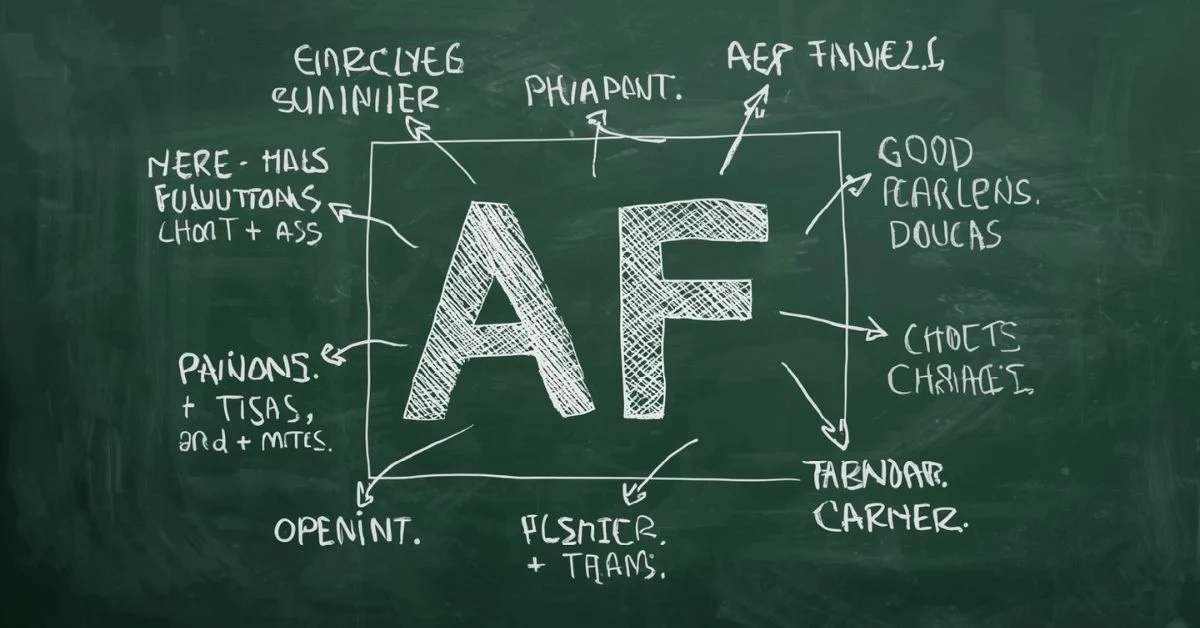
If you’ve spent any time on social media, texting, or scrolling through memes, you’ve probably seen people typing “AF” after a word or phrase.
But what does AF mean? In today’s fast-paced digital world, abbreviations and slang terms are everywhere, and AF is one of the most common ways people emphasize their feelings online.
Essentially, AF is short for a popular expression that adds intensity or emphasis to whatever you’re describing.
If someone says “tired AF,” “funny AF,” or “cold AF,” it’s meant to make the statement more expressive and sometimes more humorous. While it’s widely used among younger audiences, it’s becoming increasingly recognized across all age groups.
In this article, we’ll break down the meaning of AF, explore its origins, provide examples of how to use it in sentences, discuss its appropriateness in different settings, and even look at related slang words to keep you in the know.
What Does AF Stand For?
AF is a slang abbreviation that you’ve probably seen everywhere online, but what does it actually stand for? Simply put, AF stands for “As F*”**, and it’s used to add emphasis to an adjective or feeling. For example, when someone says, “I’m tired AF,” they mean they are extremely tired. Similarly, “funny AF” indicates something is very funny. The abbreviation allows people to express strong emotions quickly without typing out the entire phrase.
AF is most commonly used in informal contexts, like texting friends, posting on social media, or commenting on memes. It’s a way to intensify a statement in a casual, sometimes humorous, way. The tone of AF depends heavily on the context; it can be playful, sarcastic, or even dramatic.
Although the F-word in the abbreviation makes AF technically offensive, it’s generally accepted online and among younger audiences because it’s so widely used. However, it’s important to know your audience. Using AF in professional emails or formal messages is a no-go, but in casual conversations with friends, it’s perfectly fine.
In short, AF is a versatile tool for emphasizing your feelings in a short, punchy way. From showing excitement, humor, frustration, or exaggeration, AF has become one of the most recognizable abbreviations in internet slang today.
Origins of AF
The slang abbreviation AF has an interesting history that reflects how language evolves in digital communication. While the phrase “as f***” has been part of spoken English for decades, its abbreviation, AF, became popular with the rise of texting and social media. People needed a quick and concise way to emphasize their feelings without typing out the full phrase, and AF was the perfect solution.
AF started appearing frequently on internet forums, chat rooms, and social media platforms like Twitter, Instagram, and TikTok. Its rise is closely tied to meme culture, where brevity and impact are key. Memes often use exaggerated statements to create humor or drama, and AF fits perfectly as a tool for that kind of expression. For example, a meme might say, “Monday mornings are brutal AF,” conveying the frustration many feel in just three words.
The term’s popularity also spread through younger generations, who use it to communicate quickly with friends or followers. Over time, AF has become so common that it’s now widely understood even outside of its original age group. Its shorthand nature reflects the broader trend in digital communication toward abbreviations, acronyms, and slang tools that save time while conveying emotion effectively.
In essence, the origin of AF is rooted in both traditional spoken emphasis and modern internet culture, making it a uniquely contemporary slang term that shows how language adapts to new modes of communication.
How to Use AF in Sentences
Using AF in sentences is easier than it might seem, but context is key. Essentially, AF is used to intensify an adjective or feeling. It’s placed directly after the word you want to emphasize. For example:
- “I’m tired AF” → extremely tired
- “That movie was funny AF” → very funny
- “It’s cold AF today” → extremely cold
The beauty of AF is its versatility. You can attach it to almost any adjective to give your sentence extra punch. Commonly used adjectives include: tired, hungry, cold, hot, funny, bored, and excited. The tone can vary depending on the context it can be playful, dramatic, sarcastic, or humorous.
AF works best in informal communication, such as texting friends, social media captions, or commenting on memes. It’s a quick way to express emotion without needing long explanations. However, it’s not suitable for formal or professional contexts because of the implied expletive.
You can also combine AF with other slang for more emphasis. For example: “I’m hungry AF, lowkey craving pizza,” or “That party was fun AF, no cap!” This shows how AF fits seamlessly into modern internet slang and casual speech.
In short, AF is a flexible tool for expressing extremes in everyday language. By adding AF after an adjective, you can instantly communicate the intensity of your feeling, making your sentences more engaging, relatable, and expressive in digital conversations.
AF in Social Media and Pop Culture
AF has become a staple of social media language and internet culture, showing up in tweets, Instagram captions, TikTok videos, and memes. Its widespread use is largely because it’s short, expressive, and instantly understood by younger audiences who want to convey intensity or humor in a few characters. For example, a viral Instagram caption might read: “Feeling lazy AF today,” instantly letting followers know the poster’s mood without a long explanation.
Memes often rely on exaggeration, and AF is perfect for this. A meme might say, “When you realize it’s Monday morning AF,” paired with a funny or relatable image, amplifying the humor and relatability. AF adds drama and emotional emphasis, which makes online content more engaging and shareable.
Celebrities and influencers also contribute to AF’s popularity. Tweets, YouTube video titles, and TikTok captions frequently feature AF to add intensity or a casual, humorous tone. Its use in pop culture has cemented AF as a recognizable slang term, even among people who aren’t heavy social media users.
Despite its casual nature, AF is widely understood across age groups and regions, largely thanks to its presence in viral content and trending hashtags. Its shorthand nature allows people to communicate strong feelings quickly, a hallmark of internet-era language.
In short, AF has transcended casual texting and is now a key part of digital communication and pop culture, helping people express themselves in fun, relatable, and highly shareable ways.
Variations and Similar Slang
AF is just one of many slang abbreviations that have become popular in digital communication, and it often appears alongside other short, punchy expressions. Understanding these variations can help you better navigate online conversations and social media trends.
Some similar slang terms include:
- BFF – Best Friends Forever, used to describe close friendships.
- YOLO – You Only Live Once, often used to justify fun or risky behavior.
- LOL – Laugh Out Loud, a classic way to show amusement.
- SMH – Shaking My Head, expressing disbelief or disappointment.
- Lowkey / Highkey – Used to express subtle or strong emphasis, similar to AF but without profanity.
Like AF, these abbreviations are designed for speed and impact, allowing people to communicate strong feelings in just a few characters. While AF emphasizes intensity (e.g., “hungry AF”), terms like “lit” or “extra” convey excitement or exaggeration in a different way.
It’s also common to see creative variations of AF, such as replacing the F-word with symbols or asterisks for a cleaner, less offensive version e.g., “as f***” → “as f***” or “as frick.” This allows users to keep the emphasis while softening the language for different audiences.
By understanding AF and its related slang terms, you can better interpret online messages, memes, and social media posts. Recognizing these expressions helps you stay current with internet culture while also giving you tools to express your own emotions clearly and humorously in casual digital conversations.
Is AF Offensive?
AF is an abbreviation for “As F***,” which includes a strong expletive. Because of this, some people may consider it offensive, especially in formal or sensitive settings. However, its level of offensiveness often depends on context, audience, and tone.
In casual settings, such as texting friends or posting on social media, AF is generally accepted and widely understood. Younger generations, in particular, use it frequently without intending to shock or offend anyone. For example, someone might text, “I’m tired AF,” simply to emphasize how exhausted they feel. In this scenario, the use of AF is humorous or relatable rather than offensive.
That said, it’s important to know your audience. Using AF in professional emails, formal messages, or around people who are uncomfortable with swear words is inappropriate. In those situations, alternatives like “extremely” or “very” can convey intensity without offending anyone.
Another factor is cultural context. While AF is widely understood in English-speaking countries and online communities, audiences from more conservative backgrounds or non-native speakers might find it rude or confusing.
In short, AF is not inherently offensive, but it carries the potential to be inappropriate depending on how and where it’s used. By understanding the context, tone, and audience, you can use AF effectively in casual digital communication without offending anyone, keeping your messages expressive yet respectful.
Can You Use AF Professionally?
While AF is widely accepted in casual texting and social media, it is not suitable for professional settings. The abbreviation contains a strong expletive, which can be seen as unprofessional or inappropriate in emails, meetings, or workplace communications. Using AF in a professional environment could damage your credibility or make colleagues uncomfortable, even if it’s meant humorously.
However, understanding the underlying purpose of AF emphasis can help you adapt it for professional use. Instead of using AF, you can choose alternative words that convey intensity without using profanity. For example:
- “I’m extremely busy today” instead of “I’m busy AF”
- “The results were very impressive” instead of “The results were impressive AF”
- “It was incredibly challenging” instead of “It was challenging AF”
In informal office chats with close colleagues, some professionals may use AF jokingly in a safe context, but this depends heavily on workplace culture and the relationship you have with your team. When in doubt, it’s always better to err on the side of caution.
Learning about AF’s professional limitations is also helpful for navigating internet slang in business communications, especially as younger generations enter the workforce. Recognizing what is casual vs. formal ensures you communicate effectively while maintaining professionalism.
In short, AF is best reserved for casual digital communication. In professional settings, opt for clear, expressive alternatives that convey the same intensity without using explicit language. This approach keeps your communication sharp, respectful, and universally appropriate.
Fun Examples of AF in Pop Culture
AF has become a staple of pop culture and internet humor, appearing in memes, social media posts, and even celebrity quotes. Its appeal lies in its ability to instantly amplify emotion, making statements funny, relatable, or dramatic.
One common example is in memes about everyday struggles. For instance, a meme might show a sleepy cat with the caption, “Monday mornings are exhausting AF,” perfectly capturing how people feel about the start of the week. These relatable scenarios make AF a favorite in meme culture, where exaggeration is key.
Celebrities and influencers also use AF in tweets, Instagram captions, and TikTok videos. For example, a celebrity might tweet, “This outfit is fire AF,” or post a TikTok caption saying, “Feeling lazy AF today.” These posts are casual, expressive, and relatable, which helps AF reach an even wider audience.
AF is also popular in song lyrics, YouTube video titles, and reaction posts, adding intensity or humor. Fans often quote lines like, “This concert was amazing AF!” to emphasize their excitement or enjoyment.
In short, AF has transcended casual texting and become a cultural phenomenon. From memes to celebrity posts, it helps people express extreme feelings in a fun and engaging way. Its popularity in pop culture shows how a simple two-letter abbreviation can convey emotion, humor, and relatability across the internet.
Related Slang Words to Know
If you’re familiar with AF, it’s helpful to know other popular slang words that are often used in similar ways. These terms can help you understand online conversations and even use them yourself to express emotions concisely.
- Lit – Used to describe something exciting, fun, or amazing. Example: “The party last night was lit.”
- Extra – Refers to someone or something being over-the-top or dramatic. Example: “She was acting extra at the concert.”
- Lowkey / Highkey – Lowkey means subtly or quietly, while highkey emphasizes openly or strongly. Example: “I lowkey want pizza” vs. “I highkey need coffee.”
- Dreadful – Used to describe someone bold or brutally honest. Example: “His comeback was dreadful AF.”
- Mood – Expressing a relatable feeling or vibe. Example: “Me when it rains all day: mood AF.”
These slang words, like AF, often intensify emotion, humor, or relatability in casual conversations. AF specifically emphasizes extremes, while words like “lit” or “extra” describe the intensity of an event, personality, or feeling in a slightly different way.
Many of these terms appear in memes, social media captions, or text messages, often combined with AF for extra emphasis. For instance: “This concert was lit AF” or “I’m tired AF, mood.”
By understanding AF alongside related slang, you can navigate online communication more confidently, engage with trends, and express yourself more naturally in casual digital conversations. It’s a fun way to stay current with internet culture while expanding your vocabulary of expressive slang.
FAQs About AF
To help you fully understand AF and how it’s used, here are some frequently asked questions about this popular slang term.
1. What does AF stand for in texting?
AF stands for “As F*”** and is used to emphasize an adjective or feeling. For example, “I’m tired AF” means extremely tired.
2. Is AF rude or offensive?
AF contains an expletive, so it can be considered offensive in formal or sensitive settings. However, in casual texting or social media, it’s widely accepted and used humorously.
3. Can AF be used in professional messages?
No. AF is best reserved for informal settings. In professional contexts, use alternatives like “very,” “extremely,” or “incredibly” to convey intensity without offending anyone.
4. Where did AF come from?
AF originated from the spoken phrase “as f***” and became popular online through memes, social media, and texting culture. It is now widely recognized across generations.
5. Can AF be used globally?
AF is primarily used in English-speaking countries and online communities, but its popularity is growing worldwide thanks to social media and pop culture.
6. How do I use AF correctly?
Place AF directly after an adjective to add emphasis. Example: “That movie was scary AF” or “I’m hungry AF.” Avoid using it in formal writing or professional messages.
By addressing these FAQs, you can use AF confidently, understand its context, and avoid common mistakes, making your communication clear, expressive, and appropriate for casual settings.
Conclusion
AF has become one of the most recognizable slang abbreviations in modern digital communication. Short for “As F*,”** it allows people to express strong emotions, exaggeration, or humor quickly and effectively.
From texting friends to creating viral social media posts and memes, AF adds intensity and relatability to everyday statements.
If you’re describing being tired, excited, funny, or frustrated, placing AF after an adjective instantly amplifies the sentiment.
Its popularity is not just limited to casual conversations. AF has become a part of pop culture, appearing in memes, celebrity posts, TikTok captions, and online trends.
This widespread use makes it easily understood by younger audiences and increasingly recognized by people across different age groups. However, because it includes a strong expletive, AF is best used in informal settings.
Avoid it in professional or formal contexts, and consider alternative expressions like “very” or “extremely” to convey the same meaning.
Additionally, AF is part of a broader ecosystem of internet slang, including words like “lit,” “extra,” “mood,” and “dreadful,” which all serve to express feelings concisely and impactfully.
By understanding AF and related slang, you can communicate more effectively, stay current with digital trends, and engage in online culture confidently.
In short, AF is a versatile, expressive, and fun tool for modern communication. Knowing how and when to use it ensures your messages are both impactful and appropriate, making your digital conversations more lively, relatable, and entertaining.

Punny Parker — Serving witty wordplay, clever jokes, and daily pun-filled fun. Whether it’s smart humor or pure silliness, every post brings a smile, a laugh, or a groan-worthy pun you’ll secretly love. Powered by ThePunSide.com for endless laughs and wordplay magic every day.