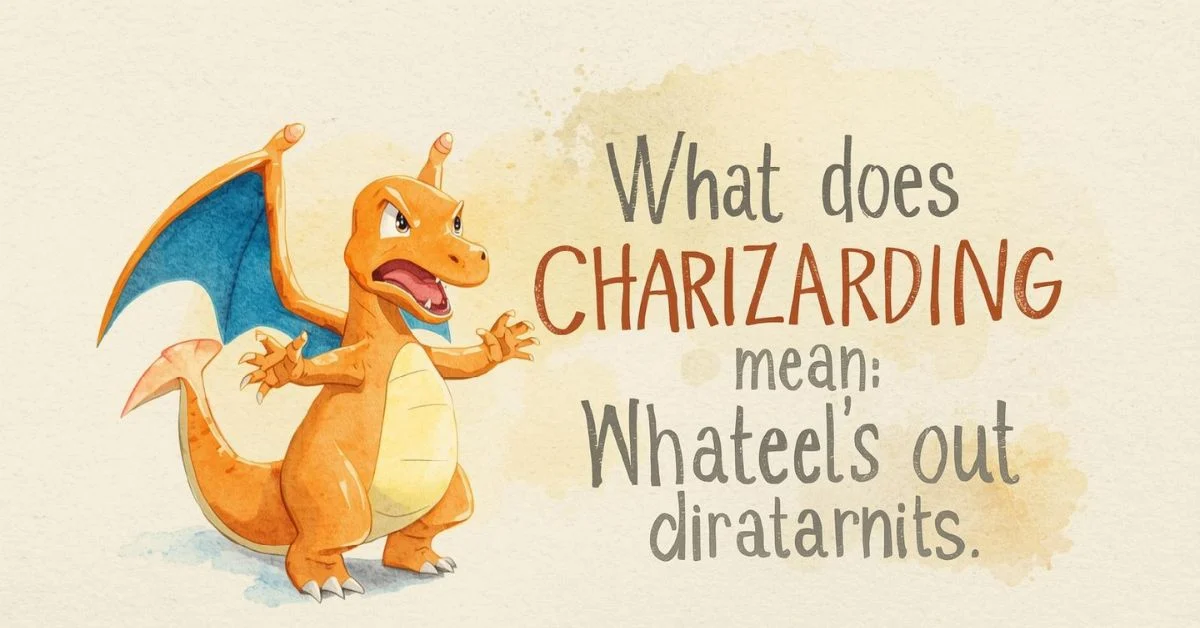
Have you ever scrolled through TikTok, Twitter, or Reddit and stumbled upon the term “charizarding” and wondered what it actually means? You’re not alone.
While it might sound like something straight out of the Pokémon universe because it kind of is, it has evolved into a playful slang term that’s making waves online.
Charizard, the fiery dragon-like Pokémon, is famous for its blazing personality and unstoppable energy, and the term “charizarding” borrows that vibe to describe bold, dramatic, or attention-grabbing actions, often in a humorous or exaggerated way.
In this article, we’ll dive deep into what charizarding really means, trace its origins, show how it’s used across social media, and explore why it’s become such a popular cultural reference.
By the end, you’ll not only understand the term but also be ready to spot or even try some charizarding yourself.
What Does Charizarding Mean?
At its core, charizarding is internet slang inspired by the fiery Pokémon Charizard, known for its dramatic, attention-grabbing presence and powerful fire attacks. In online communities, the term has evolved to describe someone acting bold, over-the-top, or flamboyant often in a humorous or exaggerated way. Think of it as “going all out” or “bringing the heat” in a social, gaming, or meme context.
Charizarding isn’t limited to literal Pokémon references. People might use it to describe flashy behavior in everyday life, like confidently showing off a skill, making a dramatic statement online, or creating a meme that demands attention. For example, posting a wild TikTok dance and tagging it with “#charizarding” signals that the creator is fully embracing their bold, fiery side.
Despite its Pokémon roots, charizarding has grown beyond the fandom. It’s become part of internet slang culture, especially among Gen Z and meme communities. The term is playful, often used ironically, and usually carries no serious or negative connotation. Essentially, if someone says you’re “charizarding,” they’re highlighting your confidence, flair, or dramatic style in a fun, exaggerated way.
By understanding this meaning, you’re now ready to explore where the term originated and why it’s spreading like wildfire online.
Origins of Charizarding
The term charizarding has its roots deeply planted in Pokémon fandom culture. Charizard, one of the most iconic Pokémon from the original series, is famous for its fiery personality, epic battle abilities, and instantly recognizable dragon-like appearance. Fans have long celebrated Charizard as a symbol of strength, flair, and confidence, which naturally led to the creation of slang inspired by its persona.
Charizarding as a term began appearing on social media platforms like TikTok, Twitter, Reddit, and Discord, where fans started using it humorously to describe bold, dramatic, or attention-grabbing behavior. The earliest mentions are often tied to memes or viral posts showing people “going all out” in their actions, mirroring Charizard’s fiery energy. For example, someone posting an over-the-top cosplay or a humorous, dramatic stunt might caption it with #charizarding to signal that they were embracing Charizard’s flair.
Beyond its Pokémon origins, charizarding reflects a larger trend of internet slang borrowing from pop culture. Similar to how terms like “yeeting” or “leveling up” have evolved, charizarding has expanded past the gaming world into general online conversations. It’s often used playfully or ironically, making it a fun, shareable way for fans to connect over nostalgia, humor, and dramatic self-expression.
Understanding the origins of charizarding helps explain why it resonates so strongly with online communities, blending nostalgia, boldness, and meme culture in one fiery, memorable phrase.
How Charizarding is Used Online
Charizarding has become a popular term across social media platforms, especially among TikTok, Twitter, and Reddit communities. It’s most commonly used to describe bold, dramatic, or flamboyant actions, often in a humorous or exaggerated way. Whether it’s a meme, a viral video, or a funny post, charizarding signals that someone is “bringing the heat” and embracing a confident, attention-grabbing style.
On TikTok, users might post videos of themselves performing daring stunts, over-the-top dances, or creative cosplay, tagging it with #charizarding to highlight their fiery energy. Twitter users often apply the term to dramatic tweets, witty comebacks, or sarcastic observations that stand out in the feed. Reddit threads frequently discuss charizarding as a way to show off bold behavior or to jokingly point out when someone is being flamboyantly confident online.
Memes are another key space where charizarding thrives. People create graphics or GIFs featuring Charizard unleashing fire, captioned with situations where someone is being extra, dramatic, or boldly expressive. It’s a fun and relatable way to communicate exaggerated actions without using serious language.
Ultimately, charizarding is more than just slang; it’s a form of digital expression. Whether in memes, videos, or casual online conversation, it allows people to celebrate boldness, humor, and creativity, all while connecting over shared pop culture references. Using it in the right context can instantly signal confidence, wit, or playful exaggeration.
Cultural Significance of Charizarding
Charizarding has grown beyond just a fun internet term; it reflects a broader cultural phenomenon that blends nostalgia, humor, and online social dynamics. At its core, the term draws from the iconic Pokémon Charizard, a figure many grew up watching in the late 1990s and early 2000s. Using Charizard as a symbol allows fans to tap into shared childhood memories while expressing confidence and flair in a modern digital context.
In online communities, charizarding acts as a language of inclusion. By referencing Charizard, users signal familiarity with Pokémon culture, instantly connecting with fellow fans. It’s not just about bold actions, it’s about being part of a shared cultural experience where creativity, humor, and exaggeration are celebrated. From viral memes to TikTok trends, charizarding encourages users to express themselves dramatically while maintaining a playful tone.
The term also highlights how internet slang evolves from pop culture. Much like other meme-based expressions, charizarding spreads quickly because it is relatable, visual, and easily adaptable. People adopt it not only for humor but also as a social tool, creating a sense of identity and belonging within fandoms or online subcultures.
Overall, charizarding is more than a simple meme; it’s a reflection of how nostalgia, humor, and online creativity intersect, making it a cultural touchpoint for both Pokémon fans and internet communities at large.
Examples of Charizarding in Action
Seeing charizarding in action helps make the term much clearer. On TikTok, users often post dramatic or over-the-top videos, tagging them with #charizarding to emphasize their boldness. For instance, a user might create a flashy dance routine with fire-themed filters or cosplay as Charizard, fully embracing the Pokémon’s fiery persona. The hashtag signals to viewers that the content is intentionally bold, confident, and attention-grabbing.
On Twitter, charizarding often appears in witty or sarcastic tweets. Someone might post a humorous statement or comeback and caption it with “charizarding” to highlight the dramatic flair behind their words. It’s a way of saying, “I’m being extra, and I know it,” all in a playful context. Similarly, Reddit threads feature discussions of charizarding where users share stories of themselves or others going all-out in humorous or confident ways, often exaggerating for comic effect.
Memes are another popular example. Graphics showing Charizard breathing fire over everyday situations like someone confidently nailing a presentation, posting a bold selfie, or dominating in a video game are captioned with charizarding to signal playful exaggeration. Fans also remix existing Pokémon images to humorously depict moments of “fiery energy” in life or online interactions.
These examples show that charizarding isn’t just a word, it’s a social media expression that combines humor, boldness, and pop culture nostalgia. Whether in videos, tweets, or memes, it celebrates being dramatic and playful in a way everyone can understand.
Charizarding in Pop Culture
While charizarding started as a niche Pokémon-inspired term, it has gradually seeped into wider pop culture, especially among online communities and meme culture. Charizard itself is one of the most recognizable Pokémon, often featured in video games, TV shows, movies, and merchandise. This iconic status makes it an ideal reference point for a term describing bold, attention-grabbing behavior.
In memes, charizarding often appears as exaggerated depictions of Charizard performing dramatic actions like breathing fire over everyday situations or “dominating” a scenario in a humorous way. These memes are shared widely on platforms like Reddit, Twitter, and Instagram, bridging the gap between Pokémon fandom and mainstream internet humor. They allow people to connect over shared cultural knowledge while highlighting playful exaggeration.
Pop culture references also appear in fan art and creative videos. Artists and content creators often use Charizard imagery to represent power, confidence, or “going all out,” effectively turning charizarding into a visual as well as linguistic concept. Influencers have picked up on the trend, using the term in captions or challenges, which further spreads its popularity beyond core Pokémon fans.
Even outside gaming or social media, the idea of “charizarding” resonates because it embodies a larger cultural fascination with bold, expressive, and dramatic behavior. Its growth shows how a nostalgic pop culture icon can inspire language and humor that transcends its original medium, turning Charizard into both a symbol and a verb in online culture.
Similar Slang and Comparisons
Charizarding isn’t the only pop culture-inspired slang floating around the internet. Many terms have emerged from fandoms, memes, and gaming communities, each describing bold, playful, or exaggerated behavior. Comparing charizarding with similar slang helps illustrate its unique flair and why it resonates with online users.
For example, terms like “yeeting” or “flexing” also describe bold actions, but in different ways. Yeeting typically refers to throwing something or someone with energy or force, often humorously, while flexing focuses on showing off strength, talent, or wealth. Charizarding, on the other hand, emphasizes dramatic flair combined with confidence, usually in a humorous or exaggerated context. It’s less about literal action or status and more about the fiery, attention-grabbing energy associated with Charizard.
Other fandom-inspired slang, like “leveling up” or “going super saiyan”, share some similarities. These terms describe transformation, power, or taking action to the next level, often with hyperbolic humor. Charizarding borrows this same sense of exaggeration but adds the specific Pokémon reference, giving it a nostalgic, pop-culture-rich twist that makes it instantly recognizable to fans.
In short, while charizarding shares some qualities with other internet slang: boldness, humor, dramatization it stands out for its Pokémon connection and playful tone. This combination of nostalgia, humor, and expressive exaggeration is what gives the term its lasting appeal and makes it easy for people to use across social media platforms.
How to Charizard Responsibly
While charizarding is all about bold, dramatic, and attention-grabbing behavior, it’s important to use the term and the concept responsibly. Like any slang, context matters. Using charizarding in the wrong situation can confuse people or come across as over-the-top in a negative way. The goal is to embrace playful exaggeration without offending or alienating others.
When using charizarding online, consider the audience and platform. On TikTok or Instagram, dramatic videos, cosplay, or humorous stunts work perfectly and are widely understood as charizarding. On professional platforms or serious conversations, however, the term may not be appropriate. Being aware of where you post ensures your fiery energy is appreciated rather than misunderstood.
Charizarding is also best used in good-humored, consensual contexts. Tagging friends or creating memes is fun when everyone understands the playful exaggeration. Avoid using it to make someone feel embarrassed, attacked, or singled out. The spirit of charizarding is confidence, creativity, and humor, not negativity.
Finally, don’t overuse the term. Part of what makes charizarding fun is its dramatic flair and novelty. If it’s applied too often, the impact can diminish. Use it sparingly, creatively, and in ways that celebrate bold expression whether it’s through memes, posts, or everyday humor. Doing so keeps charizarding fun, shareable, and culturally relevant.
Frequently Asked Questions
As charizarding gains popularity online, many people have questions about its meaning, use, and origin. Here are some of the most common FAQs:
1. Can anyone be a charizard?
Absolutely! Charizarding is meant to be playful and inclusive. Anyone can use the term to describe bold, dramatic, or humorous actions whether in memes, social media posts, or real-life scenarios. You don’t need to be a Pokémon expert to join the fun.
2. Is charizarding serious or just a meme?
Charizarding is primarily a meme-inspired slang term. It’s intended to be humorous, dramatic, and over-the-top. While it conveys confidence or flair, it’s never meant to be taken literally or seriously. Think of it as playful exaggeration rather than a formal behavior.
3. Where did charizarding start?
The term emerged from Pokémon fandoms online, with early mentions on TikTok, Reddit, and Twitter. It draws from Charizard’s iconic fiery personality, representing boldness, energy, and dramatic flair. Over time, it evolved into a widely recognized internet slang term.
4. Do you need to know Pokémon to understand it?
Not necessarily. While knowing Charizard adds context, the core meaning of bold, attention-grabbing behavior is clear even without Pokémon knowledge. Most users understand it as dramatic, humorous, or over-the-top expressions.
5. How is charizarding used today?
Today, it’s used in memes, videos, social media posts, and casual conversations to celebrate confident, playful, or exaggerated behavior. Its popularity continues to grow across platforms like TikTok, Twitter, and Reddit.
Understanding these FAQs makes it easier to spot, enjoy, or even participate in charizarding while staying part of the online community.
Why Charizarding Became Popular
Charizarding has become a viral phenomenon because it perfectly blends nostalgia, humor, and social media dynamics. Charizard, as one of the most iconic Pokémon, holds a special place in the hearts of fans who grew up watching the original series or playing the games. This sense of nostalgia gives charizarding an instant emotional connection, making it both relatable and shareable.
The term also thrives because it is inherently playful and dramatic, qualities that resonate strongly with online audiences. Social media users love exaggeration, humor, and content that stands out in feeds. By describing bold, attention-grabbing behavior as “charizarding,” people can express confidence or flamboyance in a way that’s both humorous and culturally relevant. Memes, GIFs, and viral videos further amplify the term, creating a feedback loop where more people see it, share it, and adopt it in their own posts.
Additionally, charizarding benefits from the shareable nature of internet slang. Just like other meme-inspired words, it spreads quickly because it is visual, easy to understand, and fun to use. Its Pokémon connection adds an extra layer of appeal, bridging generations of fans while remaining adaptable for online humor.
Ultimately, charizarding became popular because it captures a universal online desire: to be bold, playful, and memorable, all while referencing a beloved pop culture icon. Its combination of nostalgia, humor, and expressive exaggeration ensures it will continue to thrive across social media platforms.
Final Thoughts on Charizarding
Charizarding is more than just a catchy internet term; it’s a cultural phenomenon that combines nostalgia, humor, and bold self-expression.
Inspired by the fiery Pokémon Charizard, the term has evolved into slang that describes dramatic, attention-grabbing behavior in both online and offline contexts.
From memes and TikTok videos to witty tweets and playful conversations, charizarding allows people to celebrate confidence and creativity while connecting over a shared cultural reference.
The popularity of charizarding highlights how pop culture and internet slang intersect. By borrowing Charizard’s fiery persona, users can convey flamboyance, exaggeration, or humor in a way that is instantly relatable to other fans and social media users.
Its charm lies in its versatility: anyone can charizard, whether through a bold video, a humorous post, or a playful interaction with friends.
Charizarding also demonstrates the power of memes and social media trends in shaping language. Words that start in fandom communities can quickly become mainstream, especially when they are fun, visual, and easy to share.
The term encourages playful participation, allowing people to join in the trend while expressing their own personality and style.
In conclusion, understanding charizarding gives insight into how nostalgia, humor, and internet creativity converge. It’s a term that entertains, connects, and empowers users to embrace boldness in a playful way.
Whether you’re a Pokémon fan or simply someone who enjoys internet culture, charizarding is a trend worth knowing and maybe even trying yourself!