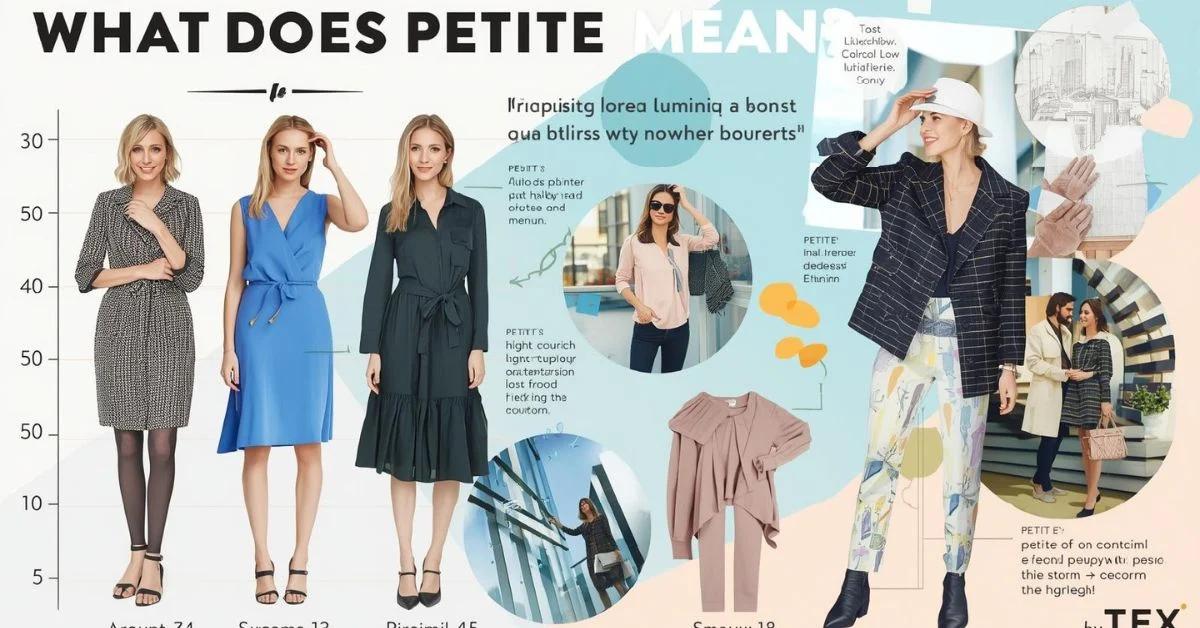
The word “petite” is often seen on clothing tags, fashion blogs, and online stores, but what does it really mean? Originating from French, petite literally translates to “small” or “delicate,” and in fashion, it specifically refers to clothing designed for women of shorter stature.
However, petite isn’t just about height it also considers proportions, including shorter sleeves, inseams, and torso lengths, making clothes fit smaller frames more comfortably.
Many people confuse petite with “small” sizes, but there’s a key difference: a petite size is tailored for body proportions, not just overall size.
Whether you’re shopping online, updating your wardrobe, or learning English vocabulary, understanding what petite means can save you from ill-fitting clothes and help you style your outfits confidently.
In this guide, we’ll dive deep into the definition, fashion context, sizing tips, and styling advice to help anyone embrace their petite figure with ease.
Definition of Petite – Language and Everyday Use
The term “petite” comes from the French word meaning “small” or “delicate,” and it has been adopted into English to describe both people and objects that are smaller in size. In everyday language, you might hear someone say, “She has a petite frame,” which simply means a person has a small, slender, or dainty build. Beyond describing body size, petite can also refer to objects, spaces, or even styles that are compact or delicately designed. For example, a “petite handbag” would be smaller and more elegant than a standard bag, emphasizing style and proportion.
In the context of fashion, however, petite has a more specialized meaning. It refers to clothing designed for women who are shorter than average, typically under 5’4” (162 cm). Unlike small or extra-small sizes, petite sizing adjusts not only the overall dimensions but also the proportions of sleeves, inseams, and torso lengths, ensuring a better fit for shorter frames. This distinction is important because wearing regular-sized clothing when you are petite can result in awkward hems, sleeves that are too long, and ill-fitting tops or dresses.
Understanding the everyday and fashion-related definitions of petite helps clarify why this term is so widely used and why it’s important for shoppers. Whether describing a person, a style, or clothing, petite always emphasizes proportion, delicacy, and smaller dimensions, making it a versatile and practical term in both language and fashion.
Petite Size in Clothing – What It Really Means
When it comes to fashion, the term “petite” takes on a very specific meaning. Petite clothing is designed for women who are shorter than the average height, generally under 5’4” (162 cm). Unlike regular sizing, petite clothes are not just smaller in width they are proportionally tailored to fit shorter torsos, arms, and legs. This means that a petite dress will have a slightly higher waistline, shorter sleeve lengths, and a reduced inseam compared to the same size in regular clothing.
The idea behind petite sizing is to create a better overall fit without the need for alterations. Many petite women struggle with clothing that is too long or overwhelming in proportion; for example, pants may bunch at the ankles, sleeves may extend past the hands, or the waist of a dress may sit too low. Petite sizing solves these issues by scaling the garment to match smaller proportions, rather than just shrinking the dimensions.
Petite clothing is available in a variety of styles, from casual wear to office attire and formal dresses. Most major brands now offer a petite line, and these garments often include the same designs as regular sizes but with adjusted measurements. By understanding what petite size truly means, shoppers can confidently choose clothing that fits well and enhances their silhouette, without relying solely on tailoring.
Petite vs Regular Sizes – Key Differences
Many people assume that petite and small sizes are the same, but there is a significant difference between the two. Regular clothing sizes are designed for the average height range, typically around 5’5” to 5’7” (165–170 cm). While the width of the garment may match a petite size, the length and proportions are not adjusted, which can lead to ill-fitting clothing for shorter women. For example, regular pants may be too long, skirts may fall below the knee, and sleeves may extend past the wrist.
On the other hand, petite sizes are tailored to shorter proportions. The inseam, sleeve length, and torso measurements are all shortened proportionally without compromising the overall fit. Even dresses and tops are altered so that the waistline, neckline, and shoulder width sit correctly on a smaller frame. This ensures that the garment complements a petite body type rather than overwhelming it.
Another difference is that petite sizing considers body proportions, not just height. For instance, a petite dress may have a slightly narrower shoulder or a higher waistline, while a regular size simply scales the garment up or down. This means that petite clothing often fits better “off the rack”, reducing the need for tailoring.
Understanding these differences is essential when shopping, especially online, where trying on clothes is not always possible. Choosing the right size ensures comfort, style, and confidence, allowing petite women to enjoy clothing that truly fits their body shape.
Understanding the Petite Body Type
The petite body type is often misunderstood as simply being “short,” but it involves more than just height. While petite generally refers to women under 5’4” (162 cm), it also considers body proportions, including shorter limbs, a smaller torso, and narrower shoulders. This combination of height and proportion is what makes standard clothing often difficult to fit properly for petite individuals.
Petite women can have a variety of body shapes: hourglass, rectangular, pear, or apple but the common factor is that garments designed for average heights may not sit correctly on their frames. For example, the waistline on a regular dress may fall too low, sleeves may extend past the wrist, and pants may bunch at the ankles. Petite clothing solves these issues by scaling dimensions while maintaining proper proportions.
Understanding your specific petite body type is important for both shopping and styling. Knowing your measurements height, inseam, waist, torso length, and shoulder width can help you choose clothing that flatters your shape. It also allows you to pick styles that enhance your silhouette, such as high-waisted pants to elongate the legs or V-neck tops to create a balanced upper body appearance.
Ultimately, the petite body type is not a limitation; it’s a set of proportions that, when understood, can guide smarter wardrobe choices. Clothes that fit well proportionally not only look better but also boost confidence, making it easier to experiment with styles, colors, and patterns.
How to Shop for Petite Clothing
Shopping for petite clothing can feel tricky at first, but understanding a few key tips can make the experience much easier and more successful. The first step is to know your measurements. For petite women, height, inseam, waist, bust, and shoulder width are essential measurements to check before making a purchase. Many online stores provide detailed size charts specifically for petite sizes, and using these charts ensures a better fit than relying solely on standard sizes.
Next, focus on brands that offer dedicated petite lines. Many major fashion retailers now provide petite collections that adjust not only the length but also the proportions of sleeves, torsos, and pants. Shopping within these lines increases the likelihood of finding clothing that fits right off the rack, minimizing the need for alterations.
It’s also important to pay attention to style and cut. High-waisted pants, cropped jackets, and dresses with defined waists often complement a petite frame, while oversized or long-flowing garments may overwhelm it. Experiment with different cuts, but always keep proportion in mind.
Finally, don’t underestimate the value of alterations. Even with petite-specific clothing, small adjustments like hemming pants or shortening sleeves can make a significant difference in overall fit. By knowing your measurements, selecting the right brands, and being open to tailoring, shopping for petite clothing becomes a more confident and rewarding experience, ensuring both comfort and style.
Styling Tips for Petite Figures
Styling a petite figure is all about creating balance, elongating the silhouette, and choosing proportionate clothing. One of the most effective strategies is to wear monochromatic outfits or similar color tones from head to toe. This creates a visual line that elongates the body, making you appear taller. Vertical stripes, high-waisted pants, and A-line skirts also help to lengthen the legs and torso, enhancing overall proportions.
When selecting tops, fitted clothing works best. Oversized sweaters or long, flowing tops can overwhelm a petite frame and make you appear shorter. Cropped jackets, v-necklines, and tucked-in shirts create a flattering shape and add definition to the waistline. For pants, slim-fit or straight-leg styles that hit just above the ankle are ideal, as they avoid bunching and give a clean line.
Accessories and shoes can also play a role in styling. Wearing pointed-toe shoes or nude heels creates an extended leg line, while belts can accentuate your natural waist without cutting the body into sections. Avoid heavy or bulky accessories that overpower a smaller frame.
Finally, don’t be afraid to experiment with patterns and textures, but keep scale in mind. Small prints usually complement petite figures better than large, bold patterns, which can overwhelm the body. By applying these styling tips, petite women can enhance their natural proportions, feel confident, and create a polished, well-balanced look for any occasion.
Celebrities and Influencers Who Are Petite
Many famous celebrities and influencers embrace their petite stature, showing that style and confidence are not limited by height. Petite women in the public eye can serve as inspiration for fashion choices, proving that proportion and fit matter more than size.
For example, Ariana Grande, standing around 5’0” (152 cm), is known for her high ponytails, mini skirts, and tailored outfits that enhance her petite frame. Emma Watson, at approximately 5’5” (slightly on the taller side of petite for some fashion brands), often chooses fitted dresses and sleek lines to maintain proportion on the red carpet. Similarly, Reese Witherspoon, 5’1” tall, consistently selects clothing that accentuates her waist and elongates her legs, demonstrating practical petite styling strategies.
Influencers on social media also provide everyday guidance. Many petite fashion bloggers focus on proportion tips, online shopping hacks, and petite-friendly brands, helping followers find pieces that fit correctly without alterations. Their content often includes before-and-after comparisons showing how clothing fits petite versus regular sizes, which can be extremely helpful for viewers navigating the world of fashion online.
Learning from celebrities and influencers allows petite women to see real-world applications of styling rules, including high-waisted bottoms, cropped jackets, vertical stripes, and monochromatic outfits. By observing how these figures dress for both formal events and casual settings, petite individuals can confidently experiment with different looks, combining trends with what suits their body type best.
Common Myths About Petite Sizing
Despite the growing popularity of petite fashion, there are still several misconceptions about what petite sizing means. One of the most common myths is that petite size is the same as small size. While a small size refers to overall garment width and fit, petite sizing is all about proportion for shorter frames. This means that even if someone wears a small regular clothing, they may still require petite sizes for the best fit.
Another myth is that petite clothing is only for very thin individuals. In reality, petite sizing accommodates a wide range of body shapes, including hourglass, pear, apple, and rectangular figures. The key factor is height and proportional measurements, not weight. Many brands now offer petite plus sizes to ensure inclusivity.
Some people also assume that tall women cannot wear petite clothing, or that it is exclusively for extremely short individuals. Petite clothing is designed for anyone whose height falls under the average range (usually under 5’4”), making it a practical choice for many women.
Finally, a misconception exists that petite clothing is always more expensive. While some specialty brands charge a premium, many mainstream retailers offer petite lines at the same price as regular sizes. Understanding these myths helps shoppers make informed decisions and avoid frustration when looking for clothing that fits properly.
By debunking these myths, petite women can shop with confidence, knowing that their clothing choices are about proportion and style, not limitations or stereotypes.
International Differences in Petite Sizes
Petite sizing is not standardized worldwide, and understanding international variations can help shoppers avoid confusion, especially when purchasing clothing online. While in the United States, petite sizes are generally designed for women under 5’4” (162 cm), other countries use different height ranges and sizing conventions.
In the United Kingdom, petite sizing often starts for women under 5’3” (160 cm), and the proportions may differ slightly, with shorter sleeve and inseam lengths adjusted differently than in the U.S. European countries like France, Italy, and Germany may not have a dedicated “petite” category in every brand, but some fashion houses use labels such as “court” or “short” to indicate similar adjustments. In Asia, particularly in Japan and South Korea, petite sizing is common due to the generally smaller average height of women, but the numeric sizing system can differ, requiring shoppers to check measurements carefully.
Because of these differences, it is essential to always consult size charts and measurement guides when shopping internationally. Many brands provide detailed instructions on how to convert U.S. petite sizes to their local equivalents. Another useful tip is to look for customer reviews that mention fit, as these often provide insights into whether the garment runs true to petite proportions or requires alterations.
By understanding international variations, petite women can shop globally with confidence, ensuring a better fit and avoiding disappointment. Paying attention to sizing charts, conversion guides, and reviews makes finding petite-friendly clothing much easier across borders.
Top Petite Clothing Brands to Know
For petite women, finding clothing that fits well off the rack can be a challenge, but many brands now offer dedicated petite lines to simplify shopping. Knowing which brands specialize in petite sizing helps streamline your wardrobe choices and ensures better proportions without constant alterations.
In the United States, brands like Ann Taylor, Banana Republic, and J.Crew are popular for their extensive petite collections. These brands adjust not only length but also proportions for shorter torsos, sleeves, and inseams, offering everything from professional office attire to casual wear. LOFT is another great option, providing affordable and stylish petite options, including dresses, tops, and pants tailored for smaller frames.
For more casual or trendy styles, ASOS Petite offers a wide range of modern clothing designed specifically for shorter women, while Topshop Petite focuses on fashion-forward pieces for everyday wear. Online retailers like Petite Studio and M.M.LaFleur Petite specialize exclusively in petite sizes, providing high-quality clothing with expert tailoring.
Internationally, Zara and H&M include petite-friendly options, though measurements may vary by country, so checking size charts is essential. When choosing brands, consider the style, fit, and measurement guides to ensure the clothing suits your body type.
By exploring these brands and learning which lines cater specifically to petite figures, women can build a wardrobe that is comfortable, flattering, and stylish, making shopping less stressful and more enjoyable. Choosing the right brands ensures that proportions are considered, leaving you confident in every outfit.
Quick Guide to Measuring for Petite Clothing
Accurate measurements are essential for finding petite clothing that fits perfectly. Unlike regular sizing, petite clothing is proportionally tailored, so knowing your height, inseam, waist, bust, and shoulder measurements can save time and prevent ill-fitting purchases.
Start with height, as this is the primary factor for petite sizing. Use a wall-mounted tape measure and stand straight without shoes. Next, measure your inseam by measuring from the top of your inner thigh down to your ankle. This ensures pants, jeans, and skirts hit at the right length.
For the waist, wrap the tape measure around the narrowest part of your torso, usually just above the belly button. Bust measurement is taken around the fullest part of your chest, keeping the tape parallel to the floor. This helps when shopping for tops, jackets, and dresses. Finally, measure your shoulders from one shoulder edge to the other to check jacket and blouse fit.
Once you have your measurements, compare them with brand-specific size charts, as petite sizing can vary between retailers. When shopping online, look for any notes about fit adjustments, such as cropped sleeves, shorter hems, or altered waistlines. Even small tailoring adjustments at home can make a big difference in fit.
By taking these measurements and understanding how they relate to petite proportions, you can confidently choose clothing that fits well, looks flattering, and complements your frame. Knowing your numbers makes petite shopping simple, accurate, and stress-free.
FAQs
1. Is petite size the same as small size?
No. Small size refers to general width and overall sizing, while petite size is tailored for shorter proportions, including shorter sleeves, torsos, and inseams. A petite small may fit differently than a regular small.
2. How do I know if I am petite?
Petite typically refers to women under 5’4” (162 cm), but it also considers proportions. If standard clothing fits awkwardly in sleeve length, waistline, or pant length, petite sizes may be a better option.
3. Can tall women wear petite clothing?
Petite clothing is designed for shorter frames, so tall women generally will not find proper fit in petite sizes. However, women who are on the shorter side of average heights (around 5’4”–5’5”) may benefit from certain petite adjustments.
4. Do all brands offer petite sizes?
No. While many major brands now offer petite lines, availability varies. Online retailers often indicate “petite” in their product descriptions, and checking the size chart is crucial for accurate fit.
5. What fabrics work best for petite figures?
Fabrics with structure or slight stretch are ideal, as they maintain proportions without adding bulk. Lightweight or flowing fabrics can work if the cut and tailoring are appropriate for petite bodies.
6. Are petite clothes more expensive than regular sizes?
Not necessarily. Many mainstream brands price petite clothing the same as regular sizes, although some specialized brands may charge slightly more for tailored adjustments.
7. Can petite clothing be altered?
Yes. Even petite clothing can benefit from minor adjustments like hemming pants or shortening sleeves for a perfect fit.
Conclusion
Understanding what petite means is essential for anyone navigating fashion, clothing sizes, or even everyday language.
While the term originates from French, meaning “small” or “delicate,” in fashion it refers to garments designed for women under 5’4” (162 cm), with careful adjustments to sleeves, inseams, torsos, and proportions.
Knowing the difference between petite and regular sizes can save time, prevent ill-fitting clothes, and boost confidence when shopping.
Petite clothing isn’t limited to one body shape or style; it’s about proportion, comfort, and flattering fit. From high-waisted pants and cropped jackets to fitted dresses and monochromatic outfits, styling for petite figures emphasizes elongation and balance.
With the right knowledge of measurements, brands, and international sizing differences, shopping for petite clothing becomes much simpler.
By embracing your petite figure and understanding how petite sizing works, you can build a stylish, comfortable, and well-fitting wardrobe that reflects your personality and enhances your natural proportions. Confidence comes from knowing your fit and wearing it well.

“ASF — Discipline, Duty & Determination. A mind trained for focus, a heart built on courage, and a spirit that never backs down. Living by principles, acting with purpose, and leading with strength. Silence in action, power in presence, and pride in every step. Always ready, always alert. Explore more at thepunside.com.”