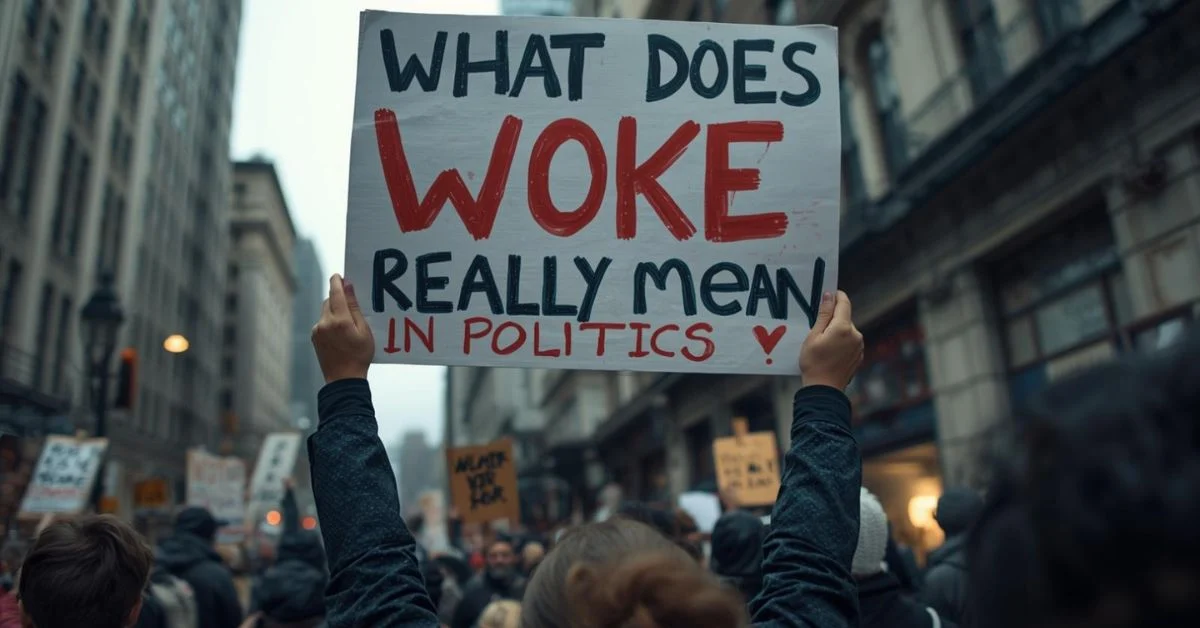
The term “woke” has become one of the most talked-about words in modern politics, but its meaning can be confusing.
Originally, “woke” emerged from African American communities as a way to describe being aware of social injustices, especially racial inequality.
Over time, however, the term has shifted from a cultural concept to a political label, often used in debates about education, social policies, and media.
Today, “woke” can carry very different meanings depending on who uses it: supporters see it as a symbol of awareness and progress, while critics often frame it as a symbol of political correctness or overreach.
Understanding what “woke” actually means in political conversations is essential for anyone trying to follow current debates or engage in meaningful discussions.
In this article, we will explore the origins, modern interpretations, controversies, and real-world examples of “woke” in politics.
What Does “Woke” Originally Mean?
The word “woke” did not start as a political term. Its roots lie in African American Vernacular English (AAVE), where it originally meant being awake or aware. Over time, “woke” became a metaphor for social consciousness, particularly about racial injustice, discrimination, and inequality. In this context, to be “woke” was to be alert to systemic issues that many people overlooked or ignored.
The earliest recorded uses of “woke” in this sense date back to the 1940s, appearing in speeches and writings that encouraged awareness of racial oppression. However, the term gained wider attention in the 21st century, especially during the Black Lives Matter movement, where activists emphasized the importance of “staying woke” to social and political inequalities.
Being “woke” originally carried a positive connotation it was about vigilance, empathy, and understanding the experiences of marginalized communities. It was a call to recognize injustice and act against it. Unlike its modern political usage, it was not meant as a label to divide people or as a point of criticism.
Understanding this origin is crucial because it shows how “woke” evolved from a cultural term rooted in awareness and justice into a politically charged word. Recognizing this history helps clarify why the meaning of “woke” can be so different depending on who is using it and in what context.
How Did “Woke” Enter Politics?
While “woke” began as a term in African American culture, it gradually entered the political arena as activists, media, and policymakers adopted it to describe awareness of social inequalities. The shift from cultural slang to political terminology became more noticeable in the 2010s, particularly during movements like Black Lives Matter, where being “woke” meant recognizing systemic racism, police brutality, and social injustice.
Politicians and public figures began using the term in debates about policy, education, and social reforms. For example, issues like affirmative action, gender equality, LGBTQ+ rights, and climate justice were increasingly framed through the lens of being “woke,” emphasizing social responsibility and awareness. Media outlets also played a major role in popularizing the term, often highlighting conflicts where people accused each other of being “too woke” or “not woke enough.”
By the late 2010s, “woke” had evolved into a political label that could be used positively or negatively. Supporters used it to signal commitment to equality and social justice, while critics, particularly in conservative circles, began using it as a term of derision, equating “woke” with excessive political correctness, overreach, or ideological extremism.
Understanding how “woke” entered politics helps explain why the term is so polarizing today. Its transformation from cultural awareness to political weapon shows how language can shift meaning depending on context, media framing, and public debate, making “woke” a word that sparks both support and controversy across the political spectrum.
What Does Woke Mean in Modern Politics?
In modern politics, the meaning of “woke” has expanded far beyond its original cultural roots. Today, it functions as both an ideological label and a point of debate, often depending on who is using the term. For supporters, being “woke” signals awareness of social injustice and a commitment to policies that promote equality, inclusion, and fairness. This can include advocating for racial equality, gender rights, LGBTQ+ protections, and social welfare initiatives. Politicians and activists who embrace these values often see “woke” as a badge of social responsibility.
Conversely, critics especially from conservative or right-leaning perspectives use “woke” as a pejorative term. In this context, “woke politics” is associated with excessive political correctness, ideological conformity, and social overreach. Media and political commentators often frame “woke” as a culture-war tool, suggesting that it undermines tradition, freedom of speech, or merit-based policies.
Left-Wing Perspective
Progressives generally view “woke” positively, emphasizing social awareness and activism. They argue it promotes fairness, inclusion, and accountability in both government and society.
Right-Wing Perspective
Conservatives often criticize “woke” culture as overbearing or performative. They argue it can create division, discourage free debate, and prioritize identity politics over practical policy.
Understanding these different interpretations is crucial. The same word can be celebrated or criticized depending on political stance, media portrayal, and cultural context. This duality explains why discussions around “woke” are often heated, polarizing, and widely debated in today’s political landscape.
Why Is “Woke” So Controversial?
The term “woke” has become highly controversial because it touches on deep cultural and political divides. What started as a positive call for awareness of social injustice has evolved into a term that sparks heated debates and strong reactions. One major reason for the controversy is the polarization of politics. People on different sides of the political spectrum often interpret “woke” very differently, turning a word about awareness into a symbol of either progress or threat.
Media coverage plays a significant role in amplifying the controversy. News outlets, social media, and opinion columns frequently highlight conflicts involving “woke” issues, from debates over school curricula and workplace policies to entertainment and corporate campaigns. This constant coverage reinforces the idea that being “woke” is not just an individual choice but a publicly debated social stance.
Another reason “woke” is controversial is its association with cancel culture and social accountability. Critics argue that “woke culture” can lead to over-policing of speech, social shaming, or punishing people for minor mistakes. Supporters, however, see these measures as necessary steps to address systemic inequalities and hold people accountable for harmful actions.
Finally, the ambiguity of the term itself contributes to controversy. Because “woke” has different meanings depending on context, it can easily be misinterpreted, exaggerated, or weaponized in political discourse. This combination of media amplification, ideological clashes, and semantic ambiguity ensures that “woke” remains one of the most debated terms in modern politics.
Examples of Woke Politics in Real Life
“Woke politics” is no longer just a concept; it appears in policies, corporate practices, education, and media. In government, woke politics can influence legislation related to diversity, equity, and inclusion (DEI). For example, some countries and states have introduced laws promoting equal pay, minority representation, and protections for LGBTQ+ communities. These policies aim to address systemic inequalities but are often labeled as “woke” by critics who see them as overreach or favoritism.
In education, schools and universities have become key arenas for woke politics. Curricula now often include lessons on racial history, gender studies, and social justice issues. Programs promoting cultural awareness and anti-bullying initiatives are praised by supporters for fostering empathy, while detractors argue that they may introduce political bias or limit free expression.
Corporate culture is another area where woke politics is visible. Companies increasingly adopt inclusive hiring practices, diverse marketing campaigns, and public support for social causes. Tech giants and media corporations often use slogans and initiatives highlighting diversity and sustainability, which some label as “performative wokeness,” while others see it as genuine social responsibility.
Media and entertainment also reflect woke politics. Films, TV shows, and online content increasingly include diverse representation and address social issues such as racism, sexism, and inequality. These examples show that woke politics is embedded in multiple aspects of modern life, influencing public debate and shaping perceptions across society.
Arguments in Favor of Woke Politics
Supporters of woke politics argue that it plays a vital role in raising awareness of social injustices and promoting equality. At its core, being “woke” encourages individuals and institutions to recognize systemic issues such as racism, sexism, and discrimination against marginalized groups. By addressing these inequalities, societies can work toward fairer opportunities for everyone, ensuring that historically disadvantaged communities receive the attention and support they need.
Woke politics also fosters inclusivity and representation. Policies and initiatives inspired by woke principles often aim to give voice to minority groups in education, workplaces, media, and government. This increased representation can lead to more diverse perspectives in decision-making, helping institutions better reflect the communities they serve.
Another argument in favor is that woke politics promotes social responsibility and accountability. Activists and communities push for change by holding individuals, organizations, and governments accountable for harmful actions or policies. This can encourage ethical behavior and discourage discrimination or exploitation.
Moreover, supporters believe that woke politics drives cultural progress. By challenging outdated norms, questioning bias, and encouraging dialogue about inequality, it helps societies evolve toward greater fairness and understanding. While critics often focus on the controversies surrounding the term, proponents emphasize its role in fostering awareness, justice, and positive social change.
In short, woke politics is seen as a tool for creating a more just and inclusive society, ensuring that systemic injustices are acknowledged and addressed rather than ignored.
Criticism of Woke Politics
While supporters praise woke politics for promoting equality, critics argue that it can have negative consequences when taken to extremes. One major criticism is that woke culture can lead to over-policing of speech and ideas, where people or organizations are publicly shamed for expressing opinions that don’t align with progressive norms. This is often referred to as cancel culture, and critics claim it can discourage free expression and open debate.
Another concern is that woke politics sometimes prioritizes identity over merit. Opponents argue that an excessive focus on race, gender, or other characteristics can lead to policies or decisions that overlook individual skills and qualifications. For example, critics may see DEI initiatives in workplaces or schools as well-intentioned but potentially unfair or tokenistic.
Some also contend that woke politics can contribute to division rather than unity. By emphasizing differences between groups, critics argue, it may inadvertently create tension and resentment, fueling polarization in society. Opponents often frame “woke” as an ideology that enforces ideological conformity, where dissenting viewpoints are dismissed or criticized harshly.
Finally, conservatives and libertarians frequently see woke politics as excessive political correctness, arguing that it can stifle open conversation and focus too much on symbolism rather than practical solutions. While the intentions behind woke politics may be positive, these criticisms highlight why the term is often polarizing in modern political debates, drawing strong reactions from both supporters and detractors.
Common Misunderstandings About Woke Politics
The term “woke” is often misunderstood, which contributes to the confusion and controversy surrounding it. One common misconception is that being woke only refers to race or racial issues. While the term originally gained prominence in discussions about racial justice, modern woke politics also addresses gender equality, LGBTQ+ rights, environmental concerns, and economic disparities. Limiting the term to a single issue oversimplifies its broader purpose of promoting awareness and social justice.
Another misunderstanding is that woke politics is inherently anti-free speech. Critics often claim that woke culture suppresses opinions that don’t align with progressive ideals. While overzealous applications of woke principles can sometimes stifle debate, the core idea is encouraging awareness and responsibility, not banning differing opinions.
Many people also confuse woke politics with political correctness or radical ideology. While there is overlap, being woke is not necessarily about extreme positions it is fundamentally about recognizing inequality and promoting fairness. The negative perception often arises when media and political commentators exaggerate conflicts, framing any progressive action as “woke overreach.”
Finally, some assume that woke politics is only relevant to the left. While it is more closely associated with progressive movements, the principles of awareness, accountability, and social justice can appear in different political contexts. Understanding these common misunderstandings helps clarify why “woke” can be interpreted in multiple ways, depending on context, intention, and perspective.
By addressing these misconceptions, readers can form a more balanced and accurate understanding of woke politics without being misled by oversimplifications or media exaggeration.
FAQs
1. What does woke mean in simple words?
Woke means being aware of social inequalities and injustices. It originally referred to understanding systemic racism but now also includes awareness of gender, LGBTQ+, and other social issues.
2. Is woke a left-wing ideology?
While woke politics is most commonly associated with progressive or left-leaning movements, its core idea being aware of injustice is not exclusive to one side. However, conservatives often use the term critically to describe leftist policies.
3. Why do conservatives criticize woke culture?
Critics argue that woke culture enforces ideological conformity, overemphasizes identity politics, and may stifle free speech. They often see it as symbolic activism rather than practical solutions.
4. Is being woke a good or bad thing?
Being woke is neutral in itself; it promotes awareness and social responsibility. Whether it is viewed positively or negatively depends on perspective. Supporters see it as ethical and fair, while critics view it as excessive or divisive.
5. Is woke the same as political correctness?
Not exactly. Political correctness focuses on avoiding offensive language, while woke politics emphasizes broader social awareness, accountability, and activism. The terms overlap but are not identical.
6. What is an example of woke politics?
Examples include DEI initiatives in workplaces, school programs addressing social justice, and policies promoting equal representation for marginalized groups.
7. How did woke become controversial?
Its controversial status comes from media amplification, political polarization, and debates over cancel culture, free speech, and identity-focused policies.
These FAQs help readers quickly grasp the key aspects of woke politics, clarifying common doubts and misunderstandings.
Conclusion:
The term “woke” has undergone a significant evolution, transforming from a simple expression of social awareness into a complex and often polarizing political concept.
Originally rooted in African American communities, being “woke” meant staying alert to racial injustice and systemic inequality.
Over time, the term expanded to include awareness of gender equality, LGBTQ+ rights, environmental issues, and other social justice causes.
In modern politics, “woke” carries different meanings depending on perspective. Supporters see it as a commitment to fairness, inclusion, and accountability, encouraging individuals and institutions to address systemic problems.
Critics, on the other hand, frame it as a symbol of overreach, ideological conformity, or excessive political correctness. This duality has made the term highly debated in media, social discourse, and policy discussions.
Understanding the origins, evolution, and contemporary use of woke politics is essential for anyone looking to navigate today’s cultural and political landscape.
It highlights the importance of critical thinking, media literacy, and awareness of context, as the meaning of “woke” can shift depending on who is using it and why.
Ultimately, being informed about woke politics allows readers to engage in discussions more thoughtfully and respectfully, avoiding misunderstandings and oversimplifications.
Whether one supports or critiques the concept, recognizing its history and nuances is key to meaningful political conversation.
“Woke” is more than a buzzword it is a reflection of society’s ongoing struggle with justice, equity, and awareness.

“Hi, I’m Gigi Giggles! Spreading laughter and good vibes wherever .I go Lover of silly jokes, random adventures, and all things fun. Life’s too short to be serious, so let’s giggle, smile, and make every day a little brighter .Check out more puns and laughs at thepunside.com!