Calcium is more than just a mineral found in milk it’s a vital nutrient that keeps your body functioning at its best.
From strengthening bones and teeth to supporting muscle movement and nerve signals, calcium plays a starring role in overall health.
Many people don’t realize that without enough calcium, the body can face serious consequences like brittle bones, muscle cramps, or even irregular heartbeats.
If you’re a growing child, an active adult, or a senior looking to maintain bone density, understanding calcium’s importance is key to staying healthy.
In this article, we’ll explore everything you need to know about calcium:
how it works in your body, the signs of deficiency, recommended daily intake, natural sources, supplements, and tips to maximize absorption.
By the end, you’ll have a clear roadmap to ensure your body gets the calcium it needs to thrive every day.
The Essential Roles of Calcium in the Body
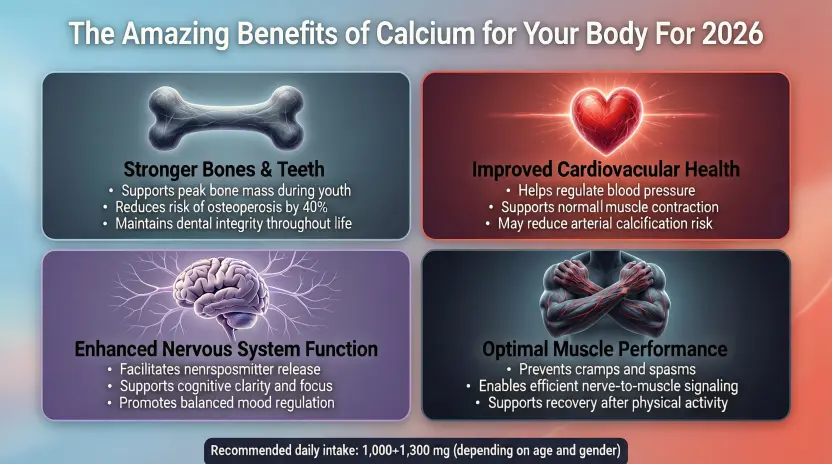
Calcium is often called the “building block” of the body, and for good reason. About 99% of the calcium in your body is stored in your bones and teeth, providing them with strength and structure. Strong bones not only allow you to move freely but also protect vital organs, reduce fracture risks, and support overall mobility. Calcium doesn’t stop there it also plays a crucial role in keeping your teeth healthy. By strengthening enamel, calcium helps prevent cavities and decay, making it essential for maintaining a confident, pain-free smile.
Beyond bones and teeth, calcium is vital for muscle function. Every time your muscles contract from simple movements like walking to intense exercise calcium ions trigger these contractions. It also supports nerve function by helping transmit messages between the brain and the rest of the body. Even processes like blood clotting rely on calcium to function correctly, helping the body prevent excessive bleeding after injuries.
Because calcium is involved in so many critical processes, a deficiency can have wide-ranging effects. From weakened bones and teeth to muscle cramps and even irregular heart rhythms, not having enough calcium impacts overall health. Understanding its diverse roles highlights why maintaining adequate calcium intake every day is essential for long-term wellness.
Signs and Symptoms of Calcium Deficiency
Calcium is essential for many body functions, so when your intake is insufficient, your body can show several warning signs. One of the earliest indicators is muscle-related issues, such as frequent cramps, spasms, or twitching. These occur because calcium plays a key role in muscle contraction and relaxation. Without enough calcium, muscles can struggle to function properly, leading to discomfort or sudden cramps, especially in the legs or back.
Another common symptom is fatigue or general weakness. Calcium is critical for energy metabolism and nerve signaling, so a deficiency can leave you feeling tired, lethargic, or mentally foggy. Over time, inadequate calcium can affect your bones and teeth, causing them to become weak and brittle. In children and teenagers, this can interfere with proper bone growth, while adults may experience early signs of osteoporosis or an increased risk of fractures.
Dental problems can also signal low calcium levels. Weak enamel, tooth decay, or delayed tooth development in children may be linked to insufficient calcium intake. In severe cases, tingling or numbness in the fingers, hands, or face may appear, as calcium is necessary for nerve function and blood clotting.
Certain groups are at higher risk of deficiency, including postmenopausal women, vegans, lactose-intolerant individuals. Recognizing these signs early is crucial for taking corrective measures, such as improving dietary intake or considering supplements, to maintain overall health and prevent long-term complications.
Recommended Daily Calcium Intake
Ensuring you get enough calcium every day is essential for strong bones, teeth, and overall bodily functions. The amount of calcium your body needs depends on your age, gender, and life stage. For children aged 1–3 years, the recommended daily intake is about 700 mg, while those aged 4–8 need around 1,000 mg. Teenagers, who are in a critical phase of bone growth, require 1,300 mg per day to support rapid development.
For adults, daily calcium needs vary slightly. human beings aged 19–50 should aim for 1,000 mg, while women over 50 and men over 70 require 1,200 mg to help prevent bone loss and maintain bone density. During pregnancy and breastfeeding, women need 1,000 mg to support both their own bone health and the developing baby’s skeletal system.
It’s important to spread calcium intake throughout the day rather than consuming it all at once, as the body absorbs it more effectively in smaller doses. Foods rich in calcium, such as dairy products, leafy greens, fortified plant-based milks, and tofu, are ideal sources to meet these requirements.
While calcium supplements can help those who struggle to get enough from diet alone, exceeding the upper limit of 2,500 mg per day can cause side effects like kidney stones or digestive discomfort. Tracking your daily intake and understanding your body’s specific needs ensures you get the right amount of calcium for optimal health and long-term wellness.
Natural Sources of Calcium
Getting calcium from natural food sources is the best way to maintain strong bones, teeth, and overall health. Dairy products are the most well-known and effective sources. Milk, cheese, and yogurt are rich in calcium and easily absorbed by the body. A single cup of milk provides around 300 mg of calcium, while an ounce of cheese can contain between 200–300 mg depending on the type.
For those who avoid dairy, there are plenty of plant-based options. Leafy green vegetables such as kale, collard greens, and broccoli are excellent sources. Legumes like chickpeas and soybeans, as well as tofu made with calcium sulfate, can significantly contribute to daily calcium intake. Nuts and seeds, especially almonds, sesame seeds, and chia seeds, also contain moderate amounts of calcium.
Fortified foods are another convenient way to boost calcium intake. Many plant-based milks, orange juice, cereals, and even certain breads are fortified with calcium, helping individuals meet their daily needs without relying solely on dairy. Seafood such as sardines or salmon with edible bones is also a highly bioavailable source of calcium, meaning your body can absorb it efficiently.
Combining different calcium-rich foods throughout the day is an effective strategy. For example, enjoying a yogurt snack, a leafy green salad with tofu, and a handful of almonds can help cover most of your daily requirement naturally. This approach ensures adequate calcium intake while also providing other essential nutrients like protein, vitamin K, and magnesium, which support bone health.
Calcium Supplements: Benefits and Risks
While obtaining calcium from foods is ideal, some individuals may need supplements to meet their daily requirements. Calcium supplements are especially helpful for people who are lactose-intolerant, vegans, postmenopausal women, or those with certain medical conditions that limit calcium absorption. Common forms of calcium supplements include calcium carbonate and calcium citrate. Calcium carbonate is best taken with food, while calcium citrate can be taken on an empty stomach and is easier to absorb for older adults.
Supplements can effectively prevent or treat calcium deficiency, supporting bone health and reducing the risk of osteoporosis. They are often recommended in combination with vitamin D, which helps the body absorb calcium more efficiently. However, supplements should not replace a balanced diet; natural food sources provide additional nutrients like magnesium, protein, and vitamin K that enhance calcium’s benefits.
Despite their advantages, excessive supplementation carries risks. Taking more than the recommended amount can lead to kidney stones, constipation, and, in rare cases, heart problems. Overuse may also interfere with the absorption of other minerals, such as iron and zinc.
To use supplements safely, it’s important to follow the recommended daily dose and consult a healthcare professional before starting any new regimen. By balancing dietary sources with supplements when necessary, individuals can maintain optimal calcium levels and support long-term bone, dental, and overall health.
How to Improve Calcium Absorption
Consuming calcium-rich foods or supplements is important, but your body must be able to absorb it effectively to reap its full benefits. Several factors can improve calcium absorption and ensure it reaches your bones, teeth, and muscles. One of the most important is Vitamin D, which helps the intestines absorb calcium efficiently. Sunlight exposure, fatty fish like salmon, fortified dairy, and supplements can help maintain adequate vitamin D levels.
Balanced nutrition also plays a key role. Magnesium, found in nuts, seeds, and whole grains, works alongside calcium to strengthen bones. Vitamin K, present in leafy greens, helps deposit calcium into the bone matrix, improving bone density. Including these nutrients in your diet can maximize calcium’s benefits.
Lifestyle choices can influence absorption as well. Weight-bearing exercises, such as walking, jogging, or strength training, stimulate bone formation and improve calcium utilization. On the other hand, excessive salt, caffeine, and alcohol intake can reduce calcium absorption and increase calcium loss through urine.
The timing and combination of foods also matter. Spreading calcium intake throughout the day rather than consuming it all at once helps the body absorb it more efficiently. For supplements, it’s often better to take smaller doses multiple times a day instead of a single large dose.
By focusing on vitamin D, complementary nutrients, healthy habits, and proper timing, you can significantly improve calcium absorption and support overall bone, muscle, and dental health.
Risks of Excess Calcium
While calcium is essential for health, consuming too much can lead to negative effects. Excessive calcium intake, usually from supplements rather than food, can cause a condition called hypercalcemia, which occurs when calcium levels in the blood become too high. Symptoms of hypercalcemia may include nausea, vomiting, constipation, frequent urination, and even confusion or fatigue in severe cases.
One of the most common complications of too much calcium is kidney stones. High calcium levels can combine with other minerals in the kidneys, forming painful stones that may require medical treatment. Digestive issues, such as bloating and constipation, are also frequently reported in people who overuse calcium supplements.
Long-term overconsumption may affect heart health. Some studies suggest that excessive calcium supplementation could increase the risk of arterial calcification, which may contribute to cardiovascular problems, particularly in older adults. Additionally, very high calcium intake can interfere with the absorption of other essential minerals, like iron, magnesium, and zinc, potentially leading to deficiencies in those nutrients.
To avoid these risks, it’s important to stay within recommended limits. Adults should generally not exceed 2,500 mg of calcium per day from food and supplements combined. Monitoring intake, focusing on calcium-rich foods rather than excessive supplementation, and consulting a healthcare professional before starting supplements are key steps to maintaining safe and effective calcium levels.
By balancing intake, you can enjoy calcium’s many benefits without risking potential harm.
Fun and Surprising Facts About Calcium
Calcium is often associated with milk and bones, but this essential mineral plays a surprising variety of roles in the body and beyond. Did you know that adults have about 1 kilogram (2.2 pounds) of calcium in their body, with the vast majority stored in bones and teeth? This tiny mineral is constantly being recycled bones release calcium into the blood when levels are low, and it is redeposited when intake is sufficient.
Calcium is also crucial for the heart. It helps regulate the heartbeat by enabling proper contraction and relaxation of the heart muscles. Without adequate calcium, heart function could be compromised. Additionally, calcium supports nerve signaling, which allows your brain to communicate with muscles and organs, helping your body move, respond to stimuli, and perform daily functions smoothly.
Outside of the body, calcium has surprising applications. It is a key ingredient in construction materials like cement and plaster. In the food industry, calcium is used to fortify products and stabilize ingredients, improving nutrition and texture.
Interestingly, calcium needs fluctuate throughout life. Children and teenagers require high amounts for bone growth, while older adults need more to prevent bone loss. Even small dietary changes, like adding fortified plant-based milk or a handful of almonds, can significantly impact daily calcium intake.
These facts highlight that calcium is far more than a bone-building mineral it is a versatile nutrient that supports many aspects of life, inside and outside the body.
Frequently Asked Questions
1. Can adults get enough calcium without dairy?
Yes, adults can meet their calcium needs without dairy by consuming plant-based sources such as leafy greens, fortified plant milks, tofu made with calcium sulfate, almonds, and sesame seeds. Combining multiple sources throughout the day ensures adequate intake.
2. How does calcium help prevent osteoporosis?
Calcium strengthens bones by providing structural support and maintaining bone density. Adequate calcium intake throughout life, especially during childhood, adolescence, and older age, reduces the risk of osteoporosis and fractures.
3. What happens if you take too much calcium?
Excess calcium, usually from supplements, can lead to hypercalcemia, kidney stones, constipation, and, in severe cases, heart issues. Adults should generally not exceed 2,500 mg per day from all sources combined.
4. Can calcium help with weight loss?
While calcium itself doesn’t directly cause weight loss, some studies suggest that adequate calcium intake may support fat metabolism and healthy body composition. However, it should be combined with a balanced diet and regular exercise.
5. How long does it take to notice calcium deficiency symptoms?
Mild deficiency may take months to show symptoms, often starting with fatigue or muscle cramps. Severe or prolonged deficiency can lead to brittle bones, dental issues, and increased fracture risk over years.
6. Which foods are highest in calcium per serving?
Top calcium-rich foods include dairy products, fortified plant milks, leafy greens, tofu, almonds, sesame seeds, and canned fish with bones like sardines and salmon.
7. Are calcium supplements necessary for everyone?
Supplements are not needed for everyone. Individuals who meet daily calcium needs through diet usually do not require supplements.
They are most useful for people with dietary restrictions or higher requirements, such as older adults and women.
Conclusion
Calcium is one of the most important minerals for maintaining overall health.
It plays a crucial role in building and maintaining strong bones and teeth, supporting muscle function, regulating nerve signals, and even helping blood clot properly.
Without enough calcium, the body can experience a wide range of issues, from muscle cramps and fatigue to brittle bones, dental problems, and long-term risks like osteoporosis.
Recognizing the signs of calcium deficiency early allows you to take action and prevent serious health complications.
Meeting your daily calcium needs is achievable through a combination of natural foods, fortified products, and, if necessary, supplements.
Dairy products such as milk, cheese, and yogurt are excellent sources, but plant-based options like leafy greens, almonds, tofu, and fortified plant milks can provide sufficient calcium for those avoiding dairy.
Supplements can help fill gaps, especially for individuals with higher needs or dietary restrictions, but they should be used responsibly to avoid the risks associated with excessive calcium intake.
In addition to consuming enough calcium, factors like vitamin D intake, regular weight-bearing exercise, and avoiding excessive salt or caffeine can significantly improve calcium absorption and bone health.
By understanding calcium’s diverse roles and actively incorporating it into your diet, you can support your body’s bones, teeth, muscles, and overall well-being for years to come. Prioritizing calcium today helps build a healthier, stronger tomorrow.

Owen Carter — Creating moments that inspire, entertain, and connect. From creative ideas to daily insights, this page brings personality, passion, and authenticity in every post. Powered by ThePunSide.com for even more creativity, humor, and good vibes every day.