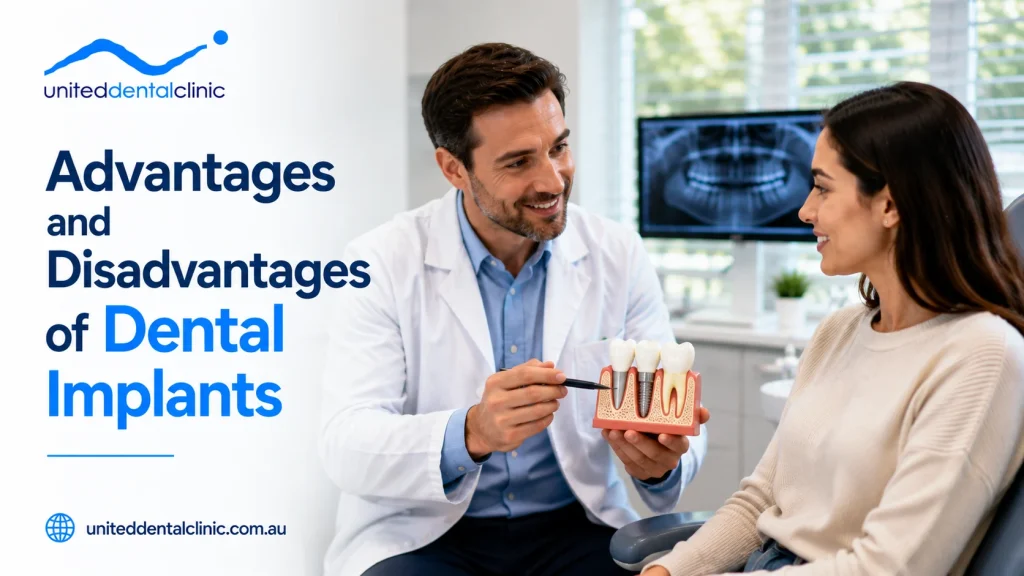
Dental implants are widely considered the gold standard for replacing missing teeth, but they are not a one-size-fits-all solution. They last for decades and restore your full chewing power. On the flip side, they require a higher upfront investment and involve a minor surgical procedure, which naturally makes some patients hesitate.
This guide breaks down both sides honestly so you can make an informed choice. If you are weighing your options, a trusted family dentist in Warriewood can walk you through how these factors apply to your specific smile.
What Are Dental Implants?
An implant is a titanium post that replaces the root of a missing tooth. It sits in the jawbone and holds a crown, bridge, or denture on top.
The post fuses with the bone over a few months. This creates a stable foundation. This is what separates implants from removable options that sit on the gums. As a missing-teeth replacement, an implant is the only option that replaces both the root and the visible tooth.
The Advantages of Dental Implants
There is a reason implants have become so popular. The benefits are substantial and genuinely change daily life.
Here is what makes them stand out:
- They look and feel natural: The crown is matched to your other teeth.
- They last a long time: The post can last decades, often a lifetime.
- They protect your jawbone: The post stimulates the bone, preventing the shrinkage that follows tooth loss.
- They restore full function: You can eat and chew normally, without restriction.
- They stand alone: Unlike a bridge, they do not rely on filing down neighbouring teeth.
That jawbone point is one people rarely hear about. When you lose a tooth, the bone beneath it starts to shrink. A well-planned dental implant treatment stops that process, which protects both your other teeth and your facial structure over time.
The Disadvantages of Dental Implants
Now for the honest other side. No treatment is perfect, and implants have real drawbacks worth knowing.
The main ones are:
- The upfront cost: Implants cost more initially than dentures or bridges.
- The time involved: The full process can span several months.
- It requires surgery: Placement is a minor surgical procedure.
- Not everyone qualifies: Some patients need bone grafting first.
The cost is usually the biggest hesitation. However, it helps to view it over the lifespan. Because implants can last decades without replacement, the disadvantages of dental implants often look smaller once you factor in the years of service. A denture may cost less now but needs replacing several times over.
The time factor is real too. Healing and fusion take months, so this is not an instant fix. For most people, though, the wait is well worth the lasting result.
Who Is a Good Candidate?
Implants suit many people, but not all. Your suitability depends on a few health factors.
You generally need healthy gums, enough jawbone to support the post, and good general health. Smokers face a higher risk of failure, so quitting during healing is strongly advised. A Dental implant specialist Warriewood patients trust will assess all of this at your consultation. If bone is lacking, a graft can often build it up first, opening the door to treatment.
The truth is that most adults missing one or more teeth are suitable, or can become suitable with some preparation.
What Does the Procedure Involve?
Knowing the steps removes much of the worry. The dental implant procedure follows a clear, well-established sequence.
It typically runs like this:
- A consultation with a 3D scan to plan the implant
- Any preparatory work, such as grafting, if needed
- Placement of the titanium post under local anaesthetic
- A healing period while the post fuses with the bone
- Attachment of the final crown once healed
Most patients are surprised by how manageable the placement is. It is quieter and more comfortable than the surgery they imagined. Mild tenderness for a day or two afterward is normal and easily managed.
What About Replacing Multiple Teeth?
Implants are not just for single teeth. They work well for larger cases too.
For several missing teeth, an implant-supported bridge works beautifully. For a full arch, full mouth dental implants using techniques like All-on-4 can replace an entire row on just a few posts. This gives patients with significant tooth loss a fixed, permanent solution rather than removable dentures. The right approach depends on how many teeth you are replacing.
How Do Implants Compare to the Alternatives?
Weighing implants against dentures and bridges helps clarify the choice. Each has its place.
| Option | Lifespan | Key trade-off |
| Dental implant | Decades, often life | Higher upfront cost |
| Dental bridge | 10 to 15 years | Files down nearby teeth |
| Denture | 5 to 10 years | Removable, can slip |
Looking at the pros and cons of dental implants this way makes the value clearer. Implants cost more upfront but last much longer and protect your other teeth. For many, that trade-off is worth it.
Making Your Decision
Dental implants offer natural looks, lasting durability, and full function, balanced against a higher upfront cost and a longer timeline. Understanding both sides is the key to a confident decision. For most people missing teeth, the benefits of dental implants outweigh the drawbacks over the long term.
The only way to know what suits you is a proper assessment. If you are considering implants, professional guidance removes the guesswork entirely. Book a consultation at United Dental Clinic today and get honest, personalised advice for your smile.
FAQs
How long do dental implants last?
The titanium post can last decades, often a lifetime, with good care. The crown on top may need replacing eventually due to normal wear, but the foundation stays solid.
Is getting a dental implant painful?
Not during the procedure, since the area is fully numbed. Most patients feel only mild tenderness for a day or two afterward, which is easily managed with simple pain relief.
How much do dental implants cost compared to dentures?
Implants cost more upfront than dentures. However, they last far longer without replacement, so the long-term value often works out favourably over the years.
Can I get implants if I’ve lost bone in my jaw?
Often, yes. A bone graft can rebuild the area first, making implants possible for many patients who lack sufficient bone. A consultation confirms whether this applies to you.