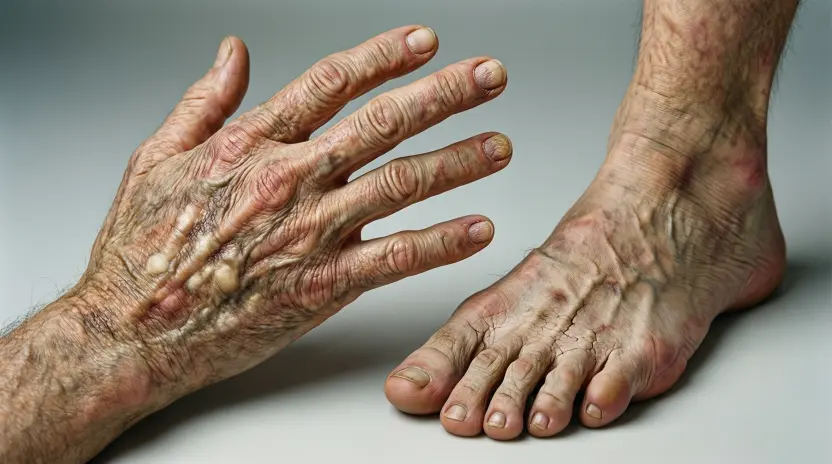
Leprosy, also known as Hansen’s disease, is a chronic infection that affects the skin, nerves, and sometimes other parts of the body.
While it is rare today, understanding what leprosy looks like can help with early detection and treatment.
Many people searching for “what does leprosy look like” are curious about the visible signs, from discolored patches to numb areas on the skin.
Early symptoms are often subtle, which makes awareness crucial. In this article, we’ll guide you through the different appearances of leprosy, including the types of skin lesions, nerve changes, and other physical signs.
You’ll also learn how doctors diagnose the disease, the progression of symptoms over time, and what treatment options are available.
By the end, you’ll have a clear, informative, and accurate understanding of leprosy without the myths or fear so you can recognize the signs and know when to seek medical help.
What Causes Leprosy?
Leprosy, medically known as Hansen’s disease, is caused by the bacterium Mycobacterium leprae. This slow-growing bacterium primarily affects the skin, peripheral nerves, and sometimes the mucous membranes of the nose and eyes. Unlike many contagious diseases, leprosy spreads very slowly and usually requires prolonged close contact with an untreated person. Casual contact, like shaking hands or sitting next to someone, is highly unlikely to transmit the disease.
The exact reason why some people develop leprosy while others do not is still under study. Genetics, immune system strength, and environmental factors all play a role. People with weakened immune systems are more susceptible, and certain regions of the world particularly parts of India, Brazil, Indonesia, and some African countries have higher rates of leprosy.
There are different forms of leprosy depending on the body’s immune response: tuberculoid, lepromatous, borderline, and indeterminate. Each type shows distinct symptoms, particularly on the skin and nerves.
Understanding the cause is important because it clarifies a common misconception: leprosy is not highly contagious and cannot be spread through casual contact. Early detection and treatment are effective, making it a manageable disease. Knowing how it develops helps in recognizing the signs early and reduces stigma, encouraging affected individuals to seek medical care promptly.
Early Signs of Leprosy
Recognizing the early signs of leprosy is crucial for prompt treatment and preventing long-term complications. One of the first indicators is the appearance of discolored patches on the skin. These patches may be lighter or reddish compared to surrounding skin and often have a smooth or slightly raised texture. Unlike regular skin blemishes, these areas usually lose sensation, meaning they may feel numb to touch, heat, or pain.
Another common early sign is tiny bumps or nodules, which may gradually enlarge or multiply. These are often painless, which can make them easy to overlook. Early leprosy may also cause tingling, burning, or numbness in hands, feet, or other affected areas, sometimes leading to unnoticed injuries due to reduced sensation.
Changes in hair growth can also occur on affected patches. Hair may thin or fall out completely in the affected areas, especially eyebrows and eyelashes in certain types of leprosy. People may also notice muscle weakness or mild nerve swelling, although this is often subtle in the early stages.
It’s important to remember that early symptoms are often subtle and gradual, which is why many people don’t realize they have leprosy at first. Detecting these signs early allows for effective treatment with multi-drug therapy (MDT), preventing severe skin changes, nerve damage, or disabilities. If you notice unusual skin patches with numbness or tingling, consulting a healthcare professional promptly is highly recommended.
Skin Changes – What Leprosy Looks Like
Leprosy affects the skin in distinct ways depending on the type of the disease. Understanding these skin changes can help in early recognition and diagnosis.
Tuberculoid leprosy usually presents as a few well-defined patches on the skin. These patches are often pale, dry, and numb, with hair loss in the affected area. Because the immune system effectively controls the bacteria, lesions are limited but still noticeable due to loss of sensation.
Lepromatous leprosy, on the other hand, is more severe and widespread. It can produce multiple nodules, thickened skin, and raised lesions over the body, often including the face, ears, and extremities. Facial skin may become thickened, giving a rounded appearance, and eyebrows or eyelashes may thin or disappear.
Borderline leprosy shows a mixture of these symptoms, with irregular patches, some numb and some sensitive, and lesions that vary in color and size. The appearance can change over time depending on immune response.
Indeterminate leprosy is an early form, where skin changes are faint and often appear as small, light-colored patches. These are difficult to notice and can easily be mistaken for other skin conditions.
In addition to discoloration and lesions, affected areas may show loss of sweat, hair, and sensation, making the skin appear dry and less responsive. Early identification of these skin changes is critical because they indicate leprosy before nerve damage becomes severe.
By learning to recognize these visual signs, individuals and healthcare providers can take prompt action, ensuring effective treatment and reducing long-term complications.
Other Visible Symptoms Beyond Skin
While leprosy is most commonly recognized by its skin changes, it also affects the nerves and other parts of the body, leading to visible signs beyond the skin. One of the earliest nerve-related symptoms is thickening of peripheral nerves, especially around the elbows, knees, and sides of the neck. These nerves may become tender or enlarged, and in some cases, they can be felt under the skin.
As the disease progresses, muscle weakness may develop, particularly in the hands and feet. This can lead to clawed fingers or toes, making daily tasks more difficult. Loss of sensation in these areas also increases the risk of injuries, burns, or unnoticed cuts.
Facial involvement can also be noticeable. In severe cases of lepromatous leprosy, the nose may become flattened or collapsed due to chronic infection. Eyebrows and eyelashes may thin or disappear entirely. Eye complications can occur as well, sometimes leading to vision problems if nerve damage affects blinking and tear production.
Other subtle signs may include swelling of the hands, feet, or face and changes in body hair on affected areas. Some patients experience numbness or tingling sensations that can persist even after skin lesions begin to heal.
Recognizing these signs early, along with skin changes, is crucial. Many of these symptoms can be prevented or minimized with timely treatment, emphasizing why awareness and medical consultation are essential. Early detection not only stops the progression of the disease but also prevents permanent deformities and improves overall quality of life.
Leprosy Progression – How It Changes Over Time
Leprosy is a slow-progressing disease, and its symptoms often develop gradually over months or even years. Understanding the progression helps in recognizing the disease early and seeking timely treatment.
In the early stages, leprosy may appear as small, pale, or reddish patches on the skin with subtle numbness. At this point, the infection is often limited to the skin and peripheral nerves, and most patients may not experience pain or discomfort. Early recognition at this stage is crucial for preventing further complications.
As the disease advances without treatment, skin lesions may multiply, thicken, or become raised, particularly in lepromatous leprosy. Nerve involvement becomes more pronounced, leading to loss of sensation, tingling, or numbness in hands, feet, and other affected areas. Muscle weakness may appear, resulting in claw-like deformities in fingers and toes. In some cases, the face may show thickened skin, eyebrow or eyelash loss, and nasal changes.
During the chronic phase, untreated leprosy can cause permanent nerve damage, leading to disabilities or deformities. Secondary infections or injuries in numb areas are common because patients may not feel pain. However, with modern multi-drug therapy (MDT), the disease can be halted at any stage. Early treatment prevents the progression of skin and nerve changes, allowing most patients to recover fully without long-term complications.
Recognizing the gradual nature of leprosy progression reinforces the importance of early medical intervention, awareness of subtle signs, and regular monitoring, ensuring better outcomes and minimizing social stigma associated with the disease.
How Doctors Diagnose Leprosy
Diagnosing leprosy requires a careful combination of clinical examination, medical history, and laboratory tests. Since early signs can be subtle, medical professionals focus on identifying the characteristic skin and nerve changes.
The first step is usually a physical examination of the skin to detect patches, lesions, or nodules. Doctors check whether these areas have reduced or absent sensation, which is a key indicator of leprosy. They also examine peripheral nerves, feeling for thickening or tenderness around the elbows, knees, and sides of the neck. Muscle strength and motor function are assessed to identify early nerve involvement.
In addition to clinical evaluation, skin smears or biopsies may be performed to detect Mycobacterium leprae, the bacterium responsible for leprosy. These tests help confirm the diagnosis and determine the type of leprosy, which is essential for selecting the correct treatment.
Doctors also rule out other skin conditions that can mimic leprosy, such as fungal infections, eczema, psoriasis, or vitiligo. Blood tests or nerve function assessments may be used in some cases to evaluate the extent of nerve damage.
Early and accurate diagnosis is critical because leprosy is most effectively treated when caught promptly. With multi-drug therapy (MDT), patients can stop the progression of the disease, prevent permanent deformities, and reduce the risk of spreading the infection. Awareness of the diagnostic process also helps reduce stigma and encourages people to seek medical attention without fear.
Treatment and Recovery
Leprosy is a treatable and manageable disease, especially when detected early. The cornerstone of treatment is multi-drug therapy (MDT), which combines antibiotics such as rifampicin, dapsone, and clofazimine. MDT effectively kills the Mycobacterium leprae bacteria, stops the disease from progressing, and prevents further nerve and skin damage. Treatment duration depends on the type of leprosy: paucibacillary cases usually require 6 months, while multibacillary cases may need 12 months or longer.
Alongside antibiotics, managing symptoms is essential. Patients with nerve involvement may require physiotherapy to maintain muscle strength and prevent deformities. Protective measures, such as wearing proper footwear and checking for injuries, help avoid secondary infections in numb areas. In some cases, corticosteroids may be prescribed to reduce inflammation and nerve damage.
Recovery is gradual, and skin lesions may fade slowly even after treatment begins. While MDT cures the infection, nerve damage that has already occurred may be permanent, making early diagnosis crucial. Patients often regain mobility, sensation, and normal skin appearance if treatment is started promptly.
Education and support are also important components of recovery. Awareness about leprosy reduces social stigma, encourages adherence to treatment, and helps patients reintegrate into their communities. With early diagnosis, proper treatment, and follow-up care, most people with leprosy can lead healthy, active lives free from complications.
Myths vs Facts About Leprosy
Leprosy has been surrounded by myths and misunderstandings for centuries, which often lead to unnecessary fear and social stigma. Addressing these misconceptions is crucial for awareness, early diagnosis, and support for affected individuals.
Myth 1: Leprosy is highly contagious.
Fact: Leprosy spreads very slowly and usually requires prolonged, close contact with an untreated person. Casual contact like shaking hands, hugging, or sharing food does not transmit the disease.
Myth 2: Leprosy is a curse or punishment.
Fact: Leprosy is caused by bacteria, not supernatural forces. Scientific understanding and effective treatment make this disease completely manageable.
Myth 3: People with leprosy are always disfigured.
Fact: Visible deformities only occur in untreated or advanced cases. With early detection and proper multi-drug therapy (MDT), patients can recover fully without lasting physical changes.
Myth 4: Leprosy cannot be treated.
Fact: Leprosy is curable. MDT has been used worldwide for decades to effectively eliminate the bacteria and stop disease progression.
Myth 5: Leprosy affects only poor communities.
Fact: While more common in certain regions, leprosy can affect anyone regardless of economic status. Awareness and access to healthcare are key factors in early treatment.
By separating myths from facts, we reduce fear and encourage people to seek timely medical attention. Educating the public not only prevents stigma but also helps those affected reintegrate into society with dignity and confidence. Understanding the truth about leprosy is as important as recognizing its symptoms.
When to See a Doctor
Early detection of leprosy is essential for effective treatment and preventing long-term complications. You should consider seeing a doctor if you notice unusual skin patches that are lighter or reddish than surrounding skin, especially if these areas feel numb or less sensitive to touch, heat, or pain. Even small, faint patches can indicate the early stages of leprosy, so it’s important not to ignore them.
Other warning signs include tingling, burning, or numbness in your hands, feet, or other parts of the body. Swelling or thickening of peripheral nerves, particularly around the elbows, knees, or sides of the neck, is another important indicator. Muscle weakness or difficulty performing everyday tasks, such as gripping objects or walking, may also suggest nerve involvement.
If skin lesions appear along with changes in hair growth, such as thinning eyebrows or eyelashes, or if you notice facial changes like nose flattening or thickened skin, it’s crucial to seek professional evaluation immediately. Early medical consultation can confirm whether these signs are caused by leprosy or another condition, allowing for timely and appropriate treatment.
Prompt diagnosis ensures that multi-drug therapy (MDT) can be started quickly, preventing nerve damage, deformities, and further spread of the infection. It also helps reduce social stigma by educating patients and their families about the disease. Remember, seeing a doctor early improves outcomes and increases the likelihood of full recovery, making awareness of symptoms the first step in protecting both health and quality of life.
Frequently Asked Questions
1. Can leprosy be cured completely?
Yes. Leprosy is curable with multi-drug therapy (MDT), which kills the bacteria and stops the progression of the disease. Early treatment prevents long-term complications and deformities.
2. How long does it take for leprosy symptoms to appear?
Symptoms can develop slowly, often taking several months to years after infection. Early signs may be subtle, such as numb patches or minor skin changes, which is why awareness is important.
3. Is leprosy still present in modern times?
Yes, though it is rare in most countries. Some regions, particularly in parts of India, Brazil, Indonesia, and Africa, have higher prevalence. Modern medicine and public health programs have significantly reduced new cases worldwide.
4. Can leprosy affect children?
Yes, children can develop leprosy, though it is less common. Early detection in children is vital to prevent nerve damage and physical complications.
5. Are leprosy symptoms painful?
Not usually. Leprosy primarily causes numbness in affected areas, so patients may not feel pain, heat, or injuries in those regions. This lack of sensation is why early detection is critical.
6. How does leprosy spread?
Leprosy spreads very slowly and usually requires prolonged close contact with an untreated individual. Casual contact, such as hugging, shaking hands, or sharing meals, does not transmit the disease.
7. Can leprosy cause permanent deformities?
Only if left untreated. Prompt medical care with MDT prevents most deformities, making early diagnosis essential.
These FAQs address common concerns, helping readers understand leprosy, reduce fear, and encourage timely medical attention.
Conclusion
Leprosy, or Hansen’s disease, may seem mysterious to many, but understanding its signs, symptoms, and progression makes it easier to identify and treat.
The disease primarily affects the skin and peripheral nerves, leading to visible changes such as discolored patches, nodules, and numb areas, along with subtle nerve-related symptoms like tingling, muscle weakness, or thickened nerves.
Recognizing these early signs is crucial because prompt diagnosis allows for effective multi-drug therapy (MDT), which can completely cure the infection and prevent long-term complications or deformities.
It is equally important to separate myths from facts. Leprosy is not highly contagious, not a curse, and completely treatable.
Awareness helps reduce social stigma and encourages those affected to seek timely medical care.
Throughout the progression of leprosy, skin and nerve changes can become more noticeable, but with early treatment, most individuals recover fully and lead normal lives.
Regular medical follow-ups, proper care of affected areas, and physiotherapy in some cases help restore function and prevent injuries.
By learning what leprosy looks like, understanding its causes, and knowing when to see a doctor, individuals can act early, protect their health, and support awareness in their communities.
Education, early intervention, and treatment are the keys to managing leprosy effectively, reducing fear, and ensuring that this disease is no longer a barrier to living a healthy, normal life.

Punny Parker — Serving witty wordplay, clever jokes, and daily pun-filled fun. Whether it’s smart humor or pure silliness, every post brings a smile, a laugh, or a groan-worthy pun you’ll secretly love. Powered by ThePunSide.com for endless laughs and wordplay magic every day.