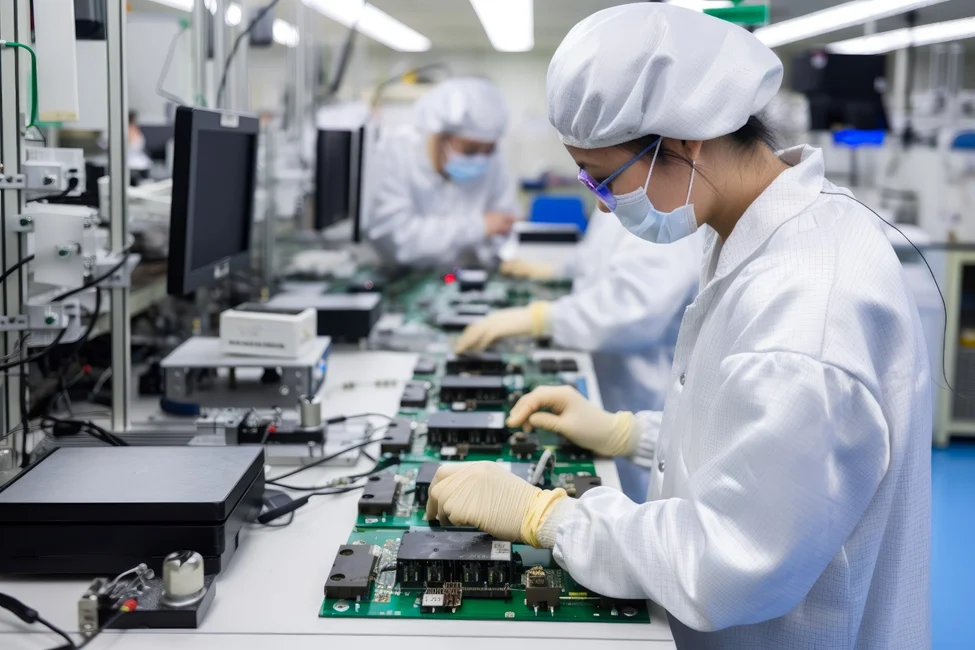
Take a look around you and you will find at least six electronic devices. Smartphones, laptops, medical devices and car sensors are used to navigate our everyday lives. Ever wonder how manufacturers know that all circuit boards will operate flawlessly when you buy them? Having serious errors on a PCB can cause catastrophic failures. A bad board could lead to an aggravating return experience for a consumer gadget. In medical or aerospace equipment, the consequences are far greater. If there is one bad connection, lives can be at risk. This is why electronic assembly companies put a lot of effort into their testing and inspection procedures.
The invisible shield that safeguards end-users and brand reputation is quality control. Knowing more about assembly company quality control can help you make better decisions about your own electronic product businesses. This guide will discuss key quality assurance elements, testing techniques and industry norms to ensure the reliability of electronic manufacturing.
The True Cost of Poor Quality
While you may be able to save a little money on the initial purchase, you will have to deal with the long run repercussions. If a product is defective when it is delivered to a customer, the manufacturer has a string of troubles.
There is the instant financial loss due to product recalls and warranties. While businesses are required to pay to send back faulty products, fix them and deliver replacements. Second, brand trust is greatly damaged. Negative reviews are readily available on the web and a negative reputation can take years to repair. Last but not least, hardware issues in heavily-regulated industries such as healthcare or transportation can cause significant liability issues.
Electronic assembly companies are aware of these risks. They see quality control as a part of the whole production process and do not regard it as an ending.
The key quality control processes that ensure the product is of the required quality
High-quality electronic assembly companies employ a layered inspection process to detect errors as early as possible, and as frequently as possible. The most frequently used methods on the factory floor are described below.
Automated Optical Inspection (AOI)
The human eye can become easily fatigued, particularly after looking at hundreds of small solder joints for prolonged periods of time. Automated Optical Inspection helps to overcome this. As the circuit boards pass along the assembly line, high-resolution cameras and advanced software are used in AOI machines to scan the boards. The system takes detailed pictures and compares them with a perfect “golden” board. The AOI machine immediately identifies a missing, misaligned or poorly soldered component and marks it for human inspection.
Solder Paste Inspection (SPI)
Solder paste is a glue used to attach electronic components to the circuit board. Too much or too little will cause the connection to fail. Solder Paste Inspection machines measure the volume, alignment and height of the solder paste even before the components are inserted. Dealing with paste issues in early stages of assembly will help avoid rework costs in the end.
X-Ray Inspection
As electronics continue to shrink, many components are now completely under the body to be connected by various points. These are called Ball Grid Array (BGA). Since the solder joints cannot be visually inspected by the naked eye or standard camera, electronic assembly companies use X-ray inspection. The X-ray passes through the component housing, and detects any air bubbles, cracks or electrical shorts in the soldered joints.
In-Circuit Testing (ICT)
After the board is completely built it must be checked for electrical performance. In-Circuit Testing is where the completed PCB is loaded into a specially designed fixture with hundreds of micro-sized metal probes. These probes are used to measure resistance, capacitance and voltage at certain points on the board. ICT is a quick and precise method of confirming that each individual part is in good working order and in communication with the other parts of the board.
Functional Testing
This is the last obstacle before a product makes it out of the factory. ICT tests the individual components, functional testing tests the board as a whole. Technicians create the same environment that the device will encounter in the real world. They boot the board up, run its software and test to ensure that it does its intended job perfectly. When a board is passed the functional test, it is ready for shipment to the customer.
To obtain industry qualifications and certifications
Quality control does not need to be a guesswork situation. The electronic assembly companies adhere to strict international standards, providing consistent manufacturing across the world.
One of the most well-known frameworks is ISO 9001. This certification is a sign of a company’s solid quality management system. It involves constant documentation, regular audits, and an effort to correct the underlying causes of manufacturing mistakes.
Also, rules for electronic equipment construction are established by the IPC (Association Connecting Electronics Industries). IPC-A-610 is the most popular acceptability standard used in the industry. It specifies the appearance and mounting of a good soldered joint and the components themselves. Responsible partners in assembly will always have IPC certified technicians on their staff who will assure that your product conforms to these strict standards.
Conclusion
The introduction of the new electronic device to the market is a complex challenge. Only a reliable manufacturing partner will help you build successful hardware.
When evaluating prospective electronic assembly companies, have a lengthy discussion with them about their quality control system. Inquire about the equipment they use for testing the assembly line and verify their certifications from the industry. In the long run, a manufacturer that puts in place continuous inspection, invests in modern testing technology and follows strict IPC standards will save you time, money and headaches. If your partner is committed to quality like you are, you can rest easy when you know that the product that you’re sending to your customers is going to be top-notch.
A reputable electronic assembly company is Optima Technology.