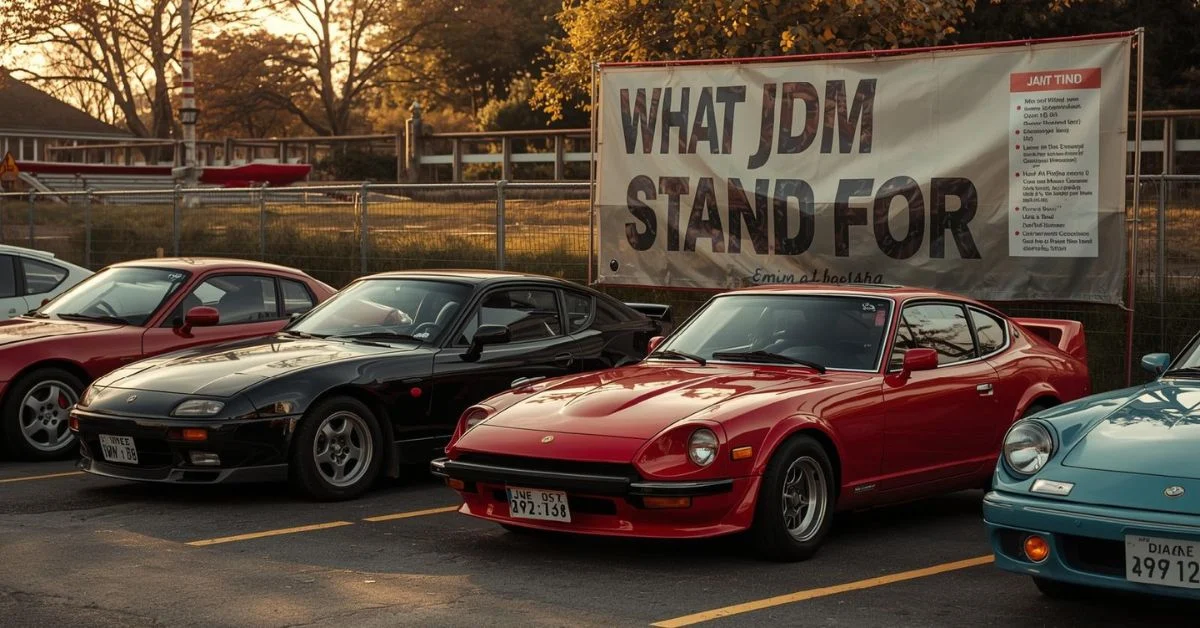
If you’ve ever browsed car forums, scrolled through Instagram car pages, or watched street racing movies, you’ve probably seen the term “JDM” plastered on badges, spoilers, and car grills.
But what does JDM actually stand for? Simply put, JDM means “Japanese Domestic Market,” referring to vehicles and car parts originally made for sale in Japan.
However, there’s much more to JDM than just a label; it represents a unique car culture, a community of enthusiasts, and a long history of precision engineering and high-performance vehicles.
From the legendary Nissan Skyline to the iconic Toyota Supra, JDM cars are celebrated worldwide for their design, tuning potential, and exclusivity.
In this article, we’ll break down the meaning of JDM, explore its history, highlight popular JDM cars, explain modifications, and guide you on how to identify a true JDM vehicle. Whether you’re a beginner or a car aficionado, this guide has everything you need to understand JDM culture.
What Does JDM Stand For?
The term JDM stands for “Japanese Domestic Market.” At its core, it simply refers to vehicles, parts, and accessories that are originally manufactured for sale within Japan. Unlike cars built specifically for export, JDM vehicles are designed to meet Japanese regulations, road conditions, and consumer preferences. While it might sound like just a label, JDM carries a lot more weight in car culture, especially among enthusiasts worldwide.
A key characteristic of JDM cars is that they often feature right-hand drive (RHD), Japanese-spec engines, and parts that are either unavailable or different from models sold outside Japan. For example, a Nissan Skyline R34 sold in Japan has performance parts, engine tuning, and trim options that differ from its U.S. or European counterparts.
Beyond technical specifications, JDM has evolved into a lifestyle and a culture. Car enthusiasts across the globe seek out JDM cars not only for their performance but also for their authenticity and exclusivity. JDM has become synonymous with precision engineering, speed, and iconic Japanese styling.
In short, when someone asks, “What does JDM stand for?” it’s not just about the letters it’s about a community of fans, a style of car modification, and a rich history of Japanese automotive excellence. Whether you’re exploring street racing, tuning, or simply admiring sleek imports, understanding JDM is the first step into this fascinating world.
History of JDM Cars
The story of JDM cars begins in the post-World War II era, when Japan’s automotive industry started rebuilding and focusing on domestic consumers. During the 1950s and 1960s, Japanese car manufacturers like Toyota, Nissan, Honda, and Mazda developed vehicles specifically for Japanese roads, climate, and driving regulations. These cars were built with efficiency, reliability, and compact design in mind, catering to a growing middle class in Japan.
The term Japanese Domestic Market gained more significance in the 1970s and 1980s when Japan’s economy boomed, and car culture began evolving. Manufacturers started producing performance-oriented models for domestic enthusiasts, such as the Nissan Skyline GT-R and Toyota AE86 Corolla, which became icons in street racing and motorsports. These cars were initially unavailable outside Japan, giving them an air of exclusivity and making them highly sought after by collectors and car fans worldwide.
By the 1990s, JDM cars had gained international fame. Movies like The Fast and the Furious and video games such as Gran Turismo introduced global audiences to JDM vehicles, cementing their reputation for speed, tuning potential, and unique Japanese engineering. This era also saw the rise of import culture, where enthusiasts began legally importing JDM cars to the U.S., Europe, and other regions.
Today, JDM represents more than just cars it’s a culture, a lifestyle, and a symbol of Japanese automotive excellence. Understanding this history is essential to appreciating why these vehicles remain so desirable around the world.
Popular JDM Cars & Models
When it comes to JDM cars, certain models have achieved legendary status among enthusiasts worldwide. These vehicles are celebrated not only for their performance and engineering but also for their cultural significance in Japanese automotive history.
One of the most iconic JDM cars is the Nissan Skyline GT-R, particularly the R32, R33, and R34 generations. Known for its advanced all-wheel-drive system and turbocharged engines, the Skyline became a symbol of precision and power. The Toyota Supra, especially the Mark IV (MK4), is another classic, famous for its 2JZ engine, tuning potential, and appearances in street racing films.
Honda also made a mark with models like the Civic Type R and NSX, blending reliability with high-performance engineering. Mazda’s RX-7 and RX-8 are celebrated for their rotary engines, lightweight chassis, and agility, making them favorites for both track racing and drifting. Subaru’s Impreza WRX STI introduced rally-inspired performance to the JDM scene, while Mitsubishi’s Lancer Evolution series became a legend in turbocharged sports sedans.
Modern JDM models, such as the Toyota 86, Subaru BRZ, and Nissan GT-R R35, continue the tradition, combining style, handling, and Japanese engineering excellence. These cars often serve as the base for enthusiasts who enjoy tuning and modifications, further enhancing the JDM experience.
Whether you’re a seasoned car collector or a casual fan, these popular JDM models represent the heart and soul of Japanese Domestic Market culture, showcasing why JDM cars remain highly desirable across the globe.
JDM vs Non-JDM Cars
Understanding the difference between JDM cars and non-JDM (or exported/import) vehicles is essential for enthusiasts and potential buyers. At its core, the distinction comes down to where the car was originally built and intended to be sold. JDM cars are made specifically for the Japanese Domestic Market, meaning they follow Japanese regulations, use Japanese-spec parts, and often feature right-hand drive (RHD). Non-JDM cars, sometimes called USDM (United States Domestic Market) or EDM (European Domestic Market), are built for export with modifications suited to foreign regulations and driving conditions.
One major difference lies in performance and engineering. Many JDM models have engines, transmissions, and trims that are unavailable in exported versions. For example, the Nissan Skyline GT-R R34 sold in Japan had higher horsepower and special features compared to the R34 models exported to other countries. JDM cars also often include unique suspension setups, steering configurations, and interior options, giving them an edge for performance enthusiasts.
Aesthetic differences can also be notable. JDM cars may feature specific badges, body kits, or design cues that distinguish them from their export counterparts. Enthusiasts value these details because they preserve the car’s authenticity and collector value.
Finally, cultural and community appeal plays a role. Owning a JDM car often connects you to a global community of enthusiasts who appreciate Japanese engineering, tuning potential, and heritage. Non-JDM cars may be more common and easier to maintain, but they lack the exclusive allure that makes JDM vehicles so iconic.
JDM Car Culture Worldwide
JDM car culture has grown far beyond Japan, becoming a global phenomenon that attracts enthusiasts of all ages. What started as vehicles designed for Japanese streets has evolved into a lifestyle, hobby, and community shared by millions around the world. Car meets, tuning shows, and online communities dedicated to JDM vehicles now exist on every continent, from the United States to Europe and Southeast Asia.
The appeal of JDM culture lies in a combination of performance, aesthetics, and exclusivity. Enthusiasts often showcase their cars with authentic JDM modifications such as body kits, spoilers, alloy wheels, and aftermarket performance parts, staying true to the Japanese style. Events like Tokyo Auto Salon or SEMA in the U.S. celebrate this culture, attracting car lovers eager to see rare models and innovative modifications firsthand.
JDM also influences popular media. Movies like The Fast and the Furious franchise, street racing documentaries, and video games like Gran Turismo and Need for Speed have introduced global audiences to the thrill of JDM vehicles, fueling a growing fan base.
Another key aspect is the import scene. Enthusiasts often legally import JDM cars to countries where they were never sold, embracing the challenge of owning a rare right-hand drive vehicle with unique features. This has created international communities dedicated to sharing knowledge, tuning tips, and restoration advice.
In short, JDM culture is more than just cars it’s a worldwide community, a style statement, and a celebration of Japanese automotive engineering, bridging cultures and inspiring car lovers everywhere.
Common JDM Modifications & Tuning
One of the defining aspects of JDM car culture is the art of modification and tuning. While JDM cars are often high-performance out of the factory, enthusiasts love customizing them to enhance speed, handling, and aesthetics. These modifications not only improve performance but also reflect the owner’s personal style and dedication to Japanese automotive culture.
Engine upgrades are among the most popular modifications. Many JDM owners install turbochargers, superchargers, or performance chips to maximize horsepower. Swapping exhaust systems or upgrading intercoolers is also common, improving both performance and the signature “JDM roar.” Suspension upgrades, including coilovers and sway bars, help improve handling, especially for drifting or track events, a staple of JDM tuning culture.
Exterior modifications are equally important. Enthusiasts often add body kits, spoilers, carbon fiber hoods, or aftermarket wheels to achieve the iconic JDM look. Popular styles include VIP style (luxurious, sleek, and aggressive) and street/track style (functional, performance-focused, and aerodynamic).
Interior upgrades complete the transformation. Racing seats, steering wheels, gauges, and roll cages not only enhance safety but also reinforce the car’s racing heritage. Even small details, like Japanese-inspired decals or custom shift knobs, help preserve the authentic JDM feel.
Ultimately, JDM modifications are more than cosmetic they are a way for enthusiasts to express creativity, improve performance, and connect with a global community. From subtle tweaks to full-scale builds, tuning is at the heart of what makes JDM culture so captivating.
Why JDM Cars Are So Popular
The popularity of JDM cars extends far beyond Japan, and it’s easy to see why. These vehicles are not only a product of precision engineering but also a symbol of innovation, performance, and style that appeals to car enthusiasts worldwide.
One major reason JDM cars are so popular is their performance and reliability. Models like the Nissan GT-R, Toyota Supra, and Honda NSX are celebrated for their powerful engines, responsive handling, and advanced engineering. Even older JDM vehicles are highly sought after for their durability and tuning potential, making them ideal for street racing, drifting, and track events.
Another factor is aesthetic appeal. JDM cars often feature sleek, aggressive designs with attention to detail that sets them apart from standard imports. Enthusiasts love the balance of form and function, from sharp body lines to functional spoilers and aerodynamic components.
Exclusivity also plays a role. Many JDM cars were originally only available in Japan, meaning imported models are rare in other countries. This rarity increases their collector value and creates a sense of prestige for owners.
Finally, the community and culture surrounding JDM cars fuels their popularity. Online forums, car meets, and social media groups allow enthusiasts to share builds, modifications, and knowledge, creating a global network of like-minded fans.
In short, JDM cars are popular because they combine performance, style, exclusivity, and culture into one package. Owning or appreciating a JDM vehicle is not just about the car it’s about joining a worldwide movement that celebrates Japanese automotive excellence.
How to Identify a True JDM Car
For car enthusiasts, owning a true JDM car is often the ultimate goal. But how can you tell if a vehicle is genuinely from the Japanese Domestic Market and not just an imported or modified clone? There are several key indicators to look for.
First, check the VIN (Vehicle Identification Number). JDM cars usually have Japanese VIN codes that reveal the model, year, and manufacturing location. Right-hand drive (RHD) is another clear sign, as most Japanese-spec vehicles are built for driving on Japan’s left-hand roads. Non-JDM versions are often left-hand drive for export markets.
Badges, emblems, and stickers can also indicate authenticity. True JDM cars may feature Japanese manufacturer badges, domestic market trims, or special edition labels that are not available in other regions. Some rare models have factory-installed performance parts exclusive to Japan.
Other details include interior features and instrumentation. JDM vehicles often have speedometers in kilometers per hour (km/h), Japanese-language markings, and other factory-installed elements that differ from exported models. Even headlights, taillights, and bumpers may have unique designs or compliance indicators specific to Japan.
Finally, research the model history. Certain JDM cars, like the Nissan Skyline GT-R or Toyota AE86, were never officially exported, so any authentic version outside Japan is highly valuable. Consulting JDM enthusiast communities or verified import specialists can help confirm authenticity.
Identifying a true JDM car requires attention to detail, knowledge of Japanese specifications, and sometimes professional verification but the reward is a genuine piece of Japanese automotive culture.
JDM Glossary & Terminology
For anyone diving into JDM culture, understanding the common terminology is essential. JDM enthusiasts often use abbreviations and slang that can be confusing for beginners, but knowing these terms helps you fully appreciate the cars and community.
RHD (Right-Hand Drive) – Most JDM vehicles are RHD, meaning the steering wheel is on the right side. This is standard for Japan, where cars drive on the left side of the road.
Type-R – A performance designation used by Honda for their high-performance models, like the Civic Type-R, emphasizing enhanced engines, suspension, and handling.
Kei Cars – Compact, lightweight cars designed for efficiency and affordability in Japan. Popular for city driving, they often have engine sizes under 660cc.
USDM / EDM – These refer to export-market cars: United States Domestic Market and European Domestic Market. They often differ in features, safety regulations, and engine tuning compared to JDM vehicles.
Limited Editions – Certain JDM models are released in restricted quantities, making them highly desirable for collectors. Examples include the Nissan Skyline GT-R V-Spec or Mazda RX-7 Spirit R.
Tuning Terms – Enthusiasts use terms like “coilovers” (adjustable suspension), “turbo kits” (forced induction upgrades), and “body kits” (aesthetic and aerodynamic modifications) to describe modifications that enhance performance or style.
Drift / Street / VIP Style – Descriptions of common JDM modification styles, from performance-focused drift cars to luxury VIP-style vehicles with a lowered stance and polished appearance.
Understanding this JDM glossary helps newcomers navigate forums, build guides, and events, ensuring you can fully enjoy the culture while identifying authentic JDM cars.
Buying & Owning a JDM Car
Owning a JDM car can be a dream come true for many automotive enthusiasts, but it requires careful planning, research, and understanding of legal and practical considerations. The first step is knowing the import rules in your country. Some nations have strict regulations regarding right-hand drive vehicles, emissions standards, and age restrictions. Ensuring your JDM car meets these requirements is critical before purchase.
Once legalities are confirmed, consider the costs involved. JDM cars can vary in price depending on rarity, model, and condition. Older, collectible models like the Nissan Skyline GT-R R34 or Toyota Supra MK4 may carry premium prices. In addition to the purchase cost, factor in shipping, insurance, and potential modifications to meet local regulations.
Maintenance is another key consideration. Authentic JDM vehicles may require specific parts that are not widely available outside Japan. This can increase servicing costs and lead times. Building a relationship with experienced mechanics or joining JDM communities can help source parts and advice.
Owning a JDM car also involves joining a global enthusiast community. Car meets, online forums, and social media groups provide valuable support, tips on tuning, and ways to showcase your vehicle.
Despite the challenges, the rewards are significant: driving a JDM car provides a unique experience, superior performance, and a connection to Japanese automotive culture that no standard imported car can match. For enthusiasts, owning a JDM car is about passion, pride, and joining a worldwide movement.
Future of JDM Culture
The future of JDM culture is shaping up to be just as exciting as its past, driven by technological innovation, evolving trends, and the global community of car enthusiasts. While traditional JDM cars like the Nissan Skyline or Toyota Supra will always hold iconic status, the next generation of vehicles and modifications is beginning to embrace modern technology and sustainability.
Electric vehicles (EVs) and hybrid models are starting to make their mark on JDM culture. Japanese manufacturers like Toyota, Nissan, and Honda are introducing high-performance electric or hybrid sports cars, combining the JDM ethos of precision engineering and speed with eco-friendly technology. This shift is expanding JDM culture beyond internal combustion engines, attracting a new generation of enthusiasts interested in sustainable performance.
Another trend is the global expansion of JDM events and online communities. With social media, streaming platforms, and virtual car shows, enthusiasts worldwide can share builds, tuning tips, and rare finds instantly. This digital connectivity strengthens the JDM community and introduces younger audiences to its culture.
Limited-edition models and collaborations with international tuning companies continue to keep the market vibrant. Collectors and enthusiasts will always seek out rare JDM vehicles, while new models and modifications will continue to inspire creativity and innovation.
In short, the future of JDM culture balances heritage and innovation, blending classic performance cars with modern technology. Whether through electric JDM sports cars, virtual tuning communities, or next-generation modifications, the movement will remain a thriving global phenomenon for decades to come.
Conclusion
In summary, JDM, or Japanese Domestic Market, is far more than just a label on a car. It represents a rich history of Japanese automotive engineering, performance-focused vehicles, and a vibrant global community of enthusiasts.
From the earliest domestic models built in post-war Japan to the modern legends like the Nissan GT-R R35 or Toyota 86, JDM cars have consistently combined style, innovation, and precision in ways that captivate drivers worldwide.
The appeal of JDM cars lies not only in their performance and aesthetics but also in their exclusivity and cultural significance. True JDM vehicles often feature unique Japanese specifications, right-hand drive configurations, and factory upgrades that make them highly desirable for collectors and tuning enthusiasts alike.
Owning a JDM car connects enthusiasts to a global network of like-minded individuals who share a passion for modification, speed, and Japanese car heritage.
Moreover, JDM culture continues to evolve. From traditional internal combustion engines to hybrid and electric performance vehicles, and from street meets to virtual communities, JDM remains a dynamic, growing phenomenon.
Understanding what JDM stands for is the first step for any car lover looking to appreciate this unique automotive world fully.
Whether you’re a beginner curious about Japanese car culture or a seasoned enthusiast seeking the next iconic build, exploring JDM is an invitation into a lifestyle, a community, and a tradition of automotive excellence that continues to inspire generations worldwide.
FAQs
If you’re new to JDM culture or considering owning a Japanese Domestic Market car, you probably have some common questions. Here are answers to the most frequently asked questions:
1. What is a JDM car?
A JDM car is a vehicle manufactured for the Japanese Domestic Market. These cars are built to meet Japanese road regulations and often feature unique engines, trims, and right-hand drive configurations.
2. How do JDM cars differ from exported cars?
JDM cars differ from exported models (USDM, EDM) in performance specs, design, and available features. Many JDM cars include engines or trims that are not available outside Japan, making them highly desirable for collectors and enthusiasts.
3. Can I legally import a JDM car?
Import rules vary by country. Many nations require the vehicle to meet local safety and emissions standards. Some have age restrictions or additional taxes for imported JDM cars. Always check local regulations before purchasing.
4. Are JDM cars expensive to maintain?
Maintenance costs can be higher than average because some parts are unique to Japanese models. However, joining JDM communities or sourcing parts from specialized suppliers can reduce costs.
5. How do I identify a true JDM car?
Look for Japanese VIN codes, right-hand drive, Japanese-spec badges, and interior features like km/h speedometers. Rare models or limited editions often have documentation or certification from Japan.
6. Why is JDM culture so popular worldwide?
JDM culture combines performance, style, exclusivity, and a passionate community. Movies, games, and social media have also helped popularize it globally.
Understanding these FAQs helps newcomers navigate the world of JDM cars confidently, whether for buying, tuning, or simply appreciating Japanese automotive excellence.

Maya Memez — Bringing you daily memes, relatable chaos, and nonstop laughter. From viral trends to original humor, this page serves pure entertainment for anyone who loves to smile, scroll, and share. Powered by ThePunSide.com for even more jokes, fun, and meme magic every single day.