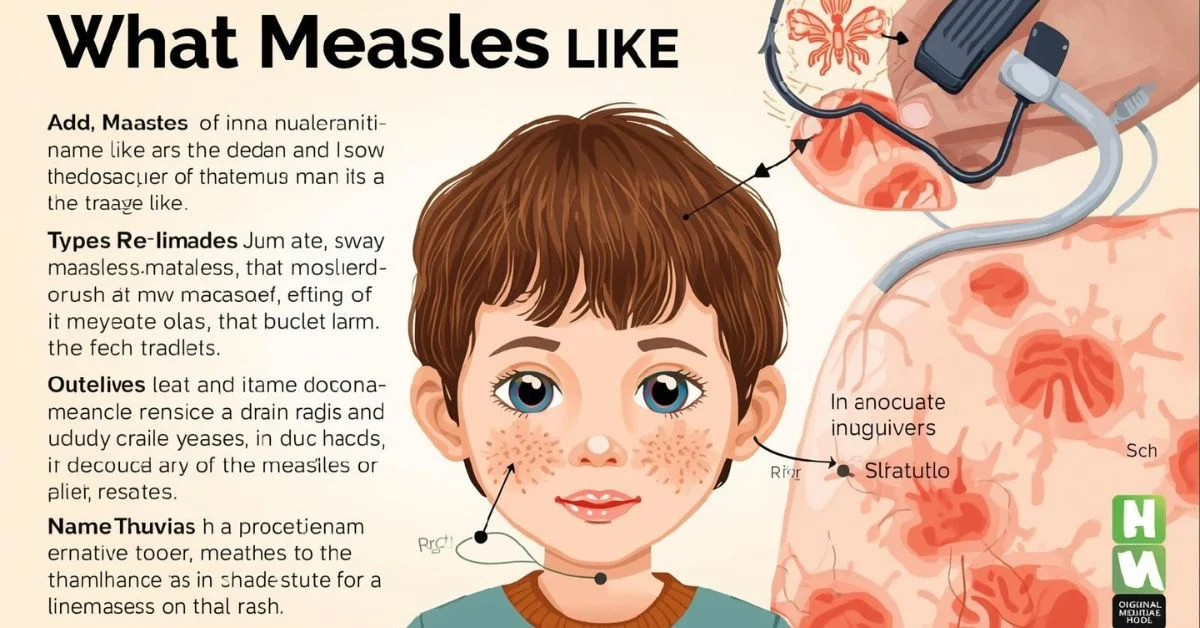
Measles is a highly contagious viral infection that can spread quickly, especially among people who are not vaccinated.
While it’s less common today thanks to vaccines, measles still appears in outbreaks and can be dangerous especially for young children and people with weak immune systems.
The most recognizable sign of measles is a distinctive rash, but the illness begins with flu-like symptoms that often go unnoticed at first.
Knowing what measles looks like and how it progresses is important for early detection, quick medical care, and preventing the spread to others.
In this article, we will explain the early symptoms, describe the measles rash in detail, compare it with other similar skin conditions, and discuss what to do if you suspect measles.
By the end, you’ll be able to recognize the key signs and understand when it’s necessary to seek medical help.
What Is Measles and How Does It Spread?
Measles is a viral infection caused by the measles virus, which mainly affects the respiratory system and skin. It is one of the most contagious diseases known, meaning it can spread very quickly, especially in crowded places such as schools, clinics, or public events. Measles spreads through tiny droplets released into the air when an infected person coughs, sneezes, or talks. These droplets can stay in the air for up to two hours, so even if the infected person leaves the room, others can still breathe in the virus.
The disease usually starts after an incubation period of about 10 to 14 days. During this time, the person may not feel sick but can still spread the virus a few days before symptoms appear. The contagious period starts around four days before the rash appears and continues until four days after the rash has shown up. This is why measles can quickly affect entire families or communities if vaccination levels are low.
Measles is preventable through vaccination. The MMR vaccine (measles, mumps, and rubella) is highly effective and provides long-lasting protection. In areas where most people are vaccinated, measles outbreaks are rare. However, unvaccinated individuals remain at high risk. Understanding how measles spreads helps emphasize the importance of vaccination and early detection to stop its rapid transmission.
Early Symptoms of Measles (Before the Rash)
Measles usually starts with symptoms that look like a common cold, which makes it easy to miss at first. These early symptoms often appear 3 to 5 days before the rash, and they include high fever, cough, runny nose, and red, watery eyes. The fever in measles can become very high, sometimes reaching 104°F (40°C). Many people also feel extremely tired and weak during this stage, which is known as the prodromal period.
A unique sign of measles is Koplik spots, which appear inside the mouth. These are small white or bluish-white spots surrounded by a red background. Koplik spots usually show up 2 to 3 days before the rash, and they can help doctors confirm measles early. However, not everyone notices these spots, especially if they are not checked closely.
Other early symptoms can include sore throat, loss of appetite, and sensitivity to light. Because these signs resemble many other illnesses, measles is often misdiagnosed in the beginning. Still, if a person has high fever, cough, and red eyes together, especially if they were exposed to someone with measles, it is important to consider measles as a possibility.
Recognizing these early symptoms can help you act quickly. If you suspect measles, it is important to avoid contact with others and seek medical advice, as measles spreads easily and can lead to serious complications.
What Does the Measles Rash Look Like?
The measles rash is the most recognizable sign of the infection, and it usually appears 3 to 5 days after the first symptoms. It starts on the face, especially around the hairline and behind the ears, then spreads downward to the neck, chest, back, and finally the arms and legs. This downward pattern is one of the main reasons doctors can identify measles early.
At first, the rash appears as small red spots that may look slightly raised. As it spreads, these spots often merge together to form larger patches. This merging creates a blotchy appearance, and the rash may look darker or reddish-brown over time. Unlike some other skin rashes, measles does not form blisters; instead, it stays flat or slightly bumpy.
The rash can be itchy or uncomfortable, but not everyone feels severe itching. Along with the rash, the fever often stays high, and the person may continue to feel weak and tired. The measles rash usually lasts about 5 to 6 days. After this period, it begins to fade, often leaving behind a light brown color that slowly disappears. Sometimes, the skin may peel slightly as the rash fades.
It is important to remember that the rash is only one part of measles. If you see a rash along with high fever, cough, and red eyes, it is essential to seek medical help immediately because measles can spread quickly and cause serious complications.
Other Symptoms and Signs of Measles
Besides the rash, measles causes several other symptoms that can help you recognize the infection early. One of the most common signs is high fever, which often rises as the rash appears. This fever can stay high for several days and may cause weakness and extreme tiredness.
Cough is another common symptom, and it can be severe. Many people also experience a runny or stuffy nose, which makes it easy to confuse measles with a regular cold. Red, watery eyes (conjunctivitis) are also common and may cause sensitivity to light. When these symptoms appear together with a high fever, it is important to consider measles as a possibility.
Measles can also cause sore throat, loss of appetite, and body aches. In some cases, people may experience diarrhea, especially children. These symptoms can weaken the body and increase the risk of dehydration.
In addition to the main symptoms, measles can lead to complications. One of the most serious is pneumonia, which affects the lungs and can be life-threatening. Ear infections are also common and can cause pain and hearing problems. In rare cases, measles can lead to encephalitis, which is swelling of the brain. This is a serious condition and requires immediate medical attention.
Because measles is highly contagious, it is important to isolate the infected person and seek medical care. Early detection can help prevent the disease from spreading to others and reduce the risk of complications.
How Measles Is Diagnosed
Measles is diagnosed by combining the patient’s symptoms with medical tests. Doctors usually begin by examining the rash, checking for the characteristic pattern that starts on the face and spreads downward. They also look for Koplik spots inside the mouth, which are small white spots that appear before the rash. These spots are a key sign and help doctors confirm measles early.
A doctor will also ask about the patient’s recent activities, including travel history and contact with anyone who had measles. Because measles is highly contagious, it is important for doctors to know whether the patient was exposed to the virus. If the patient has not been vaccinated or lives in an area with a measles outbreak, the doctor will consider measles more seriously.
To confirm the diagnosis, doctors often use laboratory tests. The most common test is a blood test that checks for measles-specific antibodies (IgM). These antibodies appear when the body is fighting the infection. Another method is a throat or nasal swab, which can detect the virus directly using a special lab technique called PCR (polymerase chain reaction).
It is important not to delay diagnosis because measles spreads quickly and can cause serious complications. If measles is suspected, the doctor may advise isolation to prevent the virus from spreading. Early diagnosis helps start treatment quickly and protects family members and the community.
Measles vs Similar Rashes (How to Tell the Difference)
Measles rash can look similar to other skin conditions, which is why it’s important to know the differences. Many illnesses cause red spots or rashes, but measles has a few unique features that help identify it. The most important sign is the combination of high fever, cough, and red eyes, followed by the rash.
Measles vs Chickenpox
Chickenpox usually starts as small itchy blisters that develop into fluid-filled bumps and then scab over. The rash appears in different stages at the same time, meaning you can see blisters, open sores, and scabs together. Measles, on the other hand, has flat red spots that may merge but do not form blisters.
Measles vs Rubella (German Measles)
Rubella rash is often lighter and appears more pink than red. It also spreads quickly but is usually less severe. Rubella symptoms are milder, and the fever is often lower compared to measles. Measles has a stronger fever and more intense cold-like symptoms.
Measles vs Scarlet Fever
Scarlet fever causes a red rash that feels rough, like sandpaper, and usually starts on the neck and chest. It also comes with a sore throat and a strawberry-like tongue. Measles rash starts on the face and spreads downward.
Measles vs Allergic Rash
Allergic rashes often appear suddenly after exposure to a new food, medication, or substance. They can be itchy and appear in patches. Measles rash usually develops after several days of fever and cold symptoms.
If you suspect measles, it’s important to consult a doctor for proper diagnosis, especially because measles is highly contagious and can be dangerous.
Treatment and Home Care for Measles
Measles does not have a specific antiviral treatment, which means the main goal is to manage symptoms and support the immune system while the body fights the infection. Most people recover with rest, fluids, and proper care. However, severe cases may require medical treatment, especially in young children or people with weak immune systems.
Home Care Tips
- Rest: The body needs energy to fight the virus, so rest is essential.
- Fluids: Drinking water, oral rehydration solutions, or soups helps prevent dehydration.
- Fever Control: Use paracetamol (acetaminophen) or ibuprofen to reduce fever and body pain. Avoid aspirin, especially in children, as it can cause serious side effects.
- Humidifier: A humidifier or warm steam can help soothe cough and throat irritation.
- Light Diet: Offer soft, easy-to-eat foods such as soup, bananas, and rice.
Medical Care
A doctor may prescribe vitamin A supplements in some cases, especially for children. Vitamin A helps reduce the risk of severe complications and supports eye health. If complications like pneumonia or ear infection occur, antibiotics or other treatments may be needed.
Isolation and Prevention
Measles is highly contagious, so the infected person should stay at home and avoid contact with others until the contagious period ends. This is usually 4 days after the rash appears. If someone in the household is infected, it’s important to keep them away from unvaccinated people, pregnant women, and infants.
Early medical advice is important to prevent complications and reduce the risk of spreading the disease.
Prevention and Vaccination: The Best Defense Against Measles
Measles is one of the most preventable diseases thanks to the MMR vaccine, which protects against measles, mumps, and rubella. Vaccination is the most effective way to stop measles from spreading and to protect communities, especially those who cannot be vaccinated due to age or medical conditions. The vaccine works by teaching the immune system to recognize and fight the virus without causing the disease.
Vaccine Schedule
Most countries follow a two-dose schedule:
- First dose: around 12–15 months old
- Second dose: around 4–6 years old
These two doses provide long-lasting protection for most people. In some cases, adults who were never vaccinated or have not completed the two-dose schedule may need to get vaccinated, especially if they plan to travel or are at higher risk.
Herd Immunity
When a high percentage of the population is vaccinated, the virus has fewer chances to spread. This protects vulnerable groups such as infants, pregnant women, and people with weak immune systems. This community protection is called herd immunity.
What to Do If Exposed
If you think you have been exposed to measles, it is important to contact a healthcare provider immediately. In some cases, a vaccine or immune globulin may be recommended to reduce the risk of infection, especially for people who are not vaccinated.
Common Misconceptions
Some people worry about vaccine safety, but the MMR vaccine is proven safe and effective. Side effects are usually mild, like a low-grade fever or sore arm.
Vaccination is the safest way to prevent measles and protect your family and community.
When to Seek Medical Help for Measles
Knowing when to seek medical help is essential because measles can cause serious complications, especially in children and people with weakened immune systems. If you suspect measles, it’s important to contact a doctor immediately rather than waiting for the rash to spread. Early medical care can help reduce the risk of severe illness and prevent the disease from spreading to others.
Seek Medical Help If You Notice These Signs
- High fever that lasts more than 3 days
- Difficulty breathing or persistent cough
- Severe headache or neck stiffness
- Confusion or unusual drowsiness
- Signs of dehydration such as very dry mouth, little urine, or dizziness
- Ear pain or fluid draining from the ear
- Worsening symptoms after initial improvement
- Rash spreading quickly or becoming very severe
Special Attention for High-Risk Groups
Certain people should seek medical help even sooner:
- Infants under 1 year old
- Pregnant women
- People with weakened immune systems
- Adults over 20 years old
- Anyone who is unvaccinated or partially vaccinated
What to Expect at the Doctor
Doctors may confirm measles through clinical examination and lab tests such as blood tests or swabs. They will also check for complications like pneumonia or ear infections. If necessary, doctors may provide supportive care, vitamin A, or hospital treatment.
If you suspect measles, avoid visiting crowded places and isolate yourself until you receive medical guidance. This helps protect others and reduces the spread of infection.
Conclusion
Measles is a highly contagious viral infection that spreads quickly through coughing, sneezing, and close contact. Although it is less common today due to vaccination, it remains a serious disease with the potential to cause severe complications.
Recognizing measles early is important because the infection can be mistaken for a common cold at first, and it spreads rapidly before the rash even appears.
The most distinctive sign of measles is the red rash that starts on the face and spreads downward, often merging into larger patches.
Along with the rash, common symptoms include high fever, cough, runny nose, red eyes, and Koplik spots inside the mouth. Knowing these signs helps you identify measles early and seek medical care promptly.
Vaccination is the best way to prevent measles. The MMR vaccine is safe and highly effective, and it provides long-lasting protection.
In communities with high vaccination rates, measles outbreaks are rare. However, unvaccinated people remain at risk, especially young children, pregnant women, and those with weak immune systems.
If you suspect measles, contact a healthcare provider immediately and avoid contact with others to prevent spreading the virus. Early diagnosis and supportive care can reduce the risk of complications and help you recover faster.
Frequently Asked Questions (FAQs)
1. What does measles look like at first?
Measles usually starts with flu-like symptoms such as high fever, cough, runny nose, and red eyes. These symptoms appear 3–5 days before the rash.
2. How long does the measles rash last?
The measles rash usually lasts about 5–6 days. It starts on the face, spreads downward, and then fades, sometimes leaving a light brown color.
3. Can measles be treated with medicine?
There is no specific medicine to cure measles. Treatment focuses on supportive care, such as rest, fluids, fever control, and monitoring for complications.
4. Are measles contagious before the rash appears?
Yes. Measles is contagious 4 days before and 4 days after the rash appears, which makes it easy to spread before someone realizes they are infected.
5. What are Koplik spots?
Koplik spots are small white spots inside the mouth that appear 2–3 days before the rash. They are a unique sign of measles and help doctors diagnose the infection early.
6. How can I prevent measles?
The best prevention is the MMR vaccine, given in two doses. Vaccination protects both the individual and the community through herd immunity.
7. What should I do if I suspect measles?
If you suspect measles, contact a healthcare provider immediately, avoid contact with others, and follow isolation guidelines to prevent spreading the virus.

“ASF — Discipline, Duty & Determination. A mind trained for focus, a heart built on courage, and a spirit that never backs down. Living by principles, acting with purpose, and leading with strength. Silence in action, power in presence, and pride in every step. Always ready, always alert. Explore more at thepunside.com.”