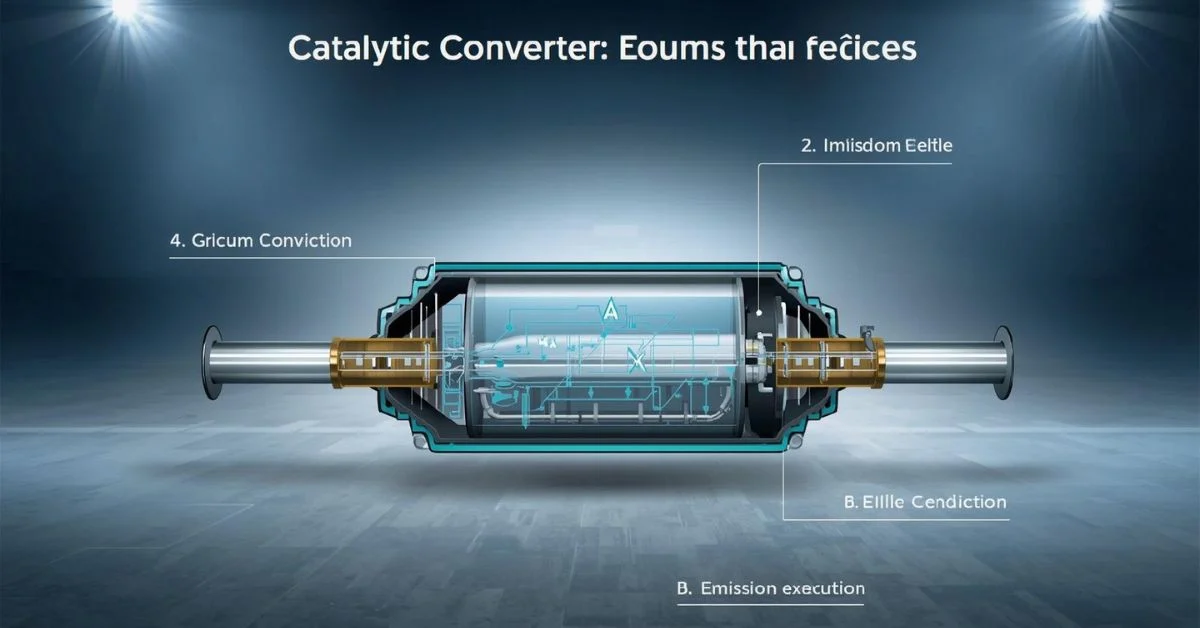
Your car’s catalytic converter is a small but vital component of your vehicle’s exhaust system, playing a major role in keeping both your car and the environment healthy.
But what does a catalytic converter do exactly? In simple terms, it transforms harmful gases produced by your engine like carbon monoxide (CO), nitrogen oxides (NOx), and hydrocarbons into less dangerous substances such as carbon dioxide (CO₂), nitrogen (N₂), and water vapor.
This process not only helps reduce air pollution but also ensures your vehicle meets strict emissions standards.
Beyond environmental benefits, a properly functioning catalytic converter helps your engine run efficiently and prevents costly damage.
In this guide, we’ll explore how catalytic converters work, why they are essential, common signs of failure, and maintenance tips to keep them performing at their best.
If you’re a car owner, enthusiast, or simply curious, understanding this part can save you time, money, and headaches.
What Is a Catalytic Converter?
A catalytic converter is an essential component of a vehicle’s exhaust system that helps reduce harmful emissions produced by the engine.
Most modern cars, trucks, and even motorcycles are equipped with one, making it a standard part of vehicle design in compliance with environmental regulations.
Positioned between the engine and the muffler, the catalytic converter acts like a filter and a chemical reactor, transforming dangerous gases into safer ones before they exit the tailpipe.
There are different types of catalytic converters, with the most common being the three-way catalytic converter, used in gasoline engines.
It simultaneously converts three main pollutants: carbon monoxide (CO), nitrogen oxides (NOx), and hydrocarbons (HC) into less harmful substances like carbon dioxide (CO₂), nitrogen (N₂), and water vapor. Diesel engines use a slightly different type, often paired with a diesel oxidation catalyst to target nitrogen oxides and particulate matter.
Inside, a catalytic converter contains a honeycomb-like structure coated with noble metals such as platinum, palladium, and rhodium.
These metals act as catalysts, speeding up chemical reactions without being consumed in the process. The exhaust gases pass through this structure, and the catalyst triggers reactions that convert toxic compounds into safer emissions.
Understanding what a catalytic converter is and how it works is crucial not only for vehicle owners but also for environmental awareness.
A malfunctioning or missing catalytic converter can lead to higher pollution, poor engine performance, and even legal penalties in regions with strict emission standards.
The Main Function of a Catalytic Converter
The primary function of a catalytic converter is to reduce harmful emissions from your vehicle’s engine, making it one of the most important components for environmental protection.
Every time your car burns fuel, it produces exhaust gases that contain pollutants such as carbon monoxide (CO), nitrogen oxides (NOx), and unburned hydrocarbons (HC). Left untreated, these gases can contribute to air pollution, smog, acid rain, and even respiratory problems in humans.
A catalytic converter works by converting these dangerous gases into less harmful substances before they exit the tailpipe.
For instance, carbon monoxide, a poisonous gas, is turned into carbon dioxide, while nitrogen oxides are broken down into nitrogen and oxygen, and hydrocarbons are converted into water vapor and carbon dioxide.
This transformation happens through chemical reactions facilitated by the metals inside the converter, such as platinum, palladium, and rhodium, which act as catalysts.
Beyond environmental protection, catalytic converters play a role in ensuring your vehicle complies with emission regulations.
Cars without properly functioning converters may fail emissions tests, leading to fines, failed inspections, or restrictions in certain areas. Additionally, a healthy catalytic converter supports engine efficiency by maintaining proper exhaust flow and reducing backpressure.
In short, the catalytic converter acts as the vehicle’s emission-control guardian, keeping your car cleaner, more efficient, and environmentally responsible.
Understanding this function highlights why neglecting this small but vital component can lead to both performance issues and environmental harm.
How a Catalytic Converter Works
A catalytic converter works like a chemical reactor, turning harmful exhaust gases into safer substances before they leave your vehicle.
At its core, the converter contains a honeycomb or ceramic structure coated with noble metals such as platinum, palladium, and rhodium, which act as catalysts.
These metals accelerate chemical reactions without being consumed, making the converter highly efficient over time.
When exhaust gases pass through the catalytic converter, two main types of chemical reactions occur: oxidation and reduction.
During the oxidation reaction, carbon monoxide (CO) and unburned hydrocarbons (HC) are converted into carbon dioxide (CO₂) and water vapor (H₂O). In the reduction reaction, nitrogen oxides (NOx) are broken down into nitrogen (N₂) and oxygen (O₂). These processes reduce the toxicity of the gases and minimize environmental impact.
Temperature plays a critical role in the efficiency of a catalytic converter.
Most converters reach their optimal performance between 400–800°F (200–425°C). This is why a vehicle’s engine must be running properly, as low engine temperatures or incomplete combustion can prevent the converter from functioning effectively.
The design also ensures maximum contact between exhaust gases and the catalyst surface, allowing chemical reactions to occur quickly and efficiently.
By converting dangerous pollutants into harmless byproducts, the catalytic converter not only protects the environment but also helps your vehicle comply with emissions regulations and maintain optimal engine performance.
Importance of Catalytic Converters
Catalytic converters are one of the most critical components in modern vehicles because they directly impact both environmental safety and vehicle compliance with emission laws.
Their primary importance lies in their ability to reduce harmful exhaust emissions, including carbon monoxide (CO), nitrogen oxides (NOx), and hydrocarbons (HC), all of which contribute to air pollution and health hazards.
By converting these pollutants into less harmful gases like carbon dioxide (CO₂), nitrogen (N₂), and water vapor (H₂O), catalytic converters help combat smog, respiratory issues, and environmental damage.
Beyond environmental protection, catalytic converters ensure that vehicles meet government emission standards. In many countries, failing emissions tests due to a faulty or missing converter can result in fines, failed inspections, or even restrictions on driving certain vehicles. This legal requirement underscores the necessity of maintaining a properly functioning catalytic converter.
Catalytic converters also support engine efficiency indirectly. When exhaust gases are effectively processed, it prevents backpressure that can strain the engine.
A well-maintained converter ensures smoother exhaust flow, which contributes to consistent engine performance and fuel efficiency.
Moreover, catalytic converters protect the resale value of vehicles. Cars with a functioning converter are more likely to pass emissions tests during resale, while vehicles with faulty or removed converters may face legal and financial complications.
In short, catalytic converters are not just a legal requirement, they are an environmental safeguard, a performance aid, and a financial protection for vehicle owners.
Understanding their importance helps drivers appreciate why proper maintenance and timely replacement are essential.
Signs of a Failing Catalytic Converter
A catalytic converter is designed to last many years, but like any car component, it can wear out or become damaged over time.
Recognizing the signs of a failing catalytic converter is essential to avoid environmental harm, engine problems, and potential legal issues.
One of the most common indicators is reduced engine performance. If your vehicle feels sluggish, struggles to accelerate, or has difficulty maintaining speed, a clogged or damaged converter could be restricting exhaust flow.
Another clear sign is the check engine light (CEL) turning on. Modern vehicles are equipped with sensors that monitor the efficiency of the catalytic converter, and any malfunction triggers this warning light.
A rotten egg or sulfur smell coming from the exhaust is another classic symptom.
This odor is caused by excess sulfur in the fuel not being properly processed due to a failing converter. Additionally, strange noises, such as rattling sounds from underneath the vehicle, may indicate that the internal ceramic honeycomb has broken apart.
Other warning signs include failed emissions tests, which occur when the converter is no longer effectively reducing harmful gases.
Fuel efficiency may also drop if the converter is clogged, as the engine works harder to push exhaust through.
Early detection is crucial because ignoring these signs can lead to more severe engine damage, increased pollution, and costly repairs.
If you notice any of these symptoms, it’s important to have your catalytic converter inspected and repaired or replaced promptly.
Common Problems and Causes of Catalytic Converter Failure
Catalytic converters are durable, but several factors can lead to their malfunction or complete failure.
Understanding these causes can help vehicle owners prevent costly repairs and maintain optimal engine performance.
One of the most frequent problems is clogging.
Over time, deposits from unburned fuel, oil, or coolant can accumulate inside the converter, restricting the flow of exhaust gases. This not only reduces the converter’s efficiency but also increases backpressure on the engine, leading to decreased performance and fuel efficiency.
Physical damage is another common issue.
Catalytic converters are located beneath the vehicle, making them vulnerable to road debris, speed bumps, or accidents.
A cracked or broken converter cannot perform its job effectively and may produce rattling noises.
Contamination from engine problems is also a major cause of failure.
For example, misfiring spark plugs, burning oil, or using leaded fuel can coat the internal catalyst with harmful substances, preventing chemical reactions from occurring.
Overheating can destroy a catalytic converter’s internal structure. Excess fuel entering the converter due to engine problems can ignite inside, melting the ceramic honeycomb and rendering the converter useless.
Finally, age and wear naturally reduce a catalytic converter’s effectiveness over time. Most converters last between 70,000 and 100,000 miles, but neglecting maintenance, poor driving habits, or engine issues can shorten this lifespan.
Recognizing these causes early and addressing related engine problems can extend the life of your catalytic converter and prevent expensive replacements.
Proper maintenance and timely inspection are key to keeping your vehicle compliant, efficient, and environmentally friendly.
Can a Catalytic Converter Be Repaired or Cleaned?
Catalytic converters are built to last, but sometimes issues arise that affect their performance. Many car owners wonder if a catalytic converter can be repaired or cleaned instead of replaced. The answer depends on the type and severity of the problem.
For minor clogging or contamination, there are temporary solutions. Some fuel additives claim to clean the internal catalyst by removing carbon deposits. Similarly, professional cleaning methods can flush out debris and improve flow. While these approaches may provide short-term relief, they often do not fully restore the converter to its original efficiency.
If the damage is physical, such as a cracked honeycomb structure or melted internal components, repair is usually not possible. Catalytic converters are precision devices, and internal damage prevents proper chemical reactions. In these cases, replacement is the only effective solution.
Cost considerations also come into play. Replacing a catalytic converter can be expensive, ranging from several hundred to over a thousand dollars depending on the vehicle make and model. However, repairing or cleaning a severely damaged converter is rarely cost-effective and may only provide temporary results.
It’s also important to address the underlying engine problems that caused the converter to fail. Issues like misfiring spark plugs, burning oil, or faulty fuel injectors must be fixed first; otherwise, a new or cleaned converter may fail prematurely.
In short, while minor cleaning may help in limited situations, most catalytic converter problems require replacement to ensure your vehicle runs efficiently, meets emissions standards, and avoids further engine damage.
Lifespan of a Catalytic Converter
Catalytic converters are designed to be durable, but like any car component, they have a finite lifespan. On average, most catalytic converters last between 70,000 and 100,000 miles, depending on driving conditions, vehicle type, and maintenance practices. Understanding their lifespan can help car owners plan for inspections and avoid unexpected failures.
Several factors influence how long a catalytic converter will last. Driving habits play a major role frequent short trips where the engine doesn’t fully warm up can reduce efficiency and cause deposits to build up inside the converter. In contrast, regular highway driving allows the converter to reach optimal operating temperatures, promoting proper chemical reactions.
Fuel quality also affects longevity. Low-quality or contaminated fuel can leave deposits that clog the converter, while using the wrong type of fuel, such as leaded gasoline in a car designed for unleaded fuel, can irreversibly damage the catalyst.
Engine health is another critical factor. Persistent misfires, burning oil, or faulty fuel injectors can introduce excess fuel or contaminants into the catalytic converter, leading to overheating, melting, or internal damage. Proper maintenance, such as regular oil changes and engine tune-ups, can significantly extend its life.
Finally, external factors like physical damage from road debris or accidents can shorten a converter’s lifespan.
In summary, while a catalytic converter is built to last for many years, attentive maintenance, good driving habits, and timely repairs are essential to maximize its lifespan. Regular inspections ensure it continues to reduce emissions and maintain optimal engine performance.
Maintenance Tips to Prolong Your Catalytic Converter’s Life
A catalytic converter is a critical part of your vehicle’s emission control system, and proper maintenance can significantly extend its lifespan while keeping your car running efficiently. There are several practical steps car owners can take to ensure their converter remains in good condition.
First, always use the correct fuel recommended for your vehicle. Using low-quality fuel, leaded gasoline, or fuel with high sulfur content can damage the catalyst over time. Proper fuel ensures cleaner combustion and prevents harmful deposits from forming inside the converter.
Second, maintain engine health. A well-tuned engine prevents excess fuel, oil, or unburned hydrocarbons from entering the exhaust system, which could clog or overheat the catalytic converter. Regularly check spark plugs, fuel injectors, and oxygen sensors, and address any engine misfires immediately.
Third, avoid physical damage. Catalytic converters are located underneath the vehicle, making them vulnerable to impacts from road debris, speed bumps, or off-road driving. Be cautious on rough roads and consider protective shields if your vehicle is frequently exposed to hazards.
Fourth, avoid unnecessary idling and frequent short trips. Converters operate best at high temperatures, which are typically reached during longer drives. Extended idling or repeated short trips can prevent the converter from reaching optimal temperature, reducing efficiency and increasing the risk of buildup.
Finally, schedule regular inspections. Mechanics can check for unusual noises, backpressure issues, or signs of contamination, allowing early intervention before costly replacements are needed.
By following these maintenance tips, you can maximize the life of your catalytic converter, maintain engine performance, and reduce harmful emissions, keeping both your vehicle and the environment in better shape.
Environmental and Legal Perspective of Catalytic Converters
Catalytic converters are not just vital for your car’s performance, they play a crucial role in protecting the environment and ensuring compliance with legal emission standards. By converting harmful exhaust gases such as carbon monoxide (CO), nitrogen oxides (NOx), and hydrocarbons (HC) into safer substances like carbon dioxide (CO₂), nitrogen (N₂), and water vapor, catalytic converters significantly reduce air pollution. This helps combat smog, acid rain, and respiratory health problems in urban areas.
From a legal standpoint, catalytic converters are required in most countries to meet stringent vehicle emission regulations. Cars without properly functioning converters can fail mandatory emissions tests, resulting in fines, penalties, or restrictions on driving. In some regions, tampering with or removing a catalytic converter is illegal and can carry severe consequences, including hefty fines and vehicle impoundment.
Catalytic converters also contribute to global efforts to reduce greenhouse gas emissions. By lowering the amount of toxic gases released into the atmosphere, they help countries comply with environmental policies and international agreements aimed at controlling climate change.
Moreover, legal requirements drive innovation in catalytic converter technology. Modern converters are designed to be more efficient, use fewer precious metals, and work effectively with hybrid and electric-assisted engines to minimize environmental impact.
In summary, catalytic converters are more than just car parts; they are environmental safeguards and legal necessities. Maintaining a functional converter ensures compliance with the law, reduces pollution, and supports global efforts to protect air quality and public health.
FAQs About Catalytic Converters
1. How does a catalytic converter affect engine performance?
A properly functioning catalytic converter helps maintain smooth exhaust flow, which supports optimal engine performance. A clogged or damaged converter can cause sluggish acceleration, reduced fuel efficiency, and increased engine strain.
2. Can a car run without a catalytic converter?
Technically, a car can run without a catalytic converter, but it is illegal in most regions. Removing the converter leads to higher emissions, failed inspections, and potential engine damage due to altered backpressure.
3. How do I know if my catalytic converter is clogged?
Common signs include reduced acceleration, unusual rattling noises, a rotten egg smell from the exhaust, and a check engine light. A mechanic can confirm clogging with diagnostic tests and backpressure measurements.
4. Are aftermarket catalytic converters effective?
Aftermarket converters can be effective if they meet legal and performance standards. High-quality options replicate the efficiency of original equipment manufacturer (OEM) converters, while cheaper models may reduce effectiveness and fail emissions tests.
5. How long does a catalytic converter last?
Most catalytic converters last between 70,000 and 100,000 miles. Lifespan depends on driving habits, engine health, fuel quality, and proper maintenance.
6. Can a catalytic converter be recycled?
Yes, catalytic converters contain precious metals like platinum, palladium, and rhodium, which can be extracted and recycled. Recycling not only reduces environmental impact but also recovers valuable resources.
These FAQs address common questions vehicle owners have about catalytic converters. Understanding these answers helps drivers maintain their cars, comply with regulations, and avoid costly repairs while supporting environmental safety.
Conclusion
The catalytic converter is a small but incredibly important component of your vehicle’s exhaust system.
Its primary role is to reduce harmful emissions by converting dangerous gases like carbon monoxide, nitrogen oxides, and hydrocarbons into safer substances such as carbon dioxide, nitrogen, and water vapor.
This not only protects the environment but also ensures your vehicle complies with legal emission standards, helping you avoid fines, failed inspections, and potential legal issues.
Beyond environmental and legal benefits, a well-functioning catalytic converter supports engine efficiency.
It maintains proper exhaust flow, reduces backpressure, and prevents performance issues such as sluggish acceleration or decreased fuel economy.
Neglecting this vital component can lead to costly repairs, poor engine performance, and excessive pollution.
Recognizing the signs of failure, such as a check engine light, strange odors, rattling noises, or reduced acceleration, is crucial.
Regular maintenance, including engine tune-ups, proper fuel usage, and periodic inspections, can significantly extend the life of your catalytic converter, keeping it operating at peak efficiency.
In summary, understanding what a catalytic converter does and taking steps to maintain it is essential for any vehicle owner.
By ensuring your converter functions properly, you are protecting your car, your wallet, and the environment.
A small investment in care and attention today can prevent major issues tomorrow, making your vehicle safer, cleaner, and more reliable.

“ASF — Discipline, Duty & Determination. A mind trained for focus, a heart built on courage, and a spirit that never backs down. Living by principles, acting with purpose, and leading with strength. Silence in action, power in presence, and pride in every step. Always ready, always alert. Explore more at thepunside.com.”