Digital marketers today face relentless pressure to produce engaging multimedia content at a pace that would have seemed impossible just a few years ago. Blog posts, social media carousels, video scripts, analytical reports, podcast outlines—the demand never stops, and audiences expect everything to feel fresh, personalized, and visually compelling. Many teams have turned to AI writing assistants, only to find that basic text generators produce generic output that still requires heavy editing and offers no help with images, video, or data visualization. The gap between what simple AI tools deliver and what modern content strategies demand is widening. So what changes when you move beyond a basic chatbot to a full-scale LLM inference platform? These sophisticated systems represent a fundamentally different approach—one built for production-grade, multimodal content orchestration rather than one-off text completions. This article explores how these platforms can genuinely revolutionize multimedia content creation, from automating analytical reports to generating cohesive cross-channel campaigns, and provides actionable steps for marketers ready to integrate them into their workflows.
What is an LLM Inference Platform and Why Does It Matter for Creators?
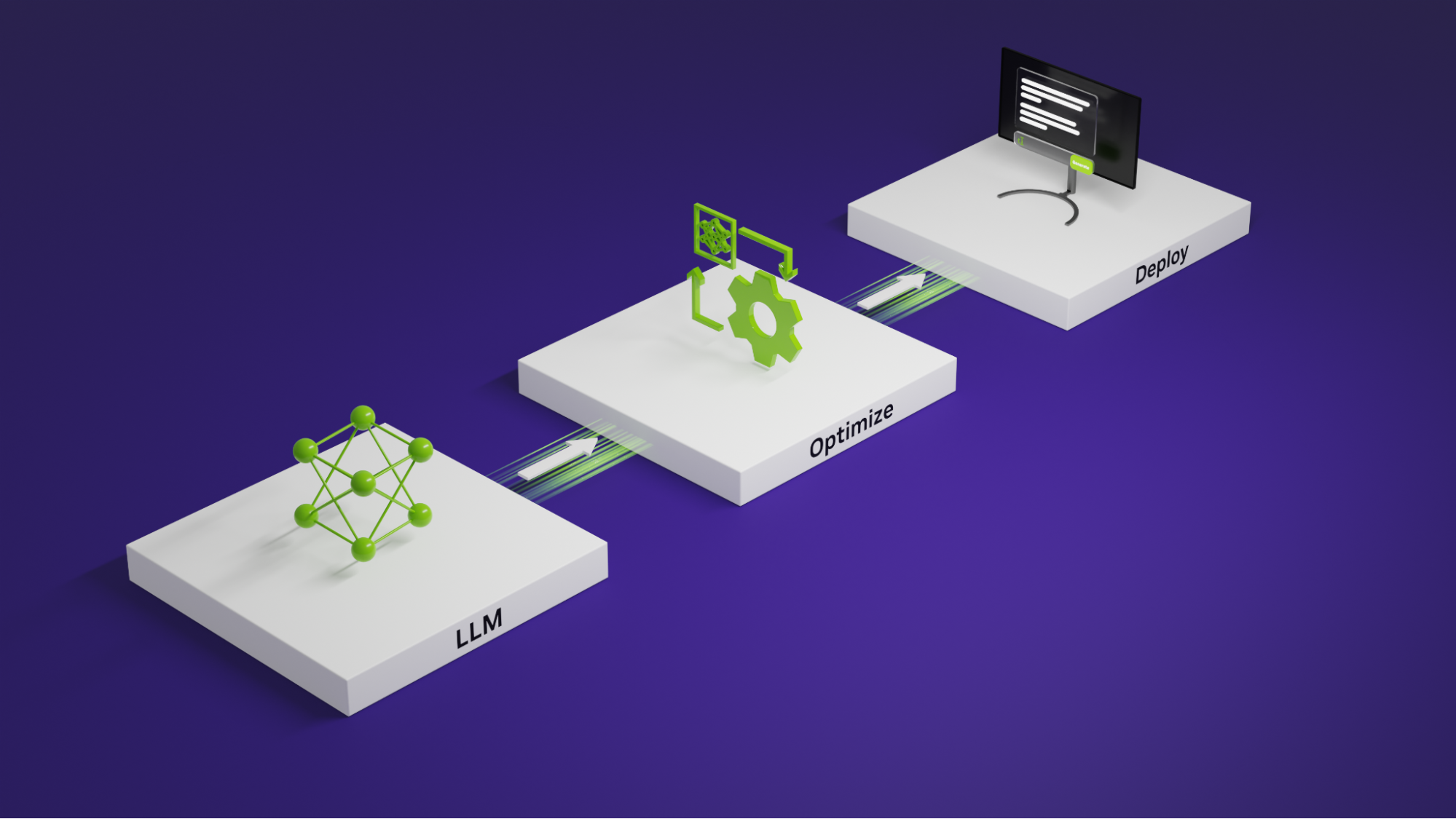
An LLM inference platform is infrastructure purpose-built to deploy, manage, and serve large language models—and increasingly, multimodal models—at production scale. Think of it not as a single chatbot endpoint you ping for a quick answer, but as an orchestration layer that lets you run multiple specialized models simultaneously, route requests intelligently, and maintain consistent output quality even under heavy demand. Where a simple API call to one general-purpose model gives you a text response and nothing more, an llm inference platform provides the backbone for complex, multi-step content pipelines.
For creators and marketing teams, several platform capabilities matter most. First is support for multimodal models—systems that handle text, image generation, audio synthesis, and video understanding within a unified environment. Instead of juggling disconnected tools for copywriting, visual creation, and audio production, you work within one coherent system where outputs from one model can feed directly into another. Second, these platforms allow you to fine-tune and deploy custom models trained on your brand voice, style guidelines, or industry-specific terminology. This eliminates the “generic AI tone” problem that plagues teams relying on off-the-shelf generators. Third, and often overlooked, is performance stability. Production content workflows cannot tolerate unpredictable latency spikes or quality degradation during peak usage. Inference platforms are engineered with load balancing, model versioning, and failover mechanisms that ensure your Tuesday morning content batch runs as reliably as your Friday afternoon one.
These capabilities directly address the core pain points marketers face: inconsistency across channels, quality degradation when scaling output, and the inability to connect data-driven insights with creative execution. When your platform can reliably serve a fine-tuned writing model alongside an image generator and a data summarization model—all within one automated pipeline—you move from using AI as a novelty to deploying it as genuine production infrastructure. Providers like SiliconFlow have focused on making this kind of unified, high-performance inference accessible, enabling teams to run multiple model types through a single platform without managing complex infrastructure themselves.
Transforming Content Workflows with Multimodal AI Models
The real power of an LLM inference platform emerges when you stop thinking about individual content pieces and start thinking about orchestrated campaigns. Consider a product launch: traditionally, your team would brief a copywriter for blog content, a designer for visuals, a video editor for short clips, and a social media manager to adapt everything for each channel. Each handoff introduces delays, inconsistencies, and interpretation drift. With a multimodal inference platform, you define the campaign’s core message, tone, and objectives once, then the system generates coordinated outputs across formats—long-form blog copy, matching hero images, video script storyboards, and audio narration drafts—all drawing from the same strategic brief and brand parameters. The result isn’t just faster production; it’s inherent coherence across every touchpoint.
Dynamic social media content adaptation represents one of the highest-impact applications. A single in-depth research report can be automatically decomposed into a LinkedIn carousel summarizing key findings, a Twitter thread highlighting provocative statistics, a short-form video script for TikTok or Reels, and an infographic outline optimized for Pinterest. The platform handles not just reformatting but genuine re-contextualization—adjusting tone, length, visual density, and hook structure to match each platform’s engagement patterns. Teams that previously spent days manually repurposing content can now generate platform-specific variants in minutes, then focus their human expertise on refinement and strategic timing.
Integration with existing design and editing tools closes the gap between AI-generated concepts and polished final assets. Modern inference platforms expose APIs that connect directly to tools like Figma, Adobe Creative Cloud, or video editing suites. An AI-generated image concept becomes an editable layered file; a video script feeds directly into a timeline with suggested B-roll tags and transition notes. This means your creative team isn’t starting from scratch or wrestling with disconnected outputs—they’re refining and elevating work that already aligns with campaign objectives.
From Data to Narrative: Automating Analytical Report Generation
Perhaps no workflow benefits more dramatically from inference platforms than analytical report generation. Marketing teams drown in data from Google Analytics, CRM systems, ad platforms, and social listening tools, yet translating raw metrics into compelling narratives for stakeholders remains painfully manual. An LLM inference platform changes this by connecting directly to your data sources, ingesting performance metrics, trend data, and KPI movements, then generating narrative-driven reports that contextualize numbers within business objectives. Rather than presenting a table showing a 23% increase in organic traffic, the system produces a paragraph explaining what drove that increase, how it compares to seasonal benchmarks, and what it implies for next quarter’s strategy. These reports can be output as written documents, slide presentations with auto-generated visualizations, or even summary videos where an AI narrator walks stakeholders through key findings. The transformation is profound: raw data becomes actionable storytelling, delivered consistently every week without consuming hours of analyst time.
Implementing Solutions: A Step-by-Step Guide for Digital Marketers
Moving from curiosity about LLM inference platforms to actual implementation requires a structured approach. The teams that succeed aren’t those who rush to adopt every AI feature simultaneously—they’re the ones who methodically identify where AI creates the most leverage and build outward from proven wins. Here’s how to make that happen in practice.
Start by auditing your current content bottlenecks with brutal honesty. Map every step in your production pipeline—from ideation through publication—and measure where time disappears. For most teams, the biggest drains aren’t the creative tasks themselves but the repetitive reformatting, data gathering, and cross-channel adaptation work that surrounds them. You might discover that your writers spend 40% of their week pulling analytics data and formatting it into client reports, or that repurposing a single blog post across six social platforms takes three days of back-and-forth between copywriters and designers. These are your highest-value automation targets.
When evaluating platforms, resist the temptation to choose based on headline features alone. The criteria that actually determine success include multimodal support breadth (can it handle text, image, and audio within unified pipelines?), the ease of integrating custom models fine-tuned on your brand assets and tone guidelines, transparent and predictable pricing at your expected volume, and proven scalability under production loads. Request trial periods with your actual workloads rather than relying on demo scenarios. Pay particular attention to API documentation quality and available integrations with tools your team already uses—a platform that requires rebuilding your entire tech stack will stall before it launches.
Build your first use case around a single, well-defined task with clear success metrics. Weekly performance report generation works exceptionally well as a starting point because the inputs are structured, the output format is predictable, and the time savings are immediately measurable. Alternatively, generating batches of social media content ideas from a single brief lets you test creative quality without high-stakes risk. Define what “good enough” looks like before you begin, so you can objectively evaluate results rather than endlessly debating subjective quality.
Integrate every AI output into a human review workflow from day one. The human-in-the-loop model isn’t a compromise—it’s the design pattern that produces the best results. Your team’s role shifts from creating from scratch to curating, refining, and elevating AI-generated drafts. Establish clear review checkpoints: a strategist validates messaging alignment, a brand editor polishes voice and tone, and a subject matter expert confirms factual accuracy. Over time, as you fine-tune models with approved outputs, the gap between raw AI generation and final published quality narrows considerably.
Once your pilot proves its value—measured in hours saved, consistency improvements, or output volume increases—scale deliberately. Expand to adjacent use cases that share similar data inputs or output formats. A successful report generation pipeline naturally extends into automated executive summaries, then into client-facing dashboards with narrative context. A social media content engine grows into full campaign orchestration once you’ve validated tone and engagement performance. Each iteration feeds learnings back into your platform configuration, creating a compounding advantage that generic tool users simply cannot match.
Building a Competitive Edge Through AI-Powered Content Infrastructure
LLM inference platforms represent a fundamental shift in how digital marketers approach multimedia content creation. They move teams beyond the limitations of simple text generators into a realm where complex, multimodal campaigns are orchestrated through unified infrastructure—text, images, video, audio, and data-driven narratives flowing from coordinated pipelines rather than disconnected tools. The benefits compound over time: operational efficiency gains free creative teams to focus on strategy and refinement, scalability ensures quality remains consistent as output volume grows, and automated analytical report generation transforms raw metrics into stakeholder-ready storytelling without consuming hours of manual effort. Perhaps most importantly, these platforms don’t replace human creativity—they amplify it through a collaborative model where AI handles repetitive production tasks while people contribute judgment, brand intuition, and strategic direction.
As content expectations continue accelerating across every digital channel, the gap between teams leveraging production-grade inference infrastructure and those still relying on basic AI tools will become a decisive competitive divide. Marketers who invest now in understanding, piloting, and scaling these platforms position themselves to lead rather than react. The technology is mature enough for practical implementation today. Start with your most painful bottleneck, prove the value with measurable results, and build from there—the compounding returns will reshape what your team can accomplish.