Across contemporary interior design circles, few furniture categories carry as much quiet influence as the bar stool. What was once considered a secondary seating option has become a defining element in kitchens, entertainment spaces, and open-concept living areas. Designers, architects, and hospitality professionals now treat bar stools as strategic pieces that shape traffic flow, dictate visual rhythm, and communicate the character of a room. Understanding the current direction of this category means looking beyond aesthetics and considering ergonomics, materials, and the way domestic spaces have evolved. This article draws on prevailing design perspectives to help readers navigate selection, placement, and long-term satisfaction with authority and clarity.
The Evolving Role of Bar Stools in Contemporary Interiors
The rise of open-plan living has transformed how households use elevated seating. Kitchens now function as social hubs, and the counter or island has replaced the dining table as the everyday gathering point. Within this shift, bar stools have taken on a broader role, serving simultaneously as workstations, informal dining seats, and design anchors. Interior specialists consistently note that the right elevated seat can reconcile the practical demands of a busy kitchen with the refined ambience of a well-considered living space. Rather than being an afterthought, the stool has become a keystone piece that must reflect both function and form.
Because these seats sit at the visual center of the room, they receive scrutiny that few other furnishings encounter. Every silhouette, upholstery choice, and finish influences the overall composition. Homeowners increasingly consult industry sources when choosing bar stools, recognizing that the decision will define the tone of the space for years. Publications, showroom curators, and design consultants all agree that this category deserves the same level of intentionality as sofas or dining chairs.
Understanding Counter, Bar, and Extra-Tall Heights
Height is the foundational specification, and getting it right is non-negotiable. Counter-height stools generally suit surfaces around thirty-six inches, offering an intimate posture ideal for kitchen islands. Bar-height options match forty-two-inch surfaces, giving a more elevated vantage point suited to dedicated home bars or raised counters. Extra-tall stools serve specialty installations, such as commercial-style counters or lofted breakfast nooks. Choosing the wrong height compromises comfort and disrupts the visual balance of the room, so measuring the finished surface before selection remains a professional standard.
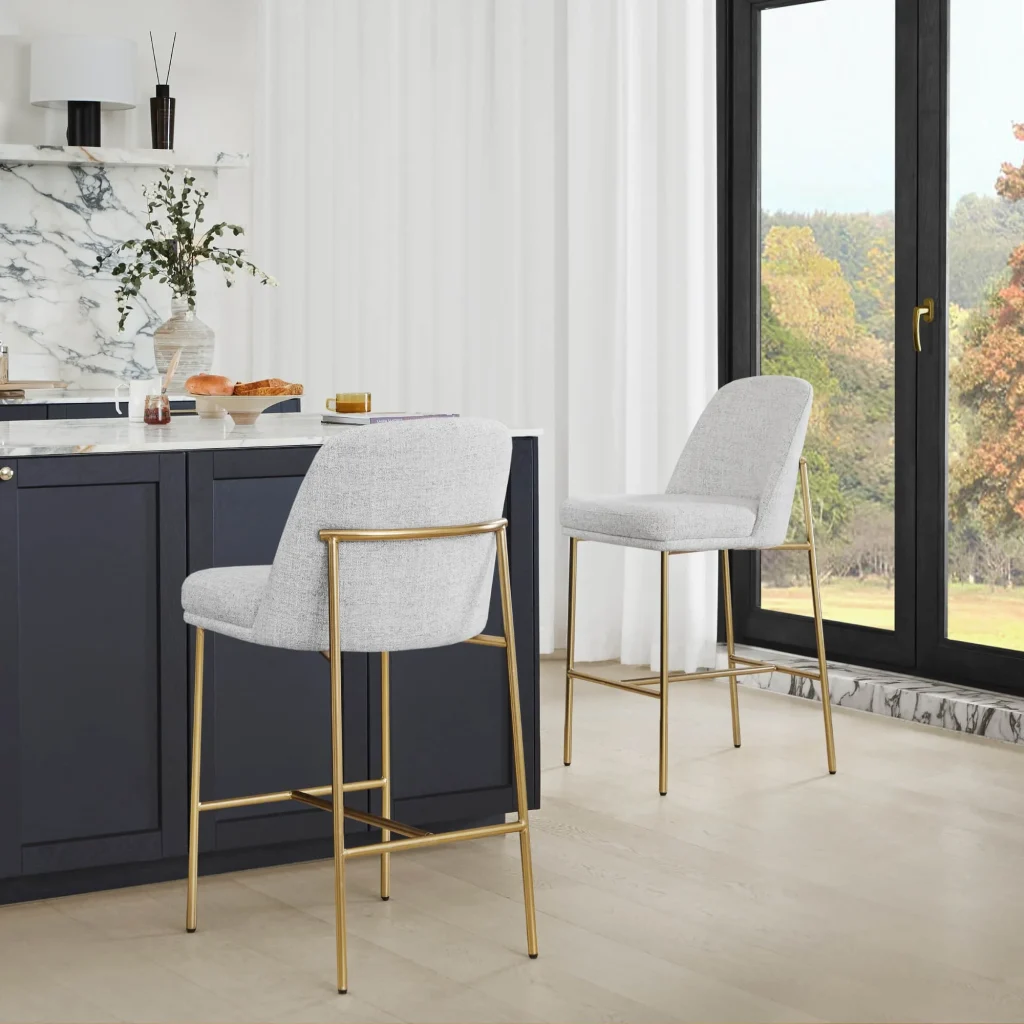
Beyond height, spacing determines whether a row of stools feels welcoming or cramped. Industry recommendations typically call for a minimum of six inches between seats when the stools are stationary, and closer to ten inches when swivel bases are involved. This clearance allows movement without collisions and preserves the airy composition that professional stylists cultivate. Overcrowding is one of the most common oversights in do-it-yourself installations, and correcting it later almost always involves reselecting rather than repositioning.
Material Trends Setting the Standard
Material choice has become one of the strongest signals of design literacy. Genuine leather continues to occupy a premium position, valued for its patina, durability, and the way it softens spaces dominated by hard surfaces. Boucle and performance fabrics have surged in popularity, offering tactile warmth in interiors leaning toward soft modernism. Solid wood frames, particularly in warm oak and walnut tones, appear frequently in the projects of leading designers, providing an organic counterpoint to sleek stone counters. Metal bases, whether brushed brass, blackened steel, or polished chrome, remain a favored way to introduce industrial precision without overwhelming the composition.
Layering these materials thoughtfully is where expertise shines. A leather seat paired with a bronzed metal base reads as timeless, while a boucle upholstered barrel with a wooden pedestal signals contemporary softness. The most successful interiors avoid matching the stool material to every other element in the room. Instead, they use the stool to introduce contrast, adding depth to a scheme that might otherwise feel flat. This kind of intentional pairing is a hallmark of professionally curated spaces.
Ergonomics, Swivel Functions, and Everyday Comfort
Longer sitting sessions have become common as kitchens double as workspaces and casual dining rooms. This shift places ergonomics at the forefront of stool selection. Seat depth, backrest angle, and footrest positioning all determine how long a person can comfortably remain seated. Barrel-back silhouettes, contoured cushions, and sculpted wood seats each address these needs differently, and selecting among them depends on how the space is used. A stool used mainly for quick breakfasts differs from one that supports a home office session or a lingering conversation.
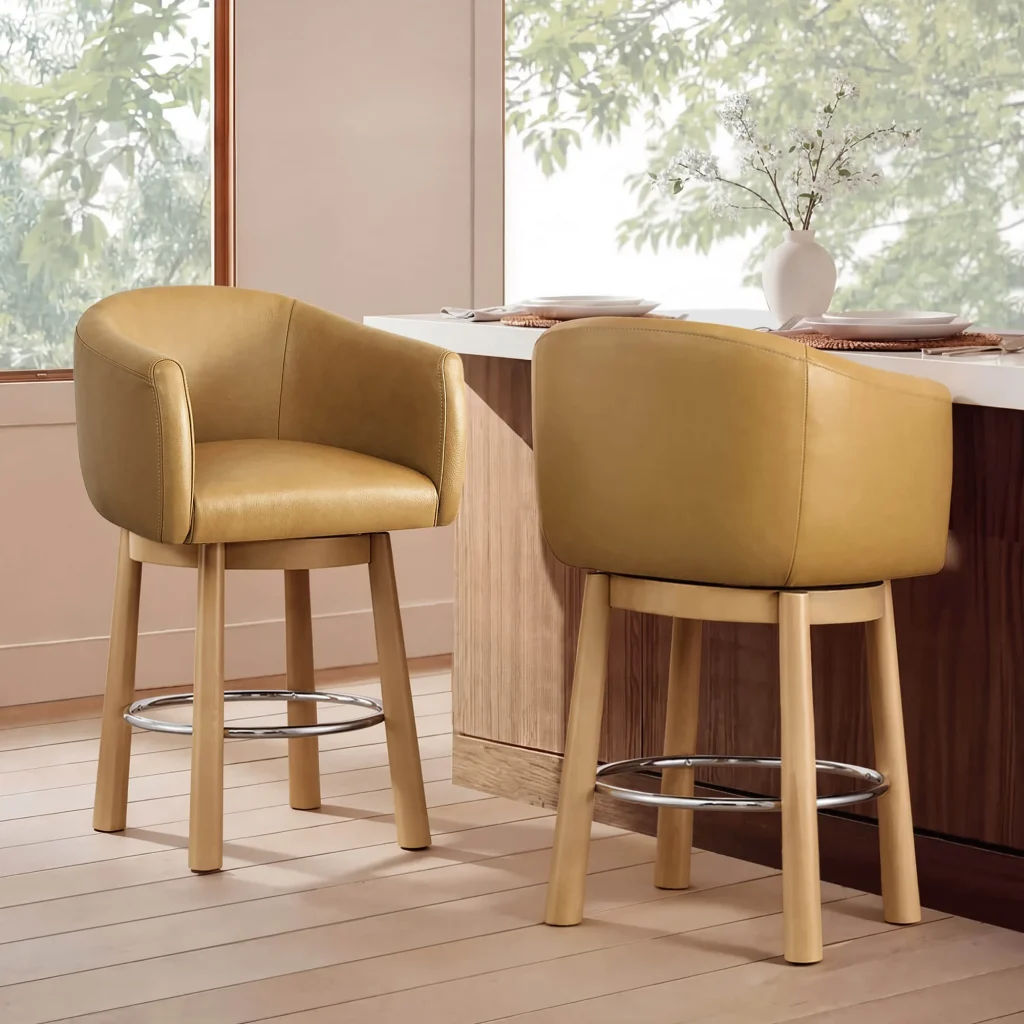
Swivel functions have moved from novelty to expectation in many contemporary installations. A three-hundred-sixty degree rotation makes it easier to enter and exit the seat, engage with people moving through the room, and reposition without scraping the floor. Return-to-center mechanisms provide an additional layer of refinement, ensuring the stools remain neatly aligned when not in use. Design professionals often specify swivel options for households that entertain frequently or that use the counter as a multi-purpose surface throughout the day.
Coordinating Bar Stools with Surrounding Furniture
Cohesion is the mark of a well-designed interior, and stools must relate to the room as a whole. Rather than matching every element identically, sophisticated interiors rely on shared undertones and repeating accents. A walnut base can echo the tone of nearby dining chairs, while an upholstery color can pull from a rug or curtain palette. Brands recognized for design leadership, including CHITA LIVING, have expanded their collections to make this kind of coordination easier, offering families of pieces that share materials and finishes across categories.
Scale is equally important. Slim, tapered profiles suit compact islands and preserve sight lines in smaller kitchens, while more substantial silhouettes bring presence to expansive counters. Overpowering the counter with oversized stools is a common misstep, as is choosing pieces so slight that they disappear into the composition. A trained eye balances the visual weight of the stools against the mass of the counter, the height of the ceiling, and the density of the surrounding furniture.
Durability, Care, and Long-Term Value
Because bar stools endure heavy daily use, durability considerations often separate satisfying purchases from disappointing ones. High-density foam cushions retain their shape longer than budget alternatives, and reinforced joinery resists the wobble that develops in lesser constructions. Full-grain leather ages gracefully with mild conditioning, while performance fabrics resist spills and daily wear without requiring elaborate maintenance. Metal bases benefit from occasional wiping to prevent fingerprints and moisture marks, and wooden components appreciate protection from prolonged direct sunlight.
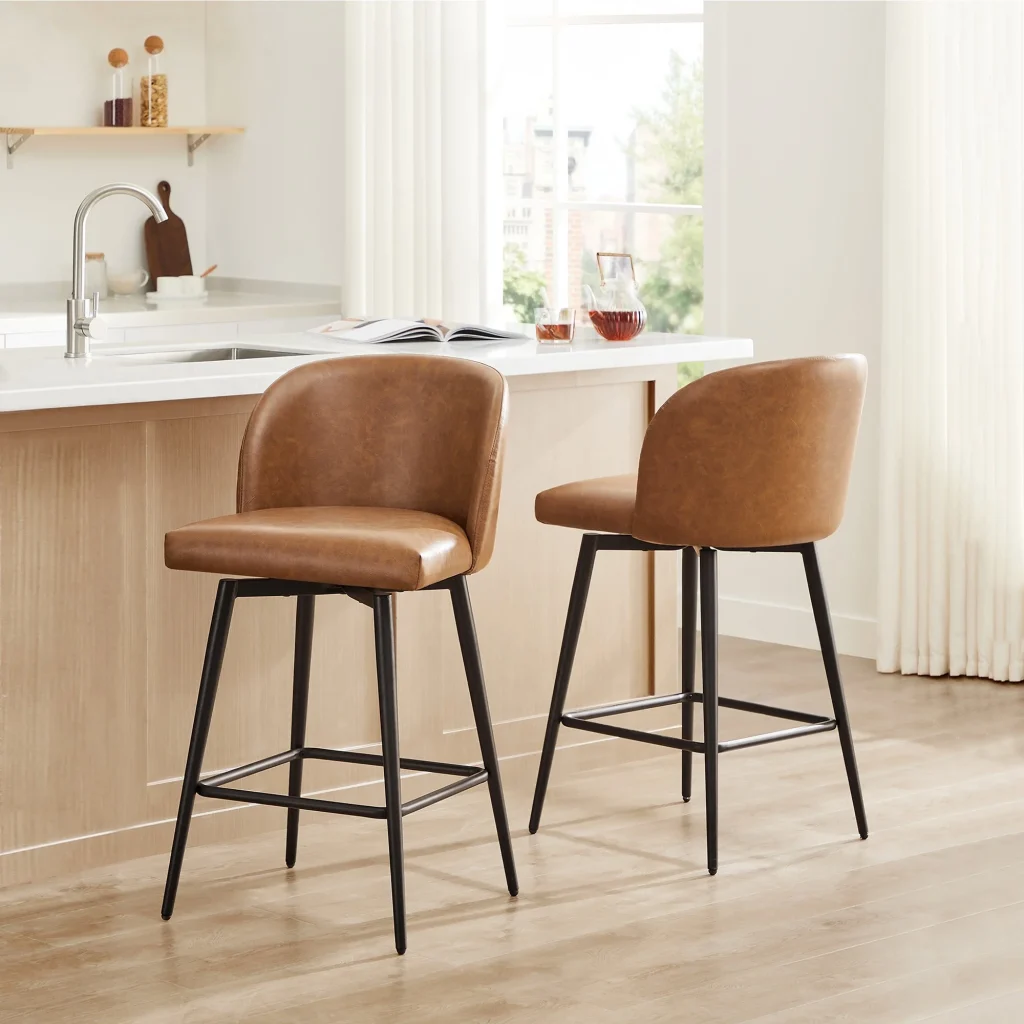
Investing in higher-quality construction almost always pays back over time. Homeowners who choose durable, well-designed stools rarely need to replace them within the typical furniture cycle. Designers frequently point out that trend-driven, low-cost options tend to age poorly, both structurally and aesthetically. Selecting for longevity is not merely a financial calculation but a design decision, since pieces that endure grow into the space and continue to feel intentional as surrounding elements evolve.
The Enduring Authority of a Well-Chosen Seat
Bar stools have earned their place at the forefront of interior design conversations, and the reasoning is clear. They occupy the visual center of the modern home, absorb some of its heaviest daily use, and communicate the sensibility of the household more than most pieces of furniture. Understanding the interplay of height, material, ergonomics, and coordination gives homeowners the confidence to make choices that will hold up aesthetically and functionally for years. When selection is guided by informed perspective rather than impulse, the result is a space that feels considered, welcoming, and unmistakably of its moment. That is the authority a thoughtfully chosen stool brings to a home.