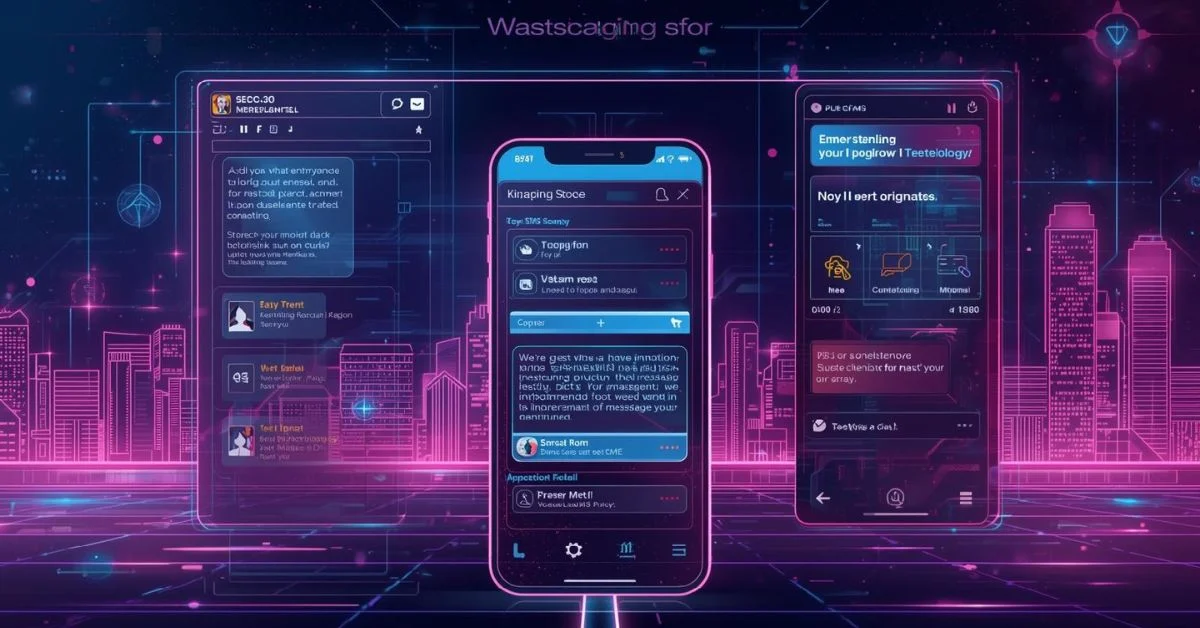
In today’s fast-paced world, we send and receive text messages almost every day but have you ever wondered what SMS stands for? SMS, or Short Message Service, is the technology that makes those quick, concise messages possible.
Despite the rise of instant messaging apps like WhatsApp, Telegram, and Messenger, SMS remains one of the most widely used communication methods worldwide.
From personal texts to important notifications from banks, businesses, and governments, SMS continues to play a vital role in connecting people.
This article will dive deep into everything you need to know about SMS: its meaning, history, how it works, advantages, limitations, and even its role in modern communication.
By the end, you’ll not only understand the full form of SMS but also why it has stood the test of time in the ever-evolving world of mobile messaging.
Definition: What SMS Stands For
SMS stands for Short Message Service, a technology that allows people to send short text messages from one mobile device to another.
Simply put, it’s the reason you can quickly type “Hey, I’m on my way” and have it reach someone else in seconds.
Unlike instant messaging apps that rely on the internet, SMS uses the cellular network, which means it can work even on basic mobile phones without data or Wi-Fi.
The concept of SMS was first standardized in the 1980s, and it became widely available in the 1990s. Each SMS message is typically limited to 160 characters, making it ideal for short and concise communication. If you need to send longer messages, multiple SMS messages are often linked together automatically.
SMS is not just for casual conversations, it’s a critical tool for businesses and organizations. Banks use SMS to send one-time passwords (OTPs), online services send transaction alerts, and governments send emergency notifications. Its simplicity, reliability, and wide accessibility make SMS a universal form of communication that works across almost all mobile devices.
In short, when someone asks, “What does SMS mean?” The answer is simple: it’s the Short Message Service that has connected billions of people worldwide, efficiently and reliably, for decades.
History of SMS
The story of SMS, or Short Message Service, dates back to the 1980s, when engineers began exploring ways to send brief text messages over mobile networks.
The idea was first proposed as part of the GSM (Global System for Mobile Communications) standard in 1985, with the goal of enabling simple text-based communication alongside voice calls.
The very first SMS was sent on December 3, 1992, by Neil Papworth, a British engineer.
He sent a simple “Merry Christmas” message from his computer to a mobile phone on the Vodafone network in the United Kingdom. At that time, mobile phones didn’t have keyboards, so sending texts was a novel and exciting experience.
Throughout the 1990s, SMS gradually gained popularity.
Initially, it was mostly used by tech enthusiasts and early adopters, but as mobile phone technology improved and keyboards became standard, SMS exploded in use. By the early 2000s, billions of SMS messages were being sent every day worldwide.
SMS also revolutionized business communication, allowing banks, companies, and governments to quickly send alerts, OTPs, and promotional messages.
Even with the rise of internet-based messaging apps, SMS remains relevant because it works on all mobile phones without requiring an internet connection.
In short, SMS has come a long way from a simple “Merry Christmas” message to a global communication tool. Its history highlights how a small, simple idea can evolve into a technology that billions rely on every day.
How SMS Works
SMS, or Short Message Service, may seem simple to use, but there’s a lot happening behind the scenes every time you send a text.
Unlike messaging apps that rely on the internet, SMS uses the cellular network to transmit messages from one phone to another.
When you type a message and hit “send,” your phone communicates with the nearest cell tower, which then forwards the message to an SMS center (SMSC).
The SMSC acts as a middleman, storing the message temporarily and ensuring it reaches the recipient, even if their phone is turned off.
Once the recipient’s device is available, the SMSC forwards the message to their phone. This process happens in seconds, making SMS almost instantaneous.
Each SMS message is limited to 160 characters using the standard GSM encoding, which ensures the message fits into a single text packet.
Longer messages are broken into multiple segments and reassembled on the recipient’s phone.
Because SMS relies on the cellular network rather than the internet, it can be used anywhere with mobile coverage, even in areas without Wi-Fi.
SMS is also highly reliable.
Unlike email or some messaging apps, which may be delayed or blocked, SMS is supported by virtually all mobile phones worldwide, making it a universal communication tool.
This reliability explains why SMS continues to be used for transaction alerts, one-time passwords (OTPs), appointment reminders, and emergency notifications.
In essence, SMS works as a simple but highly effective system that combines mobile phones, cell towers, and SMS centers to deliver messages quickly, securely, and reliably across the globe.
SMS vs MMS
While SMS (Short Message Service) is designed for sending short text messages, MMS (Multimedia Messaging Service)
takes mobile messaging a step further by allowing users to send pictures, videos, audio, and longer text. Understanding the difference between SMS and MMS is essential, especially in today’s world where mobile communication is evolving rapidly.
SMS is limited to 160 characters per message, and it only supports plain text. If you try to include multimedia like images or videos, SMS cannot handle it. That’s where MMS comes in. MMS allows messages to include media files such as photos, GIFs, videos, and even sound clips. This makes MMS perfect for marketing campaigns, multimedia greetings, or sharing visual content with friends and family.
Another key difference is cost and network usage.
SMS messages typically cost less than MMS, and they can be sent on basic cellular networks without the internet, making them accessible almost anywhere. MMS, on the other hand, requires a 3G, 4G, or LTE connection on most networks and may be more expensive depending on your mobile plan.
Despite the rise of instant messaging apps like WhatsApp and Telegram, both SMS and MMS remain widely used. SMS continues to dominate short text notifications, OTPs, and alerts, while MMS is preferred when media-rich communication is needed.
In summary, SMS is ideal for simple, fast, and text-only messages, while MMS adds multimedia capability for richer communication. Choosing between the two depends on your content, purpose, and the devices of your recipients.
Advantages of SMS
Despite the rise of internet-based messaging apps, SMS remains one of the most widely used communication tools worldwide. Its simplicity, reliability, and accessibility make it a preferred choice for both personal and business communication.
One of the biggest advantages of SMS is that it does not require an internet connection.
As long as you have cellular network coverage, you can send and receive messages on any mobile phone, including basic feature phones. This makes SMS a universal tool, especially in areas with limited internet access.
SMS messages are also delivered almost instantly, ensuring fast communication. Whether it’s a personal text, an appointment reminder, or a bank notification, SMS provides quick and reliable delivery.
Another advantage is compatibility. SMS works on nearly every mobile phone worldwide, regardless of brand, operating system, or model. You don’t need to download an app or worry about device compatibility.
SMS is also widely used in business and government communication. Banks, online services, and organizations rely on SMS to send one-time passwords (OTPs), alerts, and confirmations. Governments use SMS to broadcast emergency notifications and public announcements, reaching a large audience quickly and efficiently.
Finally, SMS is simple and straightforward, making it easy for people of all ages and technical skill levels to use.
Its widespread adoption and proven reliability have kept it relevant, even in an age dominated by apps like WhatsApp, Messenger, and Telegram.
In short, SMS has fast, reliable, universal, and simple advantages that explain its continued use across the globe.
Limitations of SMS
While SMS is a reliable and widely used communication tool, it does have several limitations that users should be aware of.
Understanding these drawbacks helps explain why newer messaging apps have become so popular.
One of the main limitations of SMS is the character limit.
Standard SMS messages can contain only 160 characters. If you need to send longer messages, they are automatically split into multiple segments, which can sometimes lead to messages arriving out of order or slightly delayed.
Another limitation is the lack of multimedia support. SMS is designed for plain text, so you cannot send images, videos, GIFs, or audio files. For media messages, you need to use MMS or internet-based messaging apps.
Cost can also be a concern in certain regions. While many mobile plans now include free SMS, in some countries or on older plans, sending SMS messages may incur additional charges, especially for international texts.
SMS also has limited interactivity compared to modern messaging apps. Features like read receipts, typing indicators, or group chats are either unavailable or extremely basic. This can make SMS feel outdated in comparison to apps like WhatsApp, Telegram, or Signal.
Finally, security and privacy are a limitation. SMS is not end-to-end encrypted, meaning messages can potentially be intercepted. Sensitive information like passwords or personal data may require additional precautions.
In summary, SMS is simple and reliable, but its character limit, lack of multimedia, limited features, cost, and security concerns are the main limitations. These factors have led many users to adopt modern messaging platforms while still relying on SMS for essential communication.
SMS in Daily Life
SMS, or Short Message Service, continues to play a vital role in our daily lives, despite the rise of internet-based messaging apps. Its simplicity, reliability, and universal compatibility make it indispensable for both personal and professional communication.
On a personal level, SMS is used for everyday conversations.
From sending reminders like “Don’t forget our meeting” to quick greetings such as “Happy Birthday!”, SMS allows users to communicate instantly without needing an internet connection. It’s especially handy for sending short messages in areas with weak mobile data coverage.
SMS is also heavily used in business communication. Companies send transaction alerts, appointment confirmations, and delivery notifications via SMS to ensure messages reach customers reliably.
Banks and financial institutions rely on SMS for sending one-time passwords (OTPs), PIN verifications, and account alerts, which help maintain security and trust.
Governments and organizations also use SMS for public safety and emergency notifications. During natural disasters, extreme weather events, or public health updates, SMS provides a quick and reliable way to reach millions of people in real-time.
Even in marketing, SMS remains effective. Businesses send promotional messages, discount offers, and survey links to engage customers directly. The high open rate of SMS far higher than email makes it an essential tool for reaching audiences effectively.
In short, SMS has become an integral part of daily life, bridging personal, business, and governmental communication. Its ability to work anywhere, instantly and reliably, ensures it remains relevant even in the age of WhatsApp, Telegram, and other messaging apps.
SMS Security and Privacy
While SMS is a convenient and reliable communication tool, it does have security and privacy limitations that users should be aware of. Unlike many modern messaging apps, SMS messages are not end-to-end encrypted, meaning the content of messages could potentially be intercepted during transmission. This is particularly important when sending sensitive information such as passwords, bank OTPs, or personal details.
One common risk associated with SMS is phishing and scam messages. Fraudsters often send SMS pretending to be banks, government agencies, or companies, asking users to click on links or share sensitive information. Falling for these scams can result in identity theft or financial loss. Users should always verify the source of any unexpected message.
Another limitation is message storage. SMS messages are often stored on your device in plain text, which can be accessed if the phone is lost, stolen, or hacked. Unlike secure messaging apps, SMS does not provide additional layers of protection such as self-destructing messages or encrypted backups.
Despite these concerns, SMS can still be used safely with a few precautions. Avoid clicking unknown links, do not share sensitive information over SMS unless necessary, and regularly delete old messages. Additionally, many organizations combine SMS with other security measures, such as two-factor authentication, to protect user accounts.
In summary, while SMS is a reliable and universal communication method, it lacks advanced security features. Awareness and cautious use are key to maintaining privacy and safety when using SMS in daily life.
Future of SMS
Even though SMS has been around for decades, it continues to evolve and adapt to modern communication needs.
One of the biggest developments shaping the future of SMS is RCS (Rich Communication Services), often referred to as the “next generation SMS.” RCS allows messages to include high-quality images, videos, typing indicators, read receipts, and group chats, making it more comparable to apps like WhatsApp while still working on standard mobile networks.
RCS aims to bridge the gap between traditional SMS and modern internet-based messaging. Unlike SMS, which is limited to plain text and 160-character messages, RCS offers a richer and more interactive messaging experience without requiring third-party apps.
Many mobile carriers around the world are gradually rolling out RCS, which means users will soon enjoy enhanced features while keeping the reliability of SMS.
Beyond RCS, SMS continues to play a crucial role in business automation and IoT (Internet of Things). Automated alerts, appointment reminders, and transaction notifications rely on SMS because it works on all devices without needing internet connectivity. Even in an age dominated by apps, SMS remains the backbone for essential, high-reliability messaging.
In addition, SMS is expected to remain relevant for emergency communications, government alerts, and verification processes due to its universal compatibility.
While instant messaging apps offer more features, SMS’s reliability, simplicity, and reach ensure it will continue to be a critical part of mobile communication for years to come.
In short, the future of SMS lies in enhanced messaging through RCS while maintaining its core strength of universal accessibility and reliability.
SMS vs. Modern Messaging Apps
In today’s digital era, many people wonder how SMS compares to modern messaging apps like WhatsApp, Telegram, and Signal. While both serve the purpose of sending messages, there are key differences that make each unique.
SMS works on all mobile phones, including basic feature phones, and does not require an internet connection. This makes it highly reliable, especially in areas with weak or no internet access. SMS is also supported by nearly all carriers worldwide, making it universally accessible. It is widely used for transaction alerts, OTPs, reminders, and emergency notifications, where instant and dependable delivery is crucial.
On the other hand, messaging apps rely on an internet connection and are mostly compatible with smartphones.
These apps provide advanced features such as multimedia sharing, group chats, read receipts, stickers, video calls, and end-to-end encryption, which SMS lacks. Messaging apps are ideal for social conversations, media-rich communication, and interactive chats.
However, SMS still holds advantages in certain scenarios. Its simple, lightweight nature ensures that messages are delivered quickly, even in network-congested areas. Unlike messaging apps, SMS does not depend on downloads, app updates, or specific operating systems. This reliability is why businesses and governments continue to use SMS for critical communications.
In summary, SMS and modern messaging apps serve different purposes. SMS is fast, reliable, and universal, while apps like WhatsApp and Telegram offer feature-rich and interactive communication. The best choice depends on your needs: basic and dependable texting versus multimedia-rich social messaging.
Fun Facts About SMS
SMS, or Short Message Service, may seem simple,
but it has a surprisingly interesting history and some fascinating facts that many people don’t know.
Did you know that the first SMS ever sent was on December 3, 1992? British engineer Neil Papworth sent the message, which simply read: “Merry Christmas.” At the time, mobile phones didn’t have keyboards, so this marked the beginning of a completely new way to communicate.
SMS messages have grown immensely in popularity.
By the early 2000s, billions of text messages were being sent every day worldwide, and even today, SMS continues to be a vital part of mobile communication.
Another fun fact is the 160-character limit of SMS. This restriction was set to ensure that messages could be transmitted efficiently across the network. Surprisingly, this limit influenced the way people communicate, giving rise to texting abbreviations and shorthand like “LOL,” “BRB,” and “OMG.”
SMS has also made its way into pop culture. Movies, songs, and books often reference texting, showing how deeply it has embedded itself into daily life.
Finally, SMS remains a global phenomenon.
Unlike apps that require smartphones and internet, SMS works on almost any mobile device, anywhere in the world, making it one of the most universally accessible communication tools.
These fun facts show that SMS is not just a simple text service,
it is a technological innovation that shaped modern communication, connecting billions of people quickly, reliably, and efficiently every day.
FAQs About SMS
1. What does SMS mean on a phone?
SMS stands for Short Message Service. It allows users to send short text messages from one mobile device to another using the cellular network. Unlike internet-based messaging apps, SMS does not require Wi-Fi or mobile data.
2. Is SMS still relevant in 2026?
Yes! Despite the popularity of apps like WhatsApp and Telegram, SMS remains widely used for bank alerts, OTPs, appointment reminders, government notifications, and emergency messages. Its reliability and universal compatibility keep it relevant worldwide.
3. How does SMS work?
When you send an SMS, your message goes from your phone to the nearest cell tower, then to an SMS Center (SMSC).
The SMSC temporarily stores the message and forwards it to the recipient’s phone once it is available. This process happens within seconds, ensuring fast and reliable delivery.
4. What is the difference between SMS and instant messaging apps?
SMS works on any mobile phone and does not require the internet,
whereas messaging apps rely on data and are generally smartphone-dependent.
SMS is limited to plain text and 160 characters, while apps like WhatsApp allow multimedia, group chats, and advanced features like encryption.
5. Can SMS work without a mobile network?
No. SMS requires a cellular network to send and receive messages. Without network coverage, messages cannot be delivered until the phone reconnects to the network.
These frequently asked questions provide quick and practical insights into SMS, helping users understand its definition, functionality, relevance, and limitations in today’s communication landscape.
Conclusion
SMS, or Short Message Service, has been a cornerstone of mobile communication for decades.
From its humble beginnings in the 1980s to the first text message sent in 1992, SMS has grown into a reliable, universal tool used by billions of people worldwide.
Despite the rise of internet-based messaging apps
like WhatsApp, Telegram, and Signal, SMS remains relevant because of its simplicity, reliability, and universal accessibility.
The beauty of SMS lies in its straightforward design.
With just 160 characters, it allows users to convey important information quickly and efficiently.
Its applications go far beyond casual conversations;
businesses, banks, and governments rely on SMS for transaction alerts, OTPs, appointment reminders, emergency notifications, and promotional messages.
The system’s universal compatibility ensures that messages can reach almost anyone, anywhere, without requiring internet access or advanced devices.
While SMS has limitations, including its character restrictions, lack of multimedia,
and basic security, ongoing innovations like RCS (Rich Communication Services) are enhancing its capabilities, making SMS more interactive and feature-rich.
In conclusion, SMS is more than just a text messaging service,
it is a powerful communication tool that has stood the test of time.
Whether for personal use, business, or public notifications, SMS continues to connect people reliably across the globe.
Its simplicity, speed, and accessibility make it a technology that remains relevant and indispensable,
even in the era of smartphones and instant messaging apps.

Punny Parker — Serving witty wordplay, clever jokes, and daily pun-filled fun. Whether it’s smart humor or pure silliness, every post brings a smile, a laugh, or a groan-worthy pun you’ll secretly love. Powered by ThePunSide.com for endless laughs and wordplay magic every day.