When families and older adults evaluate the decision to transition to a senior living community, the conversation tends to center on practical considerations — the availability of support services, the quality of healthcare access, the safety of the physical environment, the financial structure of the arrangement. These are legitimate and important factors, and they deserve careful attention. But there is a dimension of senior living that receives considerably less deliberate attention in the decision-making process and that proves, for a remarkable proportion of residents, to be the most transformative aspect of the experience: the social environment. The social benefits of well-designed senior community living are consistently underestimated before the transition and consistently cited as among the most significant after it. Understanding what those benefits actually are — and why they matter so much — changes the frame through which senior living decisions are made.
The Hidden Cost of Social Isolation in Later Life
To understand the social benefits of community living, it helps to first understand what it replaces. For many older adults living independently — in a home that may have housed a full family but now houses one or two people, in a neighborhood where long-term neighbors have moved or passed away, at a life stage where the natural social structures of work and child-rearing are no longer organizing daily life — social isolation accumulates gradually and often invisibly. It does not typically feel like a crisis; it feels like a quieter life, a simpler routine, days that pass without particular incident. What the research reveals about this experience is considerably more alarming than how it feels from inside it. Chronic social isolation is associated with cognitive decline at rates comparable to heavy smoking, with elevated risk of depression and anxiety, with increased inflammatory markers associated with cardiovascular disease, and with significantly higher mortality risk across age groups. The absence of regular, meaningful social connection is not a benign feature of later life — it is a genuine health hazard, and one that senior community living directly and effectively addresses.
The Organic Nature of Community Connection
One of the most important distinctions between the social life available in a well-designed senior living community and the social life available to an older adult living independently is the effort required to maintain it. Independent social life in later years requires deliberate cultivation — making plans, arranging transportation, maintaining energy for social engagement after managing the demands of daily life alone, and sustaining relationships across the geographical distances that typically separate people from friends and family as life progresses. Community social life, by contrast, is organic — it arises naturally from the proximity of people who share common experiences, common life stages, and a common environment. The neighbor encountered on the way to breakfast, the fellow resident whose regular table in the dining room becomes a familiar point of connection, the activity group that meets weekly and gradually becomes a genuine social anchor — these connections develop without the planning and effort that independent social life increasingly requires. Discovery Village in Naples and communities like it are designed with this organic social infrastructure in mind, creating physical and programmatic conditions in which connection happens naturally rather than requiring deliberate construction.
Shared Life Stage as a Foundation for Genuine Understanding
There is a particular quality of understanding available between people who are navigating the same life stage simultaneously — who share not just general cultural reference points but the specific, immediate experience of managing health changes, processing loss, renegotiating identity after the end of careers and the launch of children, and finding meaning and engagement in a life chapter that the broader culture often fails to adequately acknowledge or support. This shared life stage creates a foundation for conversation and connection that crosses many of the social barriers — background, profession, geography — that might otherwise make friendship between two individuals less natural. Residents of senior living communities frequently describe the friendships formed there as among the most genuine and most sustaining of their lives, precisely because they are built on a depth of mutual understanding that is difficult to find in more mixed-age social environments.
The Role of Programming in Creating Social Opportunity
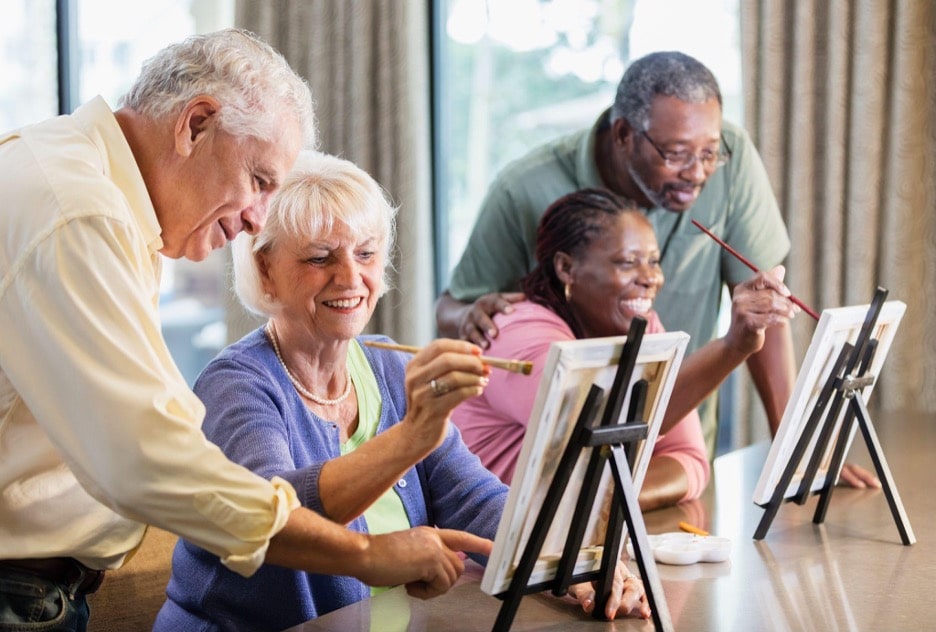
The activity programming offered by a well-designed senior living community is not simply entertainment or occupation — it is social infrastructure. Group fitness classes, shared dining experiences, cultural outings, learning groups, creative workshops, and community events all create contexts in which connection can form naturally around shared activity rather than requiring the more effortful project of relationship initiation in a social vacuum. For residents who are naturally more reserved or who have found the maintenance of social relationships increasingly difficult as their social world has contracted, structured programming provides the scaffolding within which new relationships can begin without the vulnerability of cold social approach. The best communities design their programming not just for individual enjoyment but for the social dynamics it creates — the conversations it starts, the pairs and groups it brings together, and the sense of shared community life it builds over time.
Intergenerational Connection and Its Overlooked Value
Senior living communities that create intentional connections with the broader community — through partnerships with schools, universities, volunteer programs, and cultural institutions — offer residents access to intergenerational relationships that have their own distinct social and cognitive benefits. Mentoring relationships, interactions with young people who bring different perspectives and genuine curiosity about the life experience that older adults carry, and engagement with the energy and optimism of younger generations all contribute to a social environment that is richer and more stimulating than one composed entirely of peers. Communities that invest in these intergenerational connections provide a social experience that combats the narrowing that can otherwise characterize later life social worlds and that keeps residents engaged with the full breadth of human experience.
The Relationship Between Social Wellbeing and Physical Health
The social benefits of community living are not separable from its physical health benefits — they are deeply interconnected. Residents who are socially engaged sleep better, report lower levels of chronic pain, show better immune function, and maintain cognitive sharpness at rates that consistently outperform those of socially isolated peers. The mechanisms are multiple: social engagement reduces the inflammatory stress response associated with isolation; the motivation that comes from meaningful relationships supports adherence to health-supporting behaviors; the cognitive stimulation of regular social interaction builds the neural reserves associated with resilience to cognitive decline. Understanding the social environment of a senior living community as a health intervention — not just a lifestyle amenity — reframes its importance in the decision-making process and helps families and older adults give it the weight it deserves.
Conclusion
The social benefits of senior community living are not a secondary consideration to be evaluated after the practical ones have been addressed — they are among the most significant determinants of resident wellbeing and among the most powerful arguments for thoughtful senior living as a genuine enhancement of quality of life rather than simply a practical accommodation to changing needs. The connection, the understanding, the organic daily social life, and the health benefits that flow from genuine community are things that independent living, for all its merits, cannot replicate. Giving these benefits their full weight in the senior living decision is giving the decision the depth and completeness it deserves.