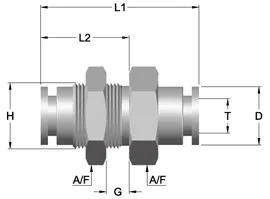
When it comes to pneumatic fittings, the one topic that comes up time and time again is connection type. Most engineers will discuss push fittings versus threaded fittings and the same applies to the other fittings such as elbow, tees, adaptors, reducers, etc., to make sure they have the right fittings for the job. However, the fitting story is but one aspect of the connections.
When selecting the right pneumatic fitting types, engineers should not only look for a type of connection that can keep the two points together, but also a type that can provide the required performance.
However, there are many more characteristics, such as ensuring that air can flow as smoothly as possible; maintaining a steady and reliable pressure; preventing leaks and maintaining good levels of performance over the lifetime of use.
Many of the fittings which are advertised as being able to do the required job will be unable to when working at true working pressures, especially given the increasing use of higher levels of control within pneumatic systems.
Why Fittings Matter More Than Many People Realise
A pneumatic system is made up of many pneumatic fittings that may be very small, even miniature, but have a surprisingly big impact on the performance of the system. At its heart, a fitting is the point at which pipes, tubes, cylinders, valves, etc. meet in a pneumatic system; the air should move freely and without restriction at the fitting without escaping or losing pressure.
The system starts to suffer if the wrong type of fitting is used, or if a poorly chosen type of fitting is used: reduced air flow and pressure loss due to work and waste energy and time, equipment life may be affected.
Fittings are the most mobile component in a pneumatic network, so a single unnoticed leak in a single fitting can impact the entire network.
Understanding Airflow Requirements
The pneumatic airflow rating of your fitting is very important. All air lines operate on efficient airflow – smooth from your compressor to your actuator or hand tool, with no kinks, bends or constrictions in between. But the outside diameter of the tubing being inserted is not all there is to the airflow.
Not all fittings are equal and can be made in a variety of ways. Compressed air systems depend on the ease of air flow from the compressor to the point of use. If a fitting is used that has a restriction on air flow, or the interior diameter is incorrect, it will not perform properly. A reduced airflow rating may cause an actuator to respond slower than desired, a tool to not have the desired power, and to lose efficiency.
A responsible engineer will check more than just the size of the fitting when ordering new parts; the fitting’s airflow capability needs to be considered as well.
Pressure Ratings Cannot Be Overlooked
Every pneumatic system operates within a defined pressure range. Fittings must be capable of handling these pressures safely and consistently.
Using a fitting with an inadequate pressure rating can create reliability concerns and increase the likelihood of leaks or component failure. Conversely, selecting fittings that exceed system requirements by a substantial margin may add unnecessary costs without delivering additional benefits.
Pressure fluctuations should also be considered. Some applications involve frequent pressure changes, rapid cycling, or intermittent operation that can place additional stress on fittings.
Understanding the operating pressures within the system allows engineers to select fittings that provide both safety and long-term reliability.
Material Selection Influences Performance
While fitting installation type might influence how fittings are applied to a system, the materials will impact longevity. Pneumatic fittings can be produced using many materials from brass to stainless steel, as well as engineered plastic materials and composites. Each offers its own strengths and application for each kind of setting.
The brass fittings, as an example, appear in use across various industrial markets due to their strength as well as resistance to disintegration, though stainless steel often arises for conditions where chemicals, dampness, and/or sanitary functions are most required. Whilst plastic will provide lightweight choices for applications where ease of set up and chemical defenses are key focus factors.
It is vital for operators to look at the setting when picking product, temperature, dampness levels, as well as contact with damaging chemicals all affect the ways in which a suitable may endure with time. By selecting ideal materials, operators are able to decrease maintenance requirements and enhance efficiency durability.
Environmental Conditions Matter
What may work well within the controlled setting of a clean room plant could be catastrophic in a workshop with dirt and dust; in an out-door setup; or in a chemical processing plant.
Moisture, dirt, temperatures extremes (both hot and cold) as well as chemical attack from substances and exposure to the rigors of vibrating environments all contribute to the wearing-out and destruction of fittings, regardless of the pneumatic specification.
An engineer looking at just port and thread information will only have a partially correct understanding of the fitting application as the surrounding environment is just as important.
Leak Prevention Should Be a Priority
Some of the top contributors to inefficiencies within a compressed air system are from air leaks. With compressed air being a labour intensive process, even the small ones add to a company’s operation costs and will add up throughout a business facility over the years.
Selection of a Fitting is Critical One of the more effective measures of preventing air leaks is the selection of the fitting type.
If a connection does not line up, threads don’t fit together, or the wrong fitting was used for the application.
When specifying a fitting an engineer may account for things such as a seal performance, the way connections engage and the fitting is designed for reliability over years of use.
If a fitting is made correctly this can add up to a reduction in waste and an improvement in efficiency.
Maintenance Requirements Affect Long-Term Costs
Although first-year installation cost is often factored into the selection of components, long-term maintenance cost will ultimately play a far more significant role in overall cost.
Certain fittings offer easy snap-in or twist-on installation and replacement; other styles might need more highly trained personnel for service.
A fitting which experiences repeated leaks, or requires regularly scheduled maintenance, as well as difficult-to-access locations will result in more expensive labour and more operational headaches.
Access for inspection, maintenance, and potential replacement must be a key concern for any engineer.
Compatibility With Other Components
Pneumatic systems consist of many interconnected components, and compatibility is essential for reliable operation.
Fittings must work effectively with the selected tubing, valves, cylinders, manifolds, and other system elements. Differences in thread standards, tube dimensions, pressure ratings, or material properties can create compatibility issues that affect performance.
Selecting a fitting without considering the broader system may lead to installation difficulties or operational inefficiencies.
A system-wide perspective helps ensure all components function together as intended.
Energy Efficiency Starts With Small Components
Improving an organisation’s energy efficiency efforts might bring attention to compressors and other larger equipment in a system. They impact an organisation’s overall energy usage but some of the smaller pieces of a system can have a large impact.
A leaking component or anything restricting airflow or causing pressure loss adds additional stress to a compressor to keep the entire system performing at its peak levels.
This increased load over time means higher energy costs and higher operation expenses. By selecting the right fittings a company can decrease the impact that the small pieces can have on energy efficiency.
Thinking Beyond Installation
Plenty of decisions about fittings are done during the time the system is being implemented but engineers also must consider maintenance requirements over its long life. Future plans for expansion, equipment upgrades or changes in the way a system is being operated will impact a fitting’s suitability.
Choose a fitting that allows for future updates in case of an expansion, upgrade or a redesign to save costs down the road.
Often a long term view can produce a more sustainable and economical solution.
Final Thoughts
Connection type is an important consideration when selecting pneumatic fittings, but it should never be the only factor. Airflow requirements, pressure ratings, material selection, environmental conditions, leak prevention, maintenance needs, compatibility, and energy efficiency all contribute to overall system performance.
Engineers who look beyond simple connection styles are often better positioned to create pneumatic systems that operate efficiently, reliably, and economically over the long term. While fittings may appear to be small components, their influence extends throughout the entire compressed air network.
By taking a broader approach to fitting selection, organisations can reduce operational challenges, improve efficiency, and support the long-term success of their pneumatic systems.